Israel Hayom is a media organization founded on the belief that the Israeli public deserves better journalism—more balanced, more accurate, and more reliable. Journalism that speaks rather than shouts. Journalism that is trustworthy, objective, and matter-of-fact. A different kind of journalism, offered free of charge. The first print edition was published on July 30, 2007, and in 2010 Israel Hayom became the Israeli newspaper with the highest weekday readership. The newspaper’s publisher is Dr. Miriam Adelson. Its Editor-in-Chief is Omar Lachmanovitch, and its founding editor is Amos Regev. Israel Hayom’s Hebrew and English websites, as well as its Android and iOS applications, provide around-the-clock news coverage, exclusive content, breaking news and updates, analysis and commentary, video, podcasts, and live broadcasts. The digital platforms of Israel Hayom include news and opinion channels covering culture and entertainment, lifestyle, technology, sports, business and consumer affairs, health, military affairs, food, Judaism, tourism, and automobiles. In 2021, a new Hebrew-language website and mobile application were launched to provide users with a fast, up-to-date, secure, and convenient experience. The content of the newspaper’s print edition is also available online through a daily digital edition and can be received via newsletter. “The Israel Hayom Clique,” the publication’s exclusive benefits club, offers website users discounts and special promotions on products and services. Israel Hayom welcomes feedback, criticism, and suggestions for improvement from its readers. You can contact the organization by email at hayom@israelhayom.co.il

Sunday Aug 2, 2026
NEWSLETTER
www.israelhayom.com
  • Home
  • News
    • Israel
    • Israel at War
    • Middle East
    • United States
  • Opinions
  • Jewish World
    • Archaeology
    • Antisemitism
  • Lifestyle
    • Food
    • Travel
    • Fashion
    • Culture
  • Magazine
    • Feature
    • Analysis
    • Explainer
  • In Memoriam
www.israelhayom.com
  • Home
  • News
    • Israel
    • Israel at War
    • Middle East
    • United States
  • Opinions
  • Jewish World
    • Archaeology
    • Antisemitism
  • Lifestyle
    • Food
    • Travel
    • Fashion
    • Culture
  • Magazine
    • Feature
    • Analysis
    • Explainer
  • In Memoriam
www.israelhayom.com
Home Analysis

What do we know about Hamas' drones?   

Israel's Iron Dome defense system proved more than a match for Hamas' homemade drones, but the cost of intercepting them is disproportionate.

by  Arison Neo
Published on  05-26-2021 12:55
Last modified: 05-26-2021 12:58
What do we know about Hamas' drones?   DroneSec

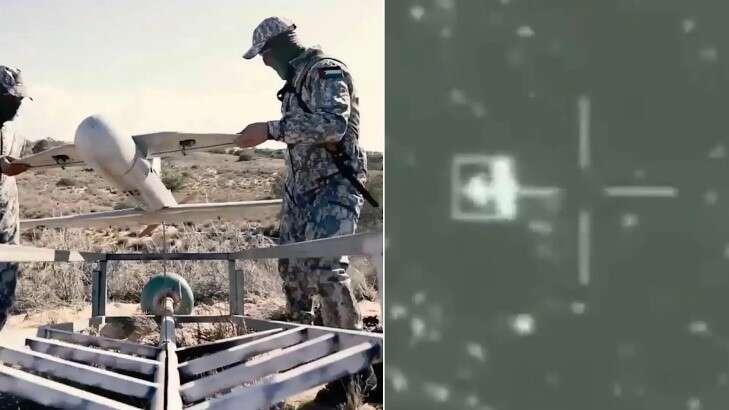
Left: Hamas demonstrates its new drone technology. On the right, an Israeli fighter-jet targets an incoming weaponized drone | Photo: DroneSec

Share on FacebookShare on Twitter

In the recent round of hostilities between Israel and Hamas, Israel had to contend with a growing drone threat from the Gaza Strip – not only detecting and mitigating the threats in the field, but on social media, where Hamas has released dramatic videos displaying their drone tactics and tooling.

Follow Israel Hayom on Facebook and Twitter

While Israel has previously dealt with Iranian drones, it seems that Hamas has acquired a similar technology that enables the organization to use explosive-laden drones.

Israel intercepted six weaponized drones through various means. A number of them were intercepted by IAF fighter jets, while one  was intercepted by the Iron Dome system in flight. These suicide drones were reportedly carrying around five kilograms (11 pounds) of explosive payload and were intended to avoid the Iron Dome defense system, unlike the regularly intercepted rockets.

These drones resemble the Iranian Ababil military drone but have been claimed as being developed and built locally by Izzedine al-Qassam Brigades, Hamas' military wing, and are named "Shehab." The Iranian HESA Ababil is notoriously affordable, designed mainly as a targeting drone with rudimentary surveillance capabilities and the capability to be used as a loitering munition ("suicide" or "kamikaze" drones).

Engine components for a Hamas weaponized drone (DroneSec)

Some observers have noted that while the engine of the Shehab and the Qasef-series drones share certain similarities, media released by Hamas shows that Commercial Off-The-Shelf (COTS) engine components are used in its drones, and they appear smaller in size. Hamas' drones also have a visible commercial GPS module for guiding the drones to their target.

As mentioned previously, the Iron Dome Defense system displayed the ability to intercept this type of emerging threat in combat. The Defense Ministry tested a range of complex scenarios (Aerial Threat Assessments) against the system, checking its ability to intercept multiple UAVs. However, compared to the cost of building a weaponized drone, the cost of using Iron Dome to intercept drones is economically disproportionate.

Drones as loitering munitions were hardly used by Hamas until the latest escalation, but there have been recorded instances of COTS drones being used for Intelligence, Surveillance and Reconnaissance (ISR). Additionally, recent innovative uses of drones by the Palestinian side include balloons with explosive payloads launched and sent into Israel over the border – a tactic that sees the balloons burst and the payload dropped, potentially bypassing defense infrastructure that might concentrate on high-speed and highly technical components.

On the other hand, there are a number of recorded cases in which the Israel Defense Forces used small drones (sUAS) of their own to conduct surveillance operations, when large military drones do not provide a tactical viewing advantage. Some of these drones have been successfully shot down and captured by Hamas, which publicized them on social media, although the IDF has responded that no important or sensitive data was lost through offensive forensics (the process for identifying information within an adversary's drone).

Both Hamas and Israel will likely continue to adopt the use of drones as they become cheaper, avoid detection more easily, and unlike a rocket – which leaves a trail of smoke – might not reveal their launch location.

The use of small consumer and commercial drones in conflict has been well documented since the war against ISIS. Cost-effective counter-drone systems (CUAS) that include Electronic Warfare (EC) and offensive cyber technologies to exploit and control non-military drones, such as the solutions offered by DroneSec, will continue to develop as countries call for strong intelligence in identifying and mitigating weaponized drones.

DroneSec is a cybersecurity and threat intelligence firm for drones that secures drone fleets and operations. DroneSec is the industry's most well-known and trusted partner for Drone Security and Counter-Drone training, with the "Drone Security Operators Certificate (DSOC)" being trusted by over 100+ organizations. Our team is made up of cyber-security professionals, military drone and military fighter jet pilots to enable safe and secure drone operations around the world.

Subscribe to Israel Hayom's daily newsletter and never miss our top stories!

Tags: dronesGaza StripHamasIron Dome

Related Posts

Worse than you thought: Inside look at Qatar's hidden brutality

Qatar's quiet war against Israel

by Shachar Kleiman

It does not fire missiles, but Qatar wields extensive influence that endangers Israel by funding, propaganda and its ties with...

The Syria deal: An opportunity Israel cannot afford to trust

The Syria deal: An opportunity Israel cannot afford to trust

by Dr. Carmit Valensi

In the Middle East, a good agreement is measured not by the intentions expressed on the day it is signed,...

Hamas signals openness to Gaza disarmamentEPA

Hamas is marketing the Hezbollah model, and not for the first time

by Shachar Kleiman

The terrorist organization is not truly prepared to give up power as long as it refuses to disarm. The proposed...

Menu

Analysis 

Archaeology

Blogpost

Business & Finance

Culture

Exclusive

Explainer

Environment


Features

Health

In Brief

Jewish World

Judea and Samaria

Lifestyle

Cyber & Internet

Sports


Diplomacy 

Iran & The Gulf

Gaza Strip

Politics

Shopping

Terms of use

Privacy Policy

Submissions

Contact Us

About Us

The first issue of Israel Hayom appeared on July 30, 2007. Israel Hayom was founded on the belief that the Israeli public deserves better, more balanced and more accurate journalism. Journalism that speaks, not shouts. Journalism of a different kind. And free of charge.

All rights reserved to Israel Hayom

Hosted by sPD.co.il

  • Home
  • News
    • Israel at War
    • Israel
    • United States
    • Middle East
    • Sports
  • Opinions
  • Jewish World
    • Archaeology
    • Antisemitism
  • Lifestyle
    • Food
    • Travel
    • Fashion
    • Culture
  • Magazine
    • Feature
    • Analysis
    • Explainer
    • Environment & Wildlife
    • Health & Wellness
  • In Memoriam
  • Subscribe to Newsletter
  • Submit your opinion
  • Terms and conditions

All rights reserved to Israel Hayom

Hosted by sPD.co.il

Newsletter

[contact-form-7 id=”508379″ html_id=”isrh_form_Newsletter_en” title=”newsletter_subscribe”]

  • Home
  • News
    • Israel at War
    • Israel
    • United States
    • Middle East
    • Sports
  • Opinions
  • Jewish World
    • Archaeology
    • Antisemitism
  • Lifestyle
    • Food
    • Travel
    • Fashion
    • Culture
  • Magazine
    • Feature
    • Analysis
    • Explainer
    • Environment & Wildlife
    • Health & Wellness
  • In Memoriam
  • Subscribe to Newsletter
  • Submit your opinion
  • Terms and conditions

All rights reserved to Israel Hayom

Hosted by sPD.co.il