Israel Hayom is a media organization founded on the belief that the Israeli public deserves better journalism—more balanced, more accurate, and more reliable. Journalism that speaks rather than shouts. Journalism that is trustworthy, objective, and matter-of-fact. A different kind of journalism, offered free of charge. The first print edition was published on July 30, 2007, and in 2010 Israel Hayom became the Israeli newspaper with the highest weekday readership. The newspaper’s publisher is Dr. Miriam Adelson. Its Editor-in-Chief is Omar Lachmanovitch, and its founding editor is Amos Regev. Israel Hayom’s Hebrew and English websites, as well as its Android and iOS applications, provide around-the-clock news coverage, exclusive content, breaking news and updates, analysis and commentary, video, podcasts, and live broadcasts. The digital platforms of Israel Hayom include news and opinion channels covering culture and entertainment, lifestyle, technology, sports, business and consumer affairs, health, military affairs, food, Judaism, tourism, and automobiles. In 2021, a new Hebrew-language website and mobile application were launched to provide users with a fast, up-to-date, secure, and convenient experience. The content of the newspaper’s print edition is also available online through a daily digital edition and can be received via newsletter. “The Israel Hayom Clique,” the publication’s exclusive benefits club, offers website users discounts and special promotions on products and services. Israel Hayom welcomes feedback, criticism, and suggestions for improvement from its readers. You can contact the organization by email at hayom@israelhayom.co.il

Friday Jul 3, 2026
NEWSLETTER
www.israelhayom.com
  • Home
  • News
    • Israel
    • Israel at War
    • Middle East
    • United States
  • Opinions
  • Jewish World
    • Archaeology
    • Antisemitism
  • Lifestyle
    • Food
    • Travel
    • Fashion
    • Culture
  • Magazine
    • Feature
    • Analysis
    • Explainer
  • In Memoriam
www.israelhayom.com
  • Home
  • News
    • Israel
    • Israel at War
    • Middle East
    • United States
  • Opinions
  • Jewish World
    • Archaeology
    • Antisemitism
  • Lifestyle
    • Food
    • Travel
    • Fashion
    • Culture
  • Magazine
    • Feature
    • Analysis
    • Explainer
  • In Memoriam
www.israelhayom.com
Home News Middle East Iran & The Gulf

Iran restricts IAEA access to main enrichment plant after attack

"They are provoking us," says one Western diplomat who follows the International Atomic Energy Agency closely, adding that inspectors should be able to have full access next week.

by  Reuters and ILH Staff
Published on  07-02-2021 12:30
Last modified: 11-05-2021 11:18
Pretend ambiguity is useless

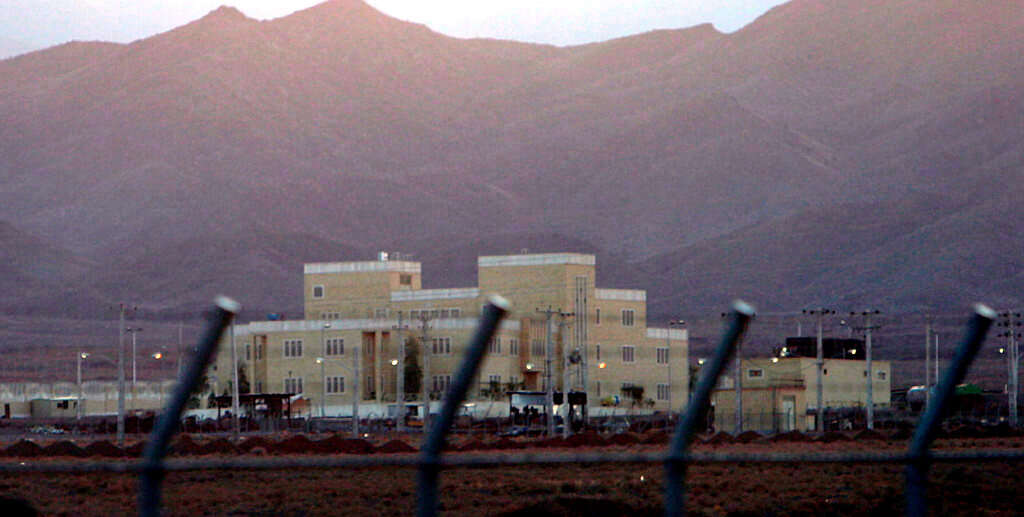
An exterior view of the nuclear enrichment plant of Natanz (EPA/Abedin Taherkenareh)

Share on FacebookShare on Twitter

Iran has been restricting UN nuclear inspectors' access to its main uranium enrichment plant at Natanz, citing security concerns after what it says was an attack on the site by Israel in April, diplomats say.

Follow Israel Hayom on Facebook and Twitter

The standoff, which one official said has been going on for weeks, is in the course of being resolved, diplomats said, but it has also raised tensions with the West just as indirect talks between Iran and the United States on reviving the Iran nuclear deal have adjourned without a date set for their resumption.

It follows various moves by Iran that have violated the 2015 nuclear deal or have angered Washington and its allies, ranging from enriching uranium to close to weapons-grade to failing to explain the origin of uranium particles that the UN nuclear watchdog found at several undeclared sites.

"They are provoking us," said one Western diplomat who follows the International Atomic Energy Agency closely, adding that inspectors should be able to have full access next week.

Iranian officials were not immediately available for comment. The IAEA declined to comment, citing its general policy of not commenting on inspection matters.

Any reasons for Iran's move beyond the official security and safety concerns it cited as explanations are unclear, but it has quarreled with the IAEA over access before. Iran in 2020 denied the IAEA access to two locations for snap inspections. In 2019, Iran held an IAEA inspector and seized her travel documents.

The IAEA has so far stopped short of reporting the issue to its member states and calling an emergency meeting of its 35-nation Board of Governors as it did in November 2019 when Iran briefly held the IAEA inspector who diplomats say had sought access to Natanz.

An explosion and power cut in April at Natanz, the heart of Iran's uranium enrichment program, appears to have damaged centrifuges at the underground, commercial-scale Fuel Enrichment Plant there. The last quarterly IAEA report on Iran in May showed its enrichment output had slowed.

"Because of the accident/sabotage in April, certain accesses have been limited for safety and security reasons," a Vienna-based diplomat said, adding that the move "had very little impact on the agency's ability to carry out verification."

The IAEA and Iran have discussed the issue "in order to avoid that these limitations become permanent and therefore start eroding the verification capability," he added.

A US official declined to comment on the dispute but stressed the importance of Iran adhering to its safeguards agreement that enables the IAEA to verify its Nuclear Non-Proliferation Treaty compliance. The NPT permits Iran to have a civil nuclear program in return for a commitment not to acquire nuclear weapons.

"We take nothing more seriously than the full implementation of Iran's obligations under the NPT and its comprehensive safeguards agreement," said the US official, who requested anonymity.

Washington and its European partners have been pressuring Iran over its violations of the 2015 deal, which was built around lengthening the time Tehran would need to produce a nuclear weapon if it so chose.

Inspections and monitoring have also been in the spotlight recently as Iran reduced its cooperation with the agency in February, removing the legal basis for snap IAEA inspections at undeclared facilities that had been introduced by the 2015 deal.

At the same time, Iran ended IAEA monitoring of some nuclear activities that the deal introduced. A temporary agreement with the IAEA kept that monitoring going in a black-box-type arrangement under which data continues to be collected but the IAEA will only have access to it at a later date.

Subscribe to Israel Hayom's daily newsletter and never miss our top stories!

That temporary agreement expired last week, however, and the IAEA has said Iran has not responded when asked about the status of that agreement, which the IAEA hopes to extend.

The Western diplomat said Iran had now agreed to grant inspectors full access to the FEP, which should happen next week. Another said the move was carefully calibrated by Iran to create a nuisance without causing a major diplomatic incident.

"The Iranians are being very tactical," he said.

Tags: IAEAIranIsraelNatanzNuclear

Related Posts

Israel warns US of 'Iranian trap' in Lebanon

Iran is convinced war with Israel will resume

by Danny Zaken

Iran has postponed the renewal of broad negotiations with the US until at least July 18, agreeing only to technical-level...

Preparations for Khamenei’s funeral

Preparations for Khamenei's funeral enter final stretch

by Dudi Kogan

The funeral procession for the former supreme leader will begin Friday in Tehran, pass through Iraq and end in Mashhad....

Iran launches Strait of Hormuz drill ahead of Switzerland talks

Iran blocks talks as Trump touts progress on nuclear deal

by Danny Zaken

Sources familiar with the talks say the Revolutionary Guards barred Foreign Minister Abbas Araghchi from attending a meeting with the...

Menu

Analysis 

Archaeology

Blogpost

Business & Finance

Culture

Exclusive

Explainer

Environment


Features

Health

In Brief

Jewish World

Judea and Samaria

Lifestyle

Cyber & Internet

Sports


Diplomacy 

Iran & The Gulf

Gaza Strip

Politics

Shopping

Terms of use

Privacy Policy

Submissions

Contact Us

About Us

The first issue of Israel Hayom appeared on July 30, 2007. Israel Hayom was founded on the belief that the Israeli public deserves better, more balanced and more accurate journalism. Journalism that speaks, not shouts. Journalism of a different kind. And free of charge.

All rights reserved to Israel Hayom

Hosted by sPD.co.il

  • Home
  • News
    • Israel at War
    • Israel
    • United States
    • Middle East
    • Sports
  • Opinions
  • Jewish World
    • Archaeology
    • Antisemitism
  • Lifestyle
    • Food
    • Travel
    • Fashion
    • Culture
  • Magazine
    • Feature
    • Analysis
    • Explainer
    • Environment & Wildlife
    • Health & Wellness
  • In Memoriam
  • Subscribe to Newsletter
  • Submit your opinion
  • Terms and conditions

All rights reserved to Israel Hayom

Hosted by sPD.co.il

Newsletter

[contact-form-7 id=”508379″ html_id=”isrh_form_Newsletter_en” title=”newsletter_subscribe”]

  • Home
  • News
    • Israel at War
    • Israel
    • United States
    • Middle East
    • Sports
  • Opinions
  • Jewish World
    • Archaeology
    • Antisemitism
  • Lifestyle
    • Food
    • Travel
    • Fashion
    • Culture
  • Magazine
    • Feature
    • Analysis
    • Explainer
    • Environment & Wildlife
    • Health & Wellness
  • In Memoriam
  • Subscribe to Newsletter
  • Submit your opinion
  • Terms and conditions

All rights reserved to Israel Hayom

Hosted by sPD.co.il