Israel Hayom is a media organization founded on the belief that the Israeli public deserves better journalism—more balanced, more accurate, and more reliable. Journalism that speaks rather than shouts. Journalism that is trustworthy, objective, and matter-of-fact. A different kind of journalism, offered free of charge. The first print edition was published on July 30, 2007, and in 2010 Israel Hayom became the Israeli newspaper with the highest weekday readership. The newspaper’s publisher is Dr. Miriam Adelson. Its Editor-in-Chief is Omar Lachmanovitch, and its founding editor is Amos Regev. Israel Hayom’s Hebrew and English websites, as well as its Android and iOS applications, provide around-the-clock news coverage, exclusive content, breaking news and updates, analysis and commentary, video, podcasts, and live broadcasts. The digital platforms of Israel Hayom include news and opinion channels covering culture and entertainment, lifestyle, technology, sports, business and consumer affairs, health, military affairs, food, Judaism, tourism, and automobiles. In 2021, a new Hebrew-language website and mobile application were launched to provide users with a fast, up-to-date, secure, and convenient experience. The content of the newspaper’s print edition is also available online through a daily digital edition and can be received via newsletter. “The Israel Hayom Clique,” the publication’s exclusive benefits club, offers website users discounts and special promotions on products and services. Israel Hayom welcomes feedback, criticism, and suggestions for improvement from its readers. You can contact the organization by email at hayom@israelhayom.co.il

Monday Jun 29, 2026
NEWSLETTER
www.israelhayom.com
  • Home
  • News
    • Israel
    • Israel at War
    • Middle East
    • United States
  • Opinions
  • Jewish World
    • Archaeology
    • Antisemitism
  • Lifestyle
    • Food
    • Travel
    • Fashion
    • Culture
  • Magazine
    • Feature
    • Analysis
    • Explainer
  • In Memoriam
www.israelhayom.com
  • Home
  • News
    • Israel
    • Israel at War
    • Middle East
    • United States
  • Opinions
  • Jewish World
    • Archaeology
    • Antisemitism
  • Lifestyle
    • Food
    • Travel
    • Fashion
    • Culture
  • Magazine
    • Feature
    • Analysis
    • Explainer
  • In Memoriam
www.israelhayom.com
Home News Middle East

After fall of Bashir, Sudan closes door on support for Hamas

Sudanese authorities seize control of lucrative assets that for years provided backing for Hamas, shedding light on how the country served as a haven for the Palestinian terrorist group under Sudan's former dictator.

by  Reuters and ILH Staff
Published on  09-24-2021 09:15
Last modified: 09-24-2021 09:18
After fall of Bashir, Sudan closes door on support for HamasAFP/Ebrahim Hamid

Chairman of Sudan's Sovereignty Council General Abdel Fattah al-Burhan speaks with Prime Minister Abdalla Hamdok during a reception ceremony in Khartoum, October 8, 2020 | Photo: AFP/Ebrahim Hamid

Share on FacebookShare on Twitter

Sudanese authorities have taken control of lucrative assets that for years provided backing for Hamas, shedding light on how the country served as a haven for the Palestinian terrorist group under former leader Omar al-Bashir.

Follow Israel Hayom on Facebook and Twitter

The takeover of at least a dozen companies that officials say were linked to Hamas has helped accelerate Sudan's realignment with the West since Bashir's overthrow in 2019. Over the past year, Khartoum has won removal from the US state sponsors of terrorism (SST) list and is on course for relief of more than $50 billion in debt.

Hamas has lost a foreign base where members and supporters could live, raise money, and channel Iranian weapons and funds to the Gaza Strip, Sudanese and Palestinian analysts said.

Seized assets detailed by Sudanese official sources and a Western intelligence source show the reach of those networks.
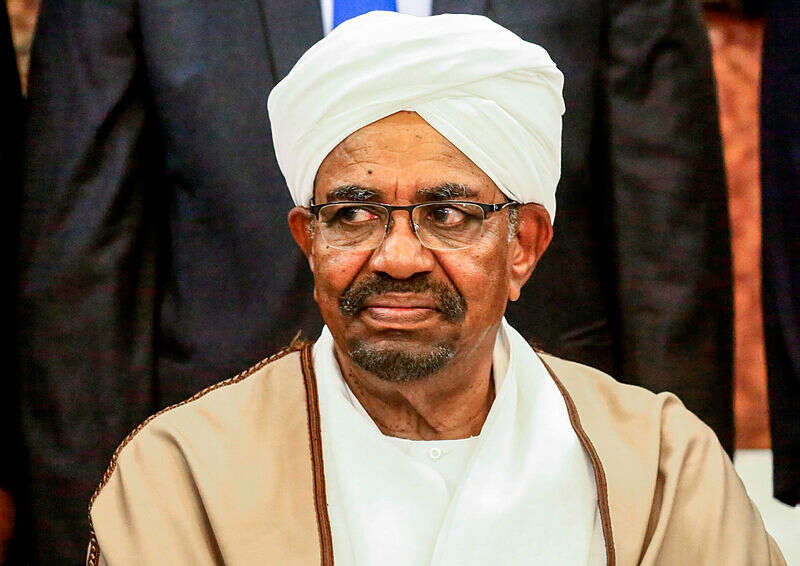
Sudan's ousted dictator Omar al-Bashir in the capital Khartoum on March 14, 2019 (AFP/Ashraf Shazly)

According to officials from a task force set up to dismantle the Bashir regime, they include real estate, company shares, a hotel in a prime Khartoum location, an exchange bureau, a TV station, and more than a million acres of farmland.

Sudan became a center for money laundering and terrorism financing, said Wagdi Salih, a leading member of the task force – the Committee to Dismantle the June 30, 1989 Regime and Retrieve Public Funds.

The system was "a big cover, a big umbrella, internally and externally," he said.

A Western intelligence source said techniques were used in Sudan that are common to organized crime: Companies were headed by trustee shareholders, rents collected in cash, and transfers made through exchange bureaus.

Bashir openly supported Hamas, and was friendly with its leaders.

"They got preferential treatment in tenders, tax forgiveness, and they were allowed to transfer to Hamas and Gaza with no limits," said a task force member, speaking on condition of anonymity.

Sudan's journey from pariah state to US ally has been gradual. In the decade after Bashir took power in 1989 the country became a hub for radical Islamists, sheltered Osama bin Laden for several years, and was sanctioned by the United States over links to Palestinian terrorists.

Bashir later tried to distance himself from hardline Islamism, stepping up security cooperation with Washington. In 2016 Sudan cut ties with Iran and the following year US trade sanctions against Khartoum were dropped after Washington accepted that state support for Hamas had ceased.
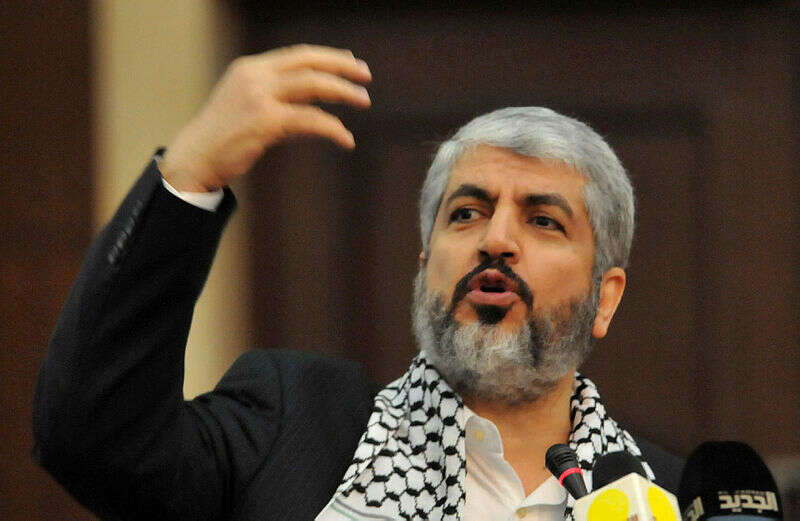
Former Hamas chief Khaled Meshaal speaks during the opening of the eighth Al-Quds International Foundation conference in Khartoum, March 6, 2011 (AFP/Ebrahim Hamid, Archive)

But until Bashir's fall, networks that had supported Hamas remained in place.

Hamas investments in Sudan began with small-scale ventures such as fast food restaurants before venturing into real estate and construction, according to an official on the task force.

An example was Hassan and Alabed, which started as a cement company and expanded into large real estate developments.

The task force says it was in a network with about 10 other large companies with interlinking share ownership connected to Bashir ally Abdelbasit Hamza that moved large sums through foreign bank accounts.

The biggest was Alrowad Real Estate Development, established in 2007 and listed on Khartoum's stock exchange, with subsidiaries that the Western intelligence source said laundered money and traded in currency to finance Hamas.

Hamza was jailed in April for 10 years on corruption charges and sent to the Khartoum prison where Bashir is being held. The task force said he had assets worth up to $1.2 billion in his name. Hamza's lawyer, who also represents Bashir, could not be reached for comment.

A second network, worth up to $20 million, revolved around the broadcaster Tayba and an associated charity named Almishkat. It was run by two Hamas members who got citizenship and amassed businesses and real estate, according to Maher Abouljokh, the caretaker brought in to manage Tayba. The TV channel was funneling money from the Gulf, laundered millions of dollars, and had clear links to Hamas, said Abouljokh.

Hamas official Sami Abu Zuhri denied the group had investments in Sudan, but acknowledged an impact from Sudan's political shift: "Unfortunately, there were several measures that weakened the presence of the movement [Hamas] in the country [Sudan] and limited political ties with it," he said.

By last year, Sudan was desperate to escape the SST list, a prerequisite for debt relief and support from international lenders.

Under pressure from the United States, it joined the United Arab Emirates, Bahrain and Morocco in agreeing to normalize ties with Israel – though it has moved slowly to implement the deal.

A former US diplomat who worked on Sudan under the Trump administration said shutting down the Hamas network was a focus in negotiations with Khartoum. "We were pushing on an open door," he said.

The United States gave Sudan a list of companies to shut down, according to one Sudanese source and the Western intelligence source. The State Department declined to comment.

Subscribe to Israel Hayom's daily newsletter and never miss our top stories!

Many Hamas-affiliated figures went to Turkey with some liquid assets but left behind about 80% of their investments, the task force official said.

Sudan's transitional leaders "consider themselves the exact antithesis of Bashir in regional terms," said Sudanese analyst Magdi El Gazouli. "They want to sell themselves as a component of the new security order in the region."

"The coup against al-Bashir caused real problems for Hamas and Iran," said Palestinian analyst Adnan Abu Amer. "Hamas and Iran had to look for alternatives – alternatives that had not been in place because the coup against al-Bashir was a sudden one."

Tags: HamasIranIsraelmoney launderingSudanterrorists

Related Posts

Urgent Doha meeting set at Iran's request, Trump saysGetty Images

Urgent Doha meeting set at Iran's request, Trump says

by Dudi Kogan

Senior American envoys deploy to Qatar Tuesday to salvage a fragile ceasefire after escalating tensions and drone strikes in the...

US seizes sanctioned Iranian cargo ship in Gulf of Oman

US strikes Iran as Tehran responds with fire toward Bahrain and Kuwait

by Dudi Kogan and Or Shaked

After an Iranian drone hit an oil tanker carrying more than 2 million oil barrels, US Central Command forces struck...

Iraq corruption probe sparks wave of arrests, tank deployment in Baghdad

Iraq corruption probe sparks wave of arrests, tank deployment in Baghdad

by Shachar Kleiman

Several senior figures from a Sunni political party were arrested as part of a massive corruption case that has shaken...

Menu

Analysis 

Archaeology

Blogpost

Business & Finance

Culture

Exclusive

Explainer

Environment


Features

Health

In Brief

Jewish World

Judea and Samaria

Lifestyle

Cyber & Internet

Sports


Diplomacy 

Iran & The Gulf

Gaza Strip

Politics

Shopping

Terms of use

Privacy Policy

Submissions

Contact Us

About Us

The first issue of Israel Hayom appeared on July 30, 2007. Israel Hayom was founded on the belief that the Israeli public deserves better, more balanced and more accurate journalism. Journalism that speaks, not shouts. Journalism of a different kind. And free of charge.

All rights reserved to Israel Hayom

Hosted by sPD.co.il

  • Home
  • News
    • Israel at War
    • Israel
    • United States
    • Middle East
    • Sports
  • Opinions
  • Jewish World
    • Archaeology
    • Antisemitism
  • Lifestyle
    • Food
    • Travel
    • Fashion
    • Culture
  • Magazine
    • Feature
    • Analysis
    • Explainer
    • Environment & Wildlife
    • Health & Wellness
  • In Memoriam
  • Subscribe to Newsletter
  • Submit your opinion
  • Terms and conditions

All rights reserved to Israel Hayom

Hosted by sPD.co.il

Newsletter

[contact-form-7 id=”508379″ html_id=”isrh_form_Newsletter_en” title=”newsletter_subscribe”]

  • Home
  • News
    • Israel at War
    • Israel
    • United States
    • Middle East
    • Sports
  • Opinions
  • Jewish World
    • Archaeology
    • Antisemitism
  • Lifestyle
    • Food
    • Travel
    • Fashion
    • Culture
  • Magazine
    • Feature
    • Analysis
    • Explainer
    • Environment & Wildlife
    • Health & Wellness
  • In Memoriam
  • Subscribe to Newsletter
  • Submit your opinion
  • Terms and conditions

All rights reserved to Israel Hayom

Hosted by sPD.co.il