Israel Hayom is a media organization founded on the belief that the Israeli public deserves better journalism—more balanced, more accurate, and more reliable. Journalism that speaks rather than shouts. Journalism that is trustworthy, objective, and matter-of-fact. A different kind of journalism, offered free of charge. The first print edition was published on July 30, 2007, and in 2010 Israel Hayom became the Israeli newspaper with the highest weekday readership. The newspaper’s publisher is Dr. Miriam Adelson. Its Editor-in-Chief is Omar Lachmanovitch, and its founding editor is Amos Regev. Israel Hayom’s Hebrew and English websites, as well as its Android and iOS applications, provide around-the-clock news coverage, exclusive content, breaking news and updates, analysis and commentary, video, podcasts, and live broadcasts. The digital platforms of Israel Hayom include news and opinion channels covering culture and entertainment, lifestyle, technology, sports, business and consumer affairs, health, military affairs, food, Judaism, tourism, and automobiles. In 2021, a new Hebrew-language website and mobile application were launched to provide users with a fast, up-to-date, secure, and convenient experience. The content of the newspaper’s print edition is also available online through a daily digital edition and can be received via newsletter. “The Israel Hayom Clique,” the publication’s exclusive benefits club, offers website users discounts and special promotions on products and services. Israel Hayom welcomes feedback, criticism, and suggestions for improvement from its readers. You can contact the organization by email at hayom@israelhayom.co.il

Sunday Jul 19, 2026
NEWSLETTER
www.israelhayom.com
  • Home
  • News
    • Israel
    • Israel at War
    • Middle East
    • United States
  • Opinions
  • Jewish World
    • Archaeology
    • Antisemitism
  • Lifestyle
    • Food
    • Travel
    • Fashion
    • Culture
  • Magazine
    • Feature
    • Analysis
    • Explainer
  • In Memoriam
www.israelhayom.com
  • Home
  • News
    • Israel
    • Israel at War
    • Middle East
    • United States
  • Opinions
  • Jewish World
    • Archaeology
    • Antisemitism
  • Lifestyle
    • Food
    • Travel
    • Fashion
    • Culture
  • Magazine
    • Feature
    • Analysis
    • Explainer
  • In Memoriam
www.israelhayom.com
Home Analysis

Reshaping the battlefield: How thwarting attacks from Iran and Lebanon changes the game

Israel's ability to neutralize threats both defensively and offensively, near and far, is forcing our neighbors to reconsider their strategies – it's time to craft a new security doctrine.

by  Zvika Haimovich
Published on  09-04-2024 06:00
Last modified: 09-04-2024 09:41
Reshaping the battlefield: How thwarting attacks from Iran and Lebanon changes the gameLeo Correa/AP

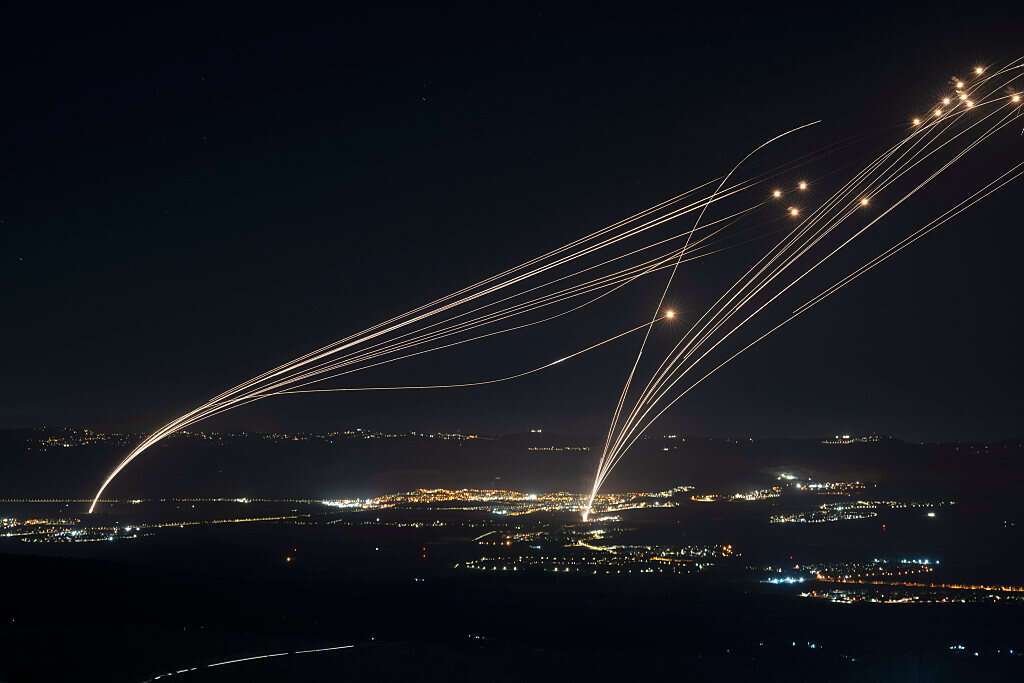
The Israeli Iron Dome air defense system fires to intercept an attack from Lebanon over the Galilee region on Sunday, Aug. 4, 2024. Photo credit: Leo Correa/AP | Photo: Leo Correa/AP

Share on FacebookShare on Twitter

The night of April 14 marked Iran's retaliation for the elimination of the Revolutionary Guards' Lebanon-Syria Corps commander in Damascus two weeks earlier – an attack successfully intercepted by Israel and its allies. On August 25, Israel launched a preemptive strike to neutralize Hezbollah's planned response to the killing of its chief of staff, Fouad Shukr, three and a half weeks prior. These two events form a crucial turning point in Israel's evolving strategy.

These incidents convey two crucial messages. First, the offensive actions planned by Iran and Hezbollah were thwarted – one through defensive measures, the other through impressive offensive capabilities of the Air Force and Intelligence Division. Both instances highlighted a significant gap between our adversaries' intentions and capabilities versus the actual results.

Second, the IDF's intelligence capabilities (which faced justified criticism after Oct. 7) demonstrated remarkable accuracy and penetrability of our enemies' plans. This ranged from uncovering initial intentions to understanding the timing down to the day and hour.

The triad: Deterrence, intelligence, and offensive capability

The events of April and August have far-reaching implications. They're part of the IDF's effort to restore deterrence across the region. This deterrence is built on intelligence capabilities that identify high-value targets, coupled with formidable military power in both defense and offense. These factors challenge our adversaries, forcing them to reevaluate their strategies, target selection, and timing. Adding to this is the unwavering US support for Israel – in defense, offense, and on the international stage.

An Iranian ballistic missile retrieved from the Dead Sea after Iran launched drones and missiles towards Israel, at Julis military base, in southern Israel April 16, 2024. Photo credit: REUTERS/Amir Cohen REUTERS

Deterrence, though it became a contentious term after Oct. 7, remains crucial and relevant. It will continue to play a central role in the security doctrine being reshaped in the wake of the Iron Swords War. When enemies repeatedly see their plans foiled and face severe consequences – with distance (be it Yemen or Iran) no longer providing safety – they're compelled to change tactics. Our challenge then becomes staying vigilant and sharp enough to identify these shifts, lest we fall into outdated thinking that leads to misconceptions.

However, actions alone, no matter how significant, aren't enough. We need to build a comprehensive system that can maximize, analyze, and translate the implications of these operations into an adaptive operational strategy.

In the post-Oct. 7 reality, such moves carry even greater weight. They're essential for restoring the IDF's capabilities and perception – both externally against our enemies and internally within Israel. While they lay an excellent foundation for change, they must be accompanied by complementary measures. Only then can we say we've truly learned from Oct. 7 and are actively reshaping the security landscape in our region.

If we've chosen to alter the security situation in the north without resorting to all-out regional war – which seems to be the preference of the Israeli government and others – then simply creating a sense of vulnerability through targeted eliminations as seen in both the April and August incidents won't suffice. Even proactive threat removal and weakening enemy capabilities – while important – aren't enough on their own. Although the operation on August 25 offered a chance to disrupt Hezbollah's plans more extensively than they had anticipated in their planned response.

The April and August events draw a clear line – one of intelligence, lethality, deterrence, and the dawn of a new reality. Our success will be measured by how effectively we capitalize on these opportunities to keep reshaping the strategic landscape.

The writer is a reserve brigadier general, former commander of the Israeli Air Defense Command, and a strategic advisor.
Tags: Gaza WarHezbollahIran

Related Posts

Hamas signals openness to Gaza disarmamentEPA

Hamas is marketing the Hezbollah model, and not for the first time

by Shachar Kleiman

The terrorist organization is not truly prepared to give up power as long as it refuses to disarm. The proposed...

Something deep is changing on the Haredi street. The real conflagration lies ahead

Something deep is changing on the Haredi street. The real conflagration lies ahead

by Yaakov Hershkowitz

The draft crisis is pushing the integration of Haredi Israelis into broader Israeli society further away and radicalizing the discourse....

The Gulf states have moved on, leaving Israel behind

The Gulf states have moved on, leaving Israel behind

by Yoel Guzansky

The signing of the memorandum of understanding between Washington and Tehran marks the beginning of a new regional order. While...

Menu

Analysis 

Archaeology

Blogpost

Business & Finance

Culture

Exclusive

Explainer

Environment


Features

Health

In Brief

Jewish World

Judea and Samaria

Lifestyle

Cyber & Internet

Sports


Diplomacy 

Iran & The Gulf

Gaza Strip

Politics

Shopping

Terms of use

Privacy Policy

Submissions

Contact Us

About Us

The first issue of Israel Hayom appeared on July 30, 2007. Israel Hayom was founded on the belief that the Israeli public deserves better, more balanced and more accurate journalism. Journalism that speaks, not shouts. Journalism of a different kind. And free of charge.

All rights reserved to Israel Hayom

Hosted by sPD.co.il

  • Home
  • News
    • Israel at War
    • Israel
    • United States
    • Middle East
    • Sports
  • Opinions
  • Jewish World
    • Archaeology
    • Antisemitism
  • Lifestyle
    • Food
    • Travel
    • Fashion
    • Culture
  • Magazine
    • Feature
    • Analysis
    • Explainer
    • Environment & Wildlife
    • Health & Wellness
  • In Memoriam
  • Subscribe to Newsletter
  • Submit your opinion
  • Terms and conditions

All rights reserved to Israel Hayom

Hosted by sPD.co.il

Newsletter

[contact-form-7 id=”508379″ html_id=”isrh_form_Newsletter_en” title=”newsletter_subscribe”]

  • Home
  • News
    • Israel at War
    • Israel
    • United States
    • Middle East
    • Sports
  • Opinions
  • Jewish World
    • Archaeology
    • Antisemitism
  • Lifestyle
    • Food
    • Travel
    • Fashion
    • Culture
  • Magazine
    • Feature
    • Analysis
    • Explainer
    • Environment & Wildlife
    • Health & Wellness
  • In Memoriam
  • Subscribe to Newsletter
  • Submit your opinion
  • Terms and conditions

All rights reserved to Israel Hayom

Hosted by sPD.co.il