
Israel Hayom is a media organization founded on the belief that the Israeli public deserves better journalism—more balanced, more accurate, and more reliable. Journalism that speaks rather than shouts. Journalism that is trustworthy, objective, and matter-of-fact. A different kind of journalism, offered free of charge. The first print edition was published on July 30, 2007, and in 2010 Israel Hayom became the Israeli newspaper with the highest weekday readership. The newspaper’s publisher is Dr. Miriam Adelson. Its Editor-in-Chief is Omar Lachmanovitch, and its founding editor is Amos Regev. Israel Hayom’s Hebrew and English websites, as well as its Android and iOS applications, provide around-the-clock news coverage, exclusive content, breaking news and updates, analysis and commentary, video, podcasts, and live broadcasts. The digital platforms of Israel Hayom include news and opinion channels covering culture and entertainment, lifestyle, technology, sports, business and consumer affairs, health, military affairs, food, Judaism, tourism, and automobiles. In 2021, a new Hebrew-language website and mobile application were launched to provide users with a fast, up-to-date, secure, and convenient experience. The content of the newspaper’s print edition is also available online through a daily digital edition and can be received via newsletter. “The Israel Hayom Clique,” the publication’s exclusive benefits club, offers website users discounts and special promotions on products and services. Israel Hayom welcomes feedback, criticism, and suggestions for improvement from its readers. You can contact the organization by email at hayom@israelhayom.co.il

Saturday Jun 27, 2026
NEWSLETTER
www.israelhayom.com
  • Home
  • News
    • Israel
    • Israel at War
    • Middle East
    • United States
  • Opinions
  • Jewish World
    • Archaeology
    • Antisemitism
  • Lifestyle
    • Food
    • Travel
    • Fashion
    • Culture
  • Magazine
    • Feature
    • Analysis
    • Explainer
  • In Memoriam
www.israelhayom.com
  • Home
  • News
    • Israel
    • Israel at War
    • Middle East
    • United States
  • Opinions
  • Jewish World
    • Archaeology
    • Antisemitism
  • Lifestyle
    • Food
    • Travel
    • Fashion
    • Culture
  • Magazine
    • Feature
    • Analysis
    • Explainer
  • In Memoriam
www.israelhayom.com
Home Commentary

The Middle East is waiting for Japan

Japan is a strategic ally of the United States. The cooperation between the two nations, which is evident in the Indo-Pacific region, can and should extend to the Middle East as well.

by  Zvi Hauser and Andrew Saidel
Published on  03-10-2025 07:15
Last modified: 03-11-2025 16:47
From a ring of fire to a ring of peaceGettyImages

Tokyo, Japan | Photo: GettyImages

Share on FacebookShare on Twitter

When listing key players reshaping the Middle East, few would include Japan. However, this democratic powerhouse, known for its advanced economy, cutting-edge technology, and extensive trade relations, holds a uniquely influential potential.

Japan's ability to build economic bridges with nations worldwide, including in the Middle East, positions it as a crucial balancing force among the global powers operating in the region, especially in times of change, uncertainty, and upheaval. As the first non-Western nation to become a technological superpower, Japan offers an attractive model for growth and prosperity. In the decades following World War II, Japan proved that without wars or conquests, an ancient nation that transitioned into a modern democracy could lead an economic revolution based on trade and technology, without relying on significant natural resources.

Learning from the Japanese model

Japan's post-war economic "miracle" resulted from its ability to balance adaptation to change with stability, consistency, and a cautious yet sophisticated foreign policy. Many Asian nations have admired its achievements, and it stands to reason that Middle Eastern countries may also seek to learn from Japan's model, which is rooted in relentless technological and trade-focused development.

As we enter the second quarter of the 21st century, the world appears to need a more proactive and assertive Japan, one that fully realizes its position as the world's fourth-largest economy. Many nations strive for global influence without possessing the necessary capabilities or tools. Japan, by contrast, is an exception, a true global power that often refrains from exercising its full influence.

Now, with China's growing presence, particularly its strategic investments under the Belt and Road Initiative, Japan faces a critical mission: serving as a counterbalance to prevent Chinese influence from expanding at the expense of Western interests. Like India, Japan cannot afford to leave the United States to face this central challenge of the modern era alone.

Counter Axis. An Iranian Oil Tanker (Archive), Photo: EPA

Japan is a strategic ally of the United States. The cooperation between the two nations, demonstrated in the Indo-Pacific, can and should also be reflected in the Middle East. Such a move would serve both American and Japanese interests, strengthen the alliance between the two countries, and reinforce the United States' commitment to Japan. Given the current reality in the Middle East and the growing influence of the China–North Korea–Russia–Iran axis, this is a significant strategic necessity for Japan's and America's regional allies in general, and for the Gulf states and Israel in particular.

Japan has a track record of quiet involvement in the Middle East, primarily focused on a narrow view of its energy interests. In the summer of 2023, then-Japanese Prime Minister Fumio Kishida visited Saudi Arabia, the United Arab Emirates, and Qatar, signing a series of economic agreements that expanded regional cooperation. At the same time, Japan has maintained and developed ties with key Arab capitals in the region, as well as with Ankara, Tehran, and the Palestinians.

Japan-Israel relations, which were limited for many years, have taken a significant positive turn over the past decade. The late Japanese Prime Minister Shinzo Abe recognized the importance of Israeli-Japanese cooperation, particularly in the fields of innovation and technology. Abe was the first Japanese leader to view Israel as a strategic partner capable of contributing to Japan's industrial strength. Despite Japan and Israel lacking a significant shared historical background, they share a common future, one that is particularly defined by a mutual understanding that their power and prosperity depend on accelerating and upgrading their technological capabilities, as well as on scientific leadership.

However, Japan's presence in the Middle East remains limited, failing to fully leverage its capabilities and potential role. Japan now stands at a crossroads: Will it continue its traditional role as merely an economic player, or will it seize the opportunity to become a more significant global player in diplomacy?

Amidst strategic shifts in the Middle East, Japan has the potential to take on a more central role. The Middle East is no longer solely the concern of the world's superpowers, but rather multi-national, where economy, technology, and sophisticated diplomacy can redefine the rules of the game. The question is no longer whether Japan can contribute, but whether it will choose to do so.

This article is based on an original article published in the Japanese newspaper "Nikkei" by Zvi Hauser and Andrew Saidel.

Related Posts

A voice needed now more than everAP

A voice needed now more than ever

by Dr. Miriam Adelson

A decade after the world lost “Reb Elie,” the Holocaust’s most vital witness, his moral clarity is needed more than...

Report: Israel sidelined as US, Iran establish military oversight cell in LebanonIDF Spokesperson's Unit

The buffer zone is Israel's red line

by Dr. Yossi Mansharof

The exposure of the strategic tunnel in Majdal Zoun and the "UAV airfield," alongside declarations by Hezbollah and the Iranian...

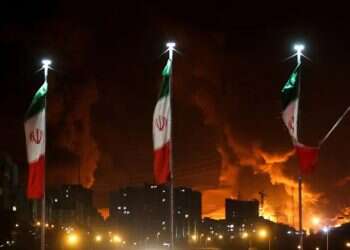
Netanyahu against the backdrop of a burning Iran

Israel is walking towards an Iranian trap with its eyes open

by Eyal Hulata

From Iran’s perspective, military pressure is not meant to defeat the enemy, but to influence the terms of the agreement...

Menu

Analysis 

Archaeology

Blogpost

Business & Finance

Culture

Exclusive

Explainer

Environment


Features

Health

In Brief

Jewish World

Judea and Samaria

Lifestyle

Cyber & Internet

Sports


Diplomacy 

Iran & The Gulf

Gaza Strip

Politics

Shopping

Terms of use

Privacy Policy

Submissions

Contact Us

About Us

The first issue of Israel Hayom appeared on July 30, 2007. Israel Hayom was founded on the belief that the Israeli public deserves better, more balanced and more accurate journalism. Journalism that speaks, not shouts. Journalism of a different kind. And free of charge.

All rights reserved to Israel Hayom

Hosted by sPD.co.il

  • Home
  • News
    • Israel at War
    • Israel
    • United States
    • Middle East
    • Sports
  • Opinions
  • Jewish World
    • Archaeology
    • Antisemitism
  • Lifestyle
    • Food
    • Travel
    • Fashion
    • Culture
  • Magazine
    • Feature
    • Analysis
    • Explainer
    • Environment & Wildlife
    • Health & Wellness
  • In Memoriam
  • Subscribe to Newsletter
  • Submit your opinion
  • Terms and conditions

All rights reserved to Israel Hayom

Hosted by sPD.co.il

Newsletter

[contact-form-7 id=”508379″ html_id=”isrh_form_Newsletter_en” title=”newsletter_subscribe”]

  • Home
  • News
    • Israel at War
    • Israel
    • United States
    • Middle East
    • Sports
  • Opinions
  • Jewish World
    • Archaeology
    • Antisemitism
  • Lifestyle
    • Food
    • Travel
    • Fashion
    • Culture
  • Magazine
    • Feature
    • Analysis
    • Explainer
    • Environment & Wildlife
    • Health & Wellness
  • In Memoriam
  • Subscribe to Newsletter
  • Submit your opinion
  • Terms and conditions

All rights reserved to Israel Hayom

Hosted by sPD.co.il