Israel Hayom is a media organization founded on the belief that the Israeli public deserves better journalism—more balanced, more accurate, and more reliable. Journalism that speaks rather than shouts. Journalism that is trustworthy, objective, and matter-of-fact. A different kind of journalism, offered free of charge. The first print edition was published on July 30, 2007, and in 2010 Israel Hayom became the Israeli newspaper with the highest weekday readership. The newspaper’s publisher is Dr. Miriam Adelson. Its Editor-in-Chief is Omar Lachmanovitch, and its founding editor is Amos Regev. Israel Hayom’s Hebrew and English websites, as well as its Android and iOS applications, provide around-the-clock news coverage, exclusive content, breaking news and updates, analysis and commentary, video, podcasts, and live broadcasts. The digital platforms of Israel Hayom include news and opinion channels covering culture and entertainment, lifestyle, technology, sports, business and consumer affairs, health, military affairs, food, Judaism, tourism, and automobiles. In 2021, a new Hebrew-language website and mobile application were launched to provide users with a fast, up-to-date, secure, and convenient experience. The content of the newspaper’s print edition is also available online through a daily digital edition and can be received via newsletter. “The Israel Hayom Clique,” the publication’s exclusive benefits club, offers website users discounts and special promotions on products and services. Israel Hayom welcomes feedback, criticism, and suggestions for improvement from its readers. You can contact the organization by email at hayom@israelhayom.co.il

Tuesday Jul 21, 2026
NEWSLETTER
www.israelhayom.com
  • Home
  • News
    • Israel
    • Israel at War
    • Middle East
    • United States
  • Opinions
  • Jewish World
    • Archaeology
    • Antisemitism
  • Lifestyle
    • Food
    • Travel
    • Fashion
    • Culture
  • Magazine
    • Feature
    • Analysis
    • Explainer
  • In Memoriam
www.israelhayom.com
  • Home
  • News
    • Israel
    • Israel at War
    • Middle East
    • United States
  • Opinions
  • Jewish World
    • Archaeology
    • Antisemitism
  • Lifestyle
    • Food
    • Travel
    • Fashion
    • Culture
  • Magazine
    • Feature
    • Analysis
    • Explainer
  • In Memoriam
www.israelhayom.com
Home News Israel Israel at War Iran War

What are Iran's nuclear sites?

Here's a look at some major Iranian sites and their importance in Tehran's program.

by  AP and ILH Staff
Published on  06-13-2025 01:00
Last modified: 06-13-2025 12:46
World powers step up pressure on Iran following nuclear breachesReuters / West Asia News Agency

Members of the media and officials tour the water nuclear reactor at Arak, Iran December 23, 2019 (Reuters / West Asia News Agency) | Photo: Reuters / West Asia News Agency

Share on FacebookShare on Twitter

Israel struck multiple Iranian nuclear and military sites on Friday as tensions reached new heights over Tehran's rapidly advancing nuclear program.

Israeli leaders said the strike was necessary to head off what they claimed was an imminent threat that Iran would build nuclear bombs. Iran long has insisted its program is peaceful and US intelligence agencies have assessed that Tehran was not actively pursuing the bomb.

The strike came one day after the International Atomic Energy Agency's Board of Governors censured Iran for the first time in 20 years for not working with its inspectors. Iran immediately announced it would establish a third enrichment site in the country and swap out some centrifuges for more-advanced ones.

The US and Iran had been in talks that could have resulted in the US lifting some of its crushing economic sanctions on Iran in exchange for Tehran drastically limiting or ending its enrichment of uranium.

Here's a look at some major Iranian sites and their importance in Tehran's program.

Natanz enrichment facility

Iran's nuclear facility at Natanz, located some 220 kilometers (135 miles) southeast of Tehran, is the country's main enrichment site.

Part of the facility on Iran's Central Plateau is underground to defend against potential airstrikes. It operates multiple cascades, or groups of centrifuges working together to more quickly enrich uranium.

The nuclear enrichment plant of Natanz, in central Iran, November 18, 2005 (EPA/Abedein Taherkenareh) EPA/Abedein Taherkenareh

Iran also is burrowing into the Kūh-e Kolang Gaz Lā, or Pickax Mountain, which is just beyond Natanz's southern fencing. Natanz has been targeted by the Stuxnet virus, believed to be an Israeli and American creation, which destroyed Iranian centrifuges. Two separate sabotage attacks, attributed to Israel, also have struck the facility.

Fordo enrichment facility

Iran's nuclear facility at Fordo is located some 100 kilometers (60 miles) southwest of Tehran. It also hosts centrifuge cascades, but isn't as big a facility as Natanz.
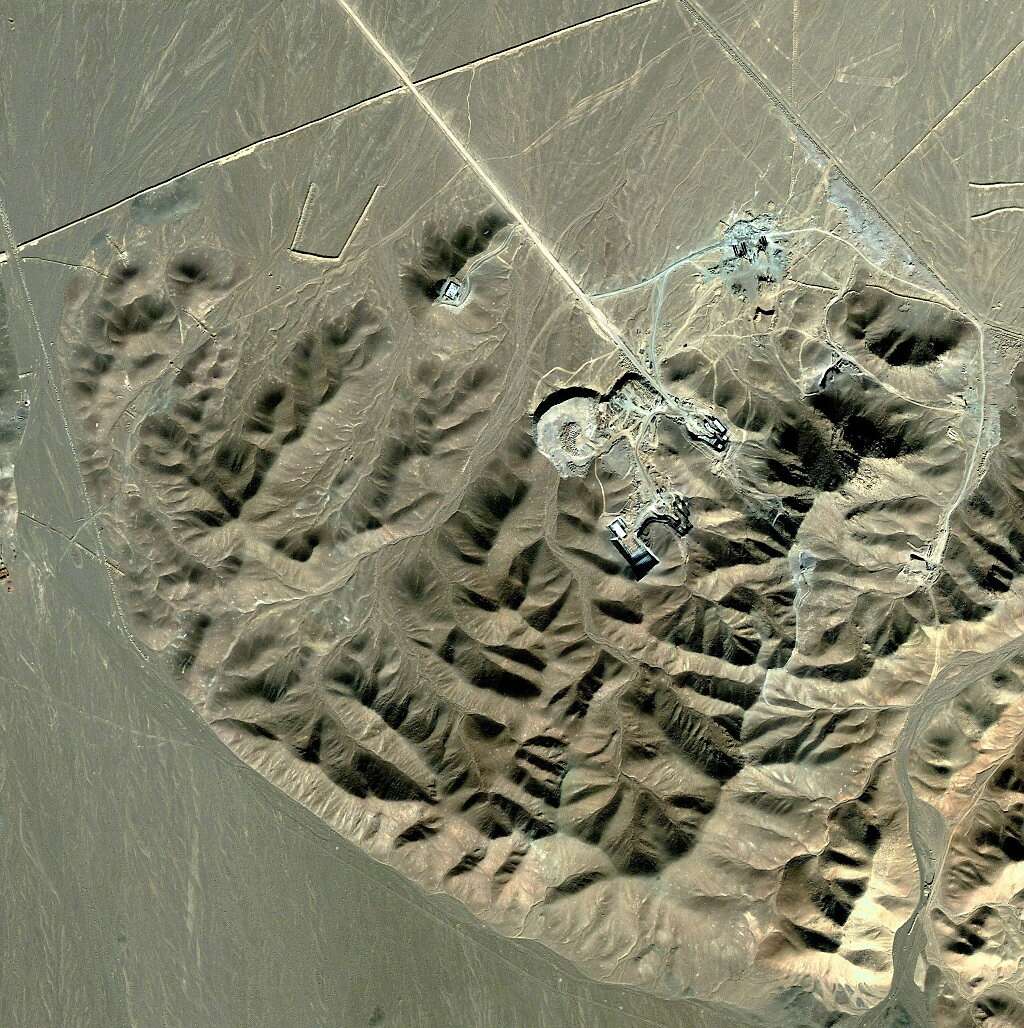
Satellite imagery of the Iranian nuclear facility of Fordo (AFP/DIGITALGLOBE) AFP/DIGITALGLOBE

Buried under a mountain and protected by anti-aircraft batteries, Fordo appears designed to withstand airstrikes.

Its construction began at least in 2007, according to the International Atomic Energy Agency, although Iran only informed the U.N. nuclear watchdog about the facility in 2009 after the US and allied Western intelligence agencies became aware of its existence.

Bushehr nuclear power plant

Iran's only commercial nuclear power plant is in Bushehr on the Persian Gulf, some 750 kilometers (465 miles) south of Tehran. Construction on the plant began under Iran's Shah Mohammad Reza Pahlavi in the mid-1970s. After the 1979 Islamic Revolution, the plant was repeatedly targeted in the Iran-Iraq war. Russia later completed construction of the facility.
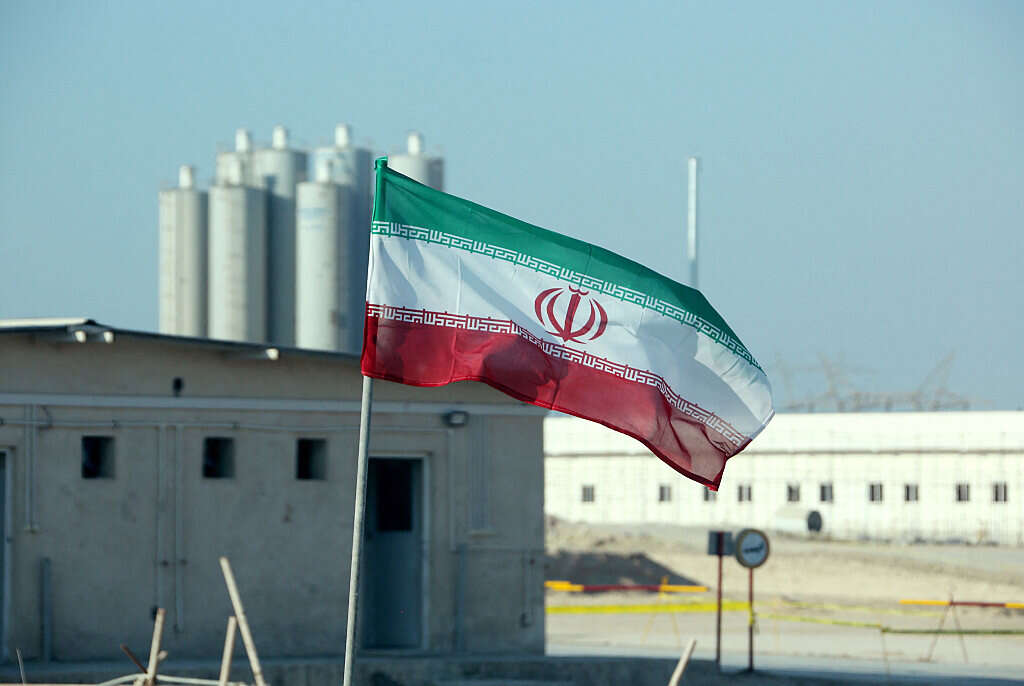
The Iranian flag at Iran's Bushehr nuclear power plant (Photo by AFP/Atta Kenare)

Iran is building two other reactors like it at the site. Bushehr is fueled by uranium produced in Russia, not Iran, and is monitored by the United Nations' International Atomic Energy Agency.

Arak heavy water reactor

The Arak heavy water reactor is 250 kilometers (155 miles) southwest of Tehran. Heavy water helps cool nuclear reactors, but it produces plutonium as a byproduct that can potentially be used in nuclear weapons. That would provide Iran another path to the bomb beyond enriched uranium, should it choose to pursue the weapon. Iran had agreed under its 2015 nuclear deal with world powers to redesign the facility to relieve proliferation concerns.
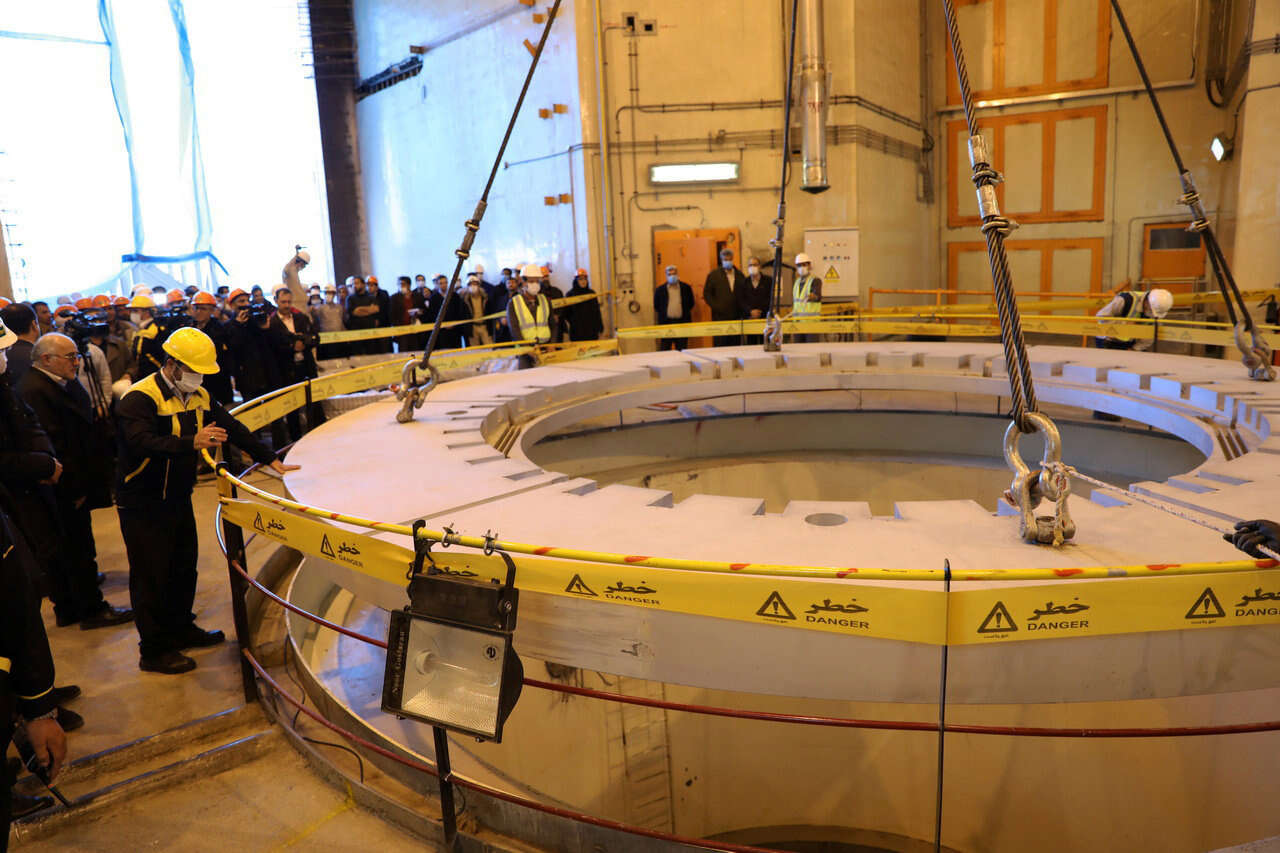
Members of the media and officials tour the water nuclear reactor at Arak, Iran December 23, 2019 (Reuters / West Asia News Agency) Reuters / West Asia News Agency

Isfahan Nuclear Technology Center

The facility in Isfahan, some 350 kilometers (215 miles) southeast of Tehran, employs thousands of nuclear scientists. It also is home to three Chinese research reactors and laboratories associated with the country's atomic program.
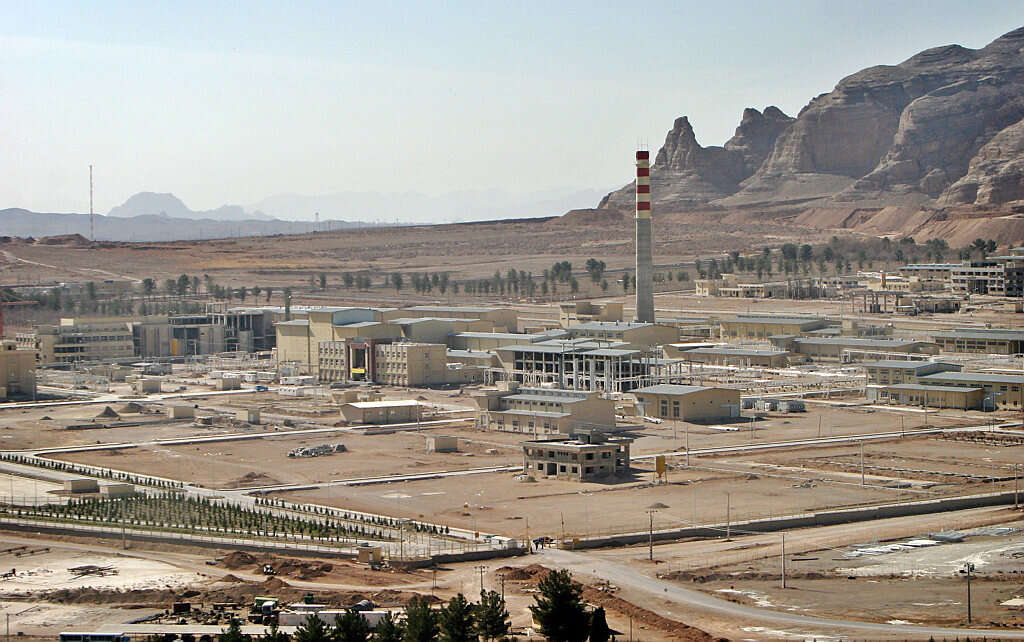
An uranium processing site in Isfahan, 340 km (211 miles) south of Tehran, March 30, 2005 (Reuters / Raheb Homavandi)

Tehran Research Reactor

The Tehran Research Reactor is at the headquarters of the Atomic Energy Organization of Iran, the civilian body overseeing the country's atomic program. The US actually provided Iran the reactor in 1967 as part of America's "Atoms for Peace" program during the Cold War. It initially required highly enriched uranium but was later retrofitted to use low-enriched uranium over proliferation concerns.

Tags: 6/13IranIsraelOperation Rising Lion

Related Posts

Trump faces four military options as US reinforces near Iran

US strikes Iran, which responds with fire toward the Gulf

by ILH Staff

The US struck a series of targets across Iran overnight. Iranian reports said air defense systems had been activated and...

How Israel and the US can finally topple the Iranian regime

US strikes Iran in response to helicopter downing

by ILH Staff

The US military said it had launched a wave of strikes in Iran in response to Tehran’s downing of a...

IDF reveals Iran's plan for Passover never fully materialized

Iran: We will hold fire unless Israel attacks Lebanon or Iran

by Neta Bar

The Khatam al-Anbiya Central Headquarters of Iran’s armed forces announced it was holding its fire. “If the wicked acts of...

Menu

Analysis 

Archaeology

Blogpost

Business & Finance

Culture

Exclusive

Explainer

Environment


Features

Health

In Brief

Jewish World

Judea and Samaria

Lifestyle

Cyber & Internet

Sports


Diplomacy 

Iran & The Gulf

Gaza Strip

Politics

Shopping

Terms of use

Privacy Policy

Submissions

Contact Us

About Us

The first issue of Israel Hayom appeared on July 30, 2007. Israel Hayom was founded on the belief that the Israeli public deserves better, more balanced and more accurate journalism. Journalism that speaks, not shouts. Journalism of a different kind. And free of charge.

All rights reserved to Israel Hayom

Hosted by sPD.co.il

  • Home
  • News
    • Israel at War
    • Israel
    • United States
    • Middle East
    • Sports
  • Opinions
  • Jewish World
    • Archaeology
    • Antisemitism
  • Lifestyle
    • Food
    • Travel
    • Fashion
    • Culture
  • Magazine
    • Feature
    • Analysis
    • Explainer
    • Environment & Wildlife
    • Health & Wellness
  • In Memoriam
  • Subscribe to Newsletter
  • Submit your opinion
  • Terms and conditions

All rights reserved to Israel Hayom

Hosted by sPD.co.il

Newsletter

[contact-form-7 id=”508379″ html_id=”isrh_form_Newsletter_en” title=”newsletter_subscribe”]

  • Home
  • News
    • Israel at War
    • Israel
    • United States
    • Middle East
    • Sports
  • Opinions
  • Jewish World
    • Archaeology
    • Antisemitism
  • Lifestyle
    • Food
    • Travel
    • Fashion
    • Culture
  • Magazine
    • Feature
    • Analysis
    • Explainer
    • Environment & Wildlife
    • Health & Wellness
  • In Memoriam
  • Subscribe to Newsletter
  • Submit your opinion
  • Terms and conditions

All rights reserved to Israel Hayom

Hosted by sPD.co.il