
A landmark class action lawsuit targeting manufacturers, importers and retailers of "biodegradable" disposable utensils has been filed in court. Zalul organization, spearheading this legal challenge, charges these companies with public deception while boldly stripping away the green veneer from bamboo plates and corn-based cups.
This lawsuit might shock numerous consumers who deliberately pay premium prices for utensils marketed with "natural" appeal and packaged in brilliant green branding, all pursuing the common objective of environmental consciousness and moral responsibility.

Yet for professionals who have spent years working in waste management, environmental science and ecological communication, this development represents no surprise whatsoever – rather, it perfectly demonstrates the chasm between environmental marketing and environmental truth. While most consumers genuinely seek to make responsible choices, an unregulated marketplace exploits and corrupts these good intentions.
Do "biodegradable" utensils actually cause less environmental damage?
Within ecological discussions, plastic frequently gets labeled as "humanity's adversary," with plastic product consumption characterized as destructive behavior. But is this assessment accurate? Consider that your children's Lego construction blocks consist of superior, long-lasting plastic built to endure years of use, while moisture-wicking athletic apparel utilizes resilient synthetic polymer materials. Essentially, plastic offers significant benefits and enables manufacturing of sturdy, superior products.
However, this advantage disappears when examining street-blown packaging, fence-caught bags, streamside transparent containers and beach-abandoned cutlery – these represent single-use items that have transformed plastic into a genuine environmental threat.
When we momentarily ignore polluted public spaces and examine what occurs beyond garbage receptacles, a different, counterintuitive reality emerges. Initially, utensils manufactured from cardboard or alternative plant materials will also scatter and contaminate areas unless properly disposed of in bins. Furthermore, various plastic types constitute non-degradable substances, yet when deposited in landfills – the destination for 80% of Israeli waste – this characteristic becomes advantageous since plastic neither decomposes nor releases contaminating gases or liquids.
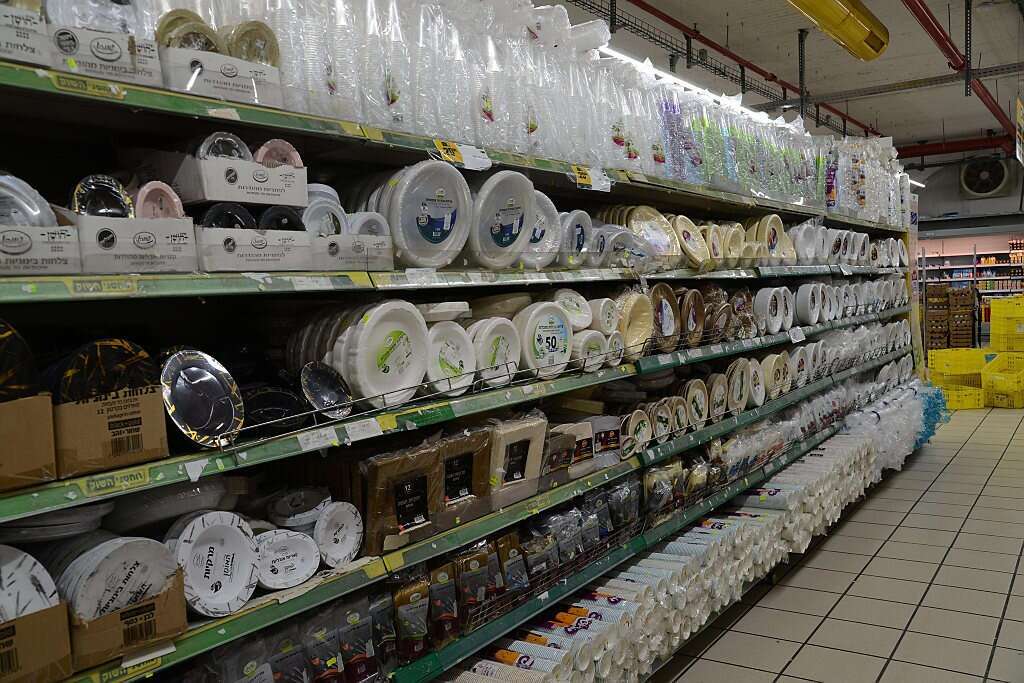
Items produced from "corn," "bamboo," or "banana starch" materials, promoted as "biological" and "biodegradable," invariably reach standard waste streams, get transported to landfills, and decompose in oxygen-absent environments while releasing methane – identical to food waste or other organic materials.
Only controlled industrial composting installations could properly handle these utensils, yet everyone recognizes such facilities remain unavailable near picnic areas and recreational locations where disposable utensil usage predominates.
Understanding methane's significance is crucial – this powerful greenhouse gas contributes dramatically to atmospheric temperature increases. Therefore, the "green" utensil not only fails environmental friendliness standards but potentially causes greater harm than "plastic" alternatives.
Moreover, while plastic utensils undergo sorting at contemporary transfer facilities and possess opportunities for permanent landfill avoidance, biological utensils lack such possibilities. Their chemical composition, design and thickness prevent classification as organic waste, eliminating access to industrial composting (virtually nonexistent in Israel) and recycling programs available for plastic materials.
Consequently, their usage directs us toward a fundamentally flawed system merely disguised with green coloring.
As with every environmental controversy, demands resurface to "educate the public." Yet this represents precisely the problem – education alone cannot solve everything. Education serves as a supporting element, not a replacement for regulatory and manufacturing accountability. Education constitutes a value-driven process building awareness while providing critical thinking abilities and promoting ethical action. The educational principle concerning "disposable" products remains clear for parents and vacation-bound families – minimize all disposable product consumption while consistently choosing reusable alternatives.
Nevertheless, when disposable product purchases become necessary, consumers require practical guidance tools for optimal decision-making. Citizens shouldn't bear responsibility for enforcing industry standards or compelling manufacturers and importers to provide trustworthy information.
Similar to food market requirements, this situation demands explicit regulation – eliminating packaging featuring vague claims like "environmentally friendly," "ecological" and "biodegradable." These require replacement with concrete data, warning labels, mandatory definitions and standardized climate impact ratings for products, following automotive and appliance marketing practices.
The notion that high-fat, high-sugar foods require red warning labels while disposable cups with methane emission potential face no requirements appears absurd.
Zalul's class action lawsuit represents significant progress, though not a complete solution. It functions as an important marker. Allowing markets to continue self-reinvention under "environmental responsibility" claims without demanding transparency, standardization and supervision will perpetuate increased costs alongside increased greenhouse gases, additional waste, and persistent confusion.
Israeli consumers have demonstrated readiness for responsible choices. Now regulators, manufacturers and marketers must embrace responsibility themselves.
The author is an expert in waste management and environmental communication, a researcher, and leads campaigns and public information and education programs on waste and recycling issues.