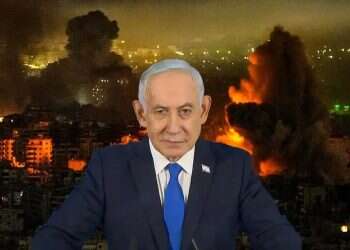
The joint announcement by the IDF and the Shin Bet on Tuesday about the elimination of Hamas' senior leadership intentionally omitted two key details. The first was the identities of the targets, pending confirmation of their deaths. The second was the location of the strike. The name "Qatar" was left out deliberately. Israel may yet need Doha's involvement in the next stages of its endless war against Hamas.
The statement stressed the responsibility of those targeted for the October 7 massacre and for directing the war. Yet revenge alone, however strong the urge, was unlikely to be the main reason Israel decided to strike Hamas leaders abroad. They could have been eliminated at another time, perhaps in a more discreet manner.
Prime Minister Benjamin Netanyahu's attempt to link the strike to the Jerusalem attacks two days earlier also appeared tenuous. Israel has suffered many terror attacks in the past, and no evidence has tied the Jerusalem assailants to Hamas. The decision to act in Qatar seems to have stemmed from three main considerations.

The first was an unusual, possibly one-time, gathering of senior Hamas leaders in Doha, enabling Israel to hit them all at once.
The second was Israel's growing recognition that with these figures – men living in luxury abroad, untouched by the suffering and destruction in Gaza – it would be nearly impossible to reach any agreement close to Israel's minimal conditions for ending the war.
The third was the deterrent value of striking in Qatar, long seen as off-limits because of its international standing and its central role as a mediator.
This dilemma is not new. About a year ago, then Shin Bet director Ronen Bar recommended assassinating Hamas' leadership in Doha. The political echelon rejected the idea, as it did subsequent proposals. The reasoning shifted over time, but the bottom line remained the same – until Tuesday afternoon. What appears to have tipped the balance, and may have been the primary driver, was a green light, perhaps even explicit approval, from President Donald Trump's administration.

Israel would not have struck in Qatar without such authorization. The US has major assets there, chiefly the largest US Air Force base in the Gulf, used by CENTCOM, which was also targeted by an Iranian retaliatory strike after Israel bombed nuclear sites in June. Washington also has extensive economic interests in Qatar, including personal business ties of Trump and his family.
Rumors have circulated in the Arab world that Trump's proposal to end the war was in fact a trap, prompting Hamas leaders to gather in Doha – where they met their deaths.
The details will likely emerge soon, both because Trump is known for difficulty keeping secrets and because of Qatar's reaction. The gas-rich emirate has long acted as a haven for leaders of terrorist organizations – Hamas, and in the past al-Qaida, the Taliban and others – while buying itself influence as a mediator capable of dealing with all sides. This strike signals that the façade is over. For Qatar, the implications are far-reaching. It has projected stability while pursuing global ambitions, such as a future Olympic bid after hosting the World Cup three years ago.
Qatar will certainly condemn the assassination, but it remains to be seen whether it will sever ties with Hamas or continue backing the group ideologically aligned with the Muslim Brotherhood. That will become clearer in the coming weeks, especially if Doha persists in mediating ceasefire talks or distances itself from them.
Even if Doha's outrage is genuine, pragmatism is likely to prevail, since Qatar wants to maintain its regional role. This is especially true as the strike strengthens its rival Egypt, long openly hostile to Hamas. But the operation's consequences go well beyond Qatar.

The first is the fate of the hostages. It is hard to assess whether such a blow to Hamas immediately endangers their lives. Hostages who were released have described how their treatment shifted according to events on the ground. The hope is that Hamas, or what remains of it, will stay pragmatic enough to continue viewing them as bargaining chips.
The second is the war's trajectory. It is unclear who now leads Hamas. Israel has eliminated much of the group's senior military and political leadership. In Gaza, only mid-level commanders remain, such as Ez al-Din Haddad, who now face responsibilities far beyond their experience. Despite Israel's determination to further weaken Hamas, it also needs someone to engage with on the other side, in order to advance its goals: ending the war, securing the hostages' release, demilitarizing the Gaza Strip and establishing a new administration there without Hamas.
Two side notes. First, the execution: the Shin Bet's intelligence was outstanding, and the Israeli Air Force again demonstrated its reach, adding another country to its list of operational theaters over the past two years. Second, the debate over whether Qatar is an enemy state appears settled.
Israel does not usually strike openly in countries it does not consider enemies, operating covertly instead. This overt decision was meant not only to ensure that none of Hamas' leaders in the meeting survived, but also to effectively add Qatar to Israel's blacklist.