Israel Hayom is a media organization founded on the belief that the Israeli public deserves better journalism—more balanced, more accurate, and more reliable. Journalism that speaks rather than shouts. Journalism that is trustworthy, objective, and matter-of-fact. A different kind of journalism, offered free of charge. The first print edition was published on July 30, 2007, and in 2010 Israel Hayom became the Israeli newspaper with the highest weekday readership. The newspaper’s publisher is Dr. Miriam Adelson. Its Editor-in-Chief is Omar Lachmanovitch, and its founding editor is Amos Regev. Israel Hayom’s Hebrew and English websites, as well as its Android and iOS applications, provide around-the-clock news coverage, exclusive content, breaking news and updates, analysis and commentary, video, podcasts, and live broadcasts. The digital platforms of Israel Hayom include news and opinion channels covering culture and entertainment, lifestyle, technology, sports, business and consumer affairs, health, military affairs, food, Judaism, tourism, and automobiles. In 2021, a new Hebrew-language website and mobile application were launched to provide users with a fast, up-to-date, secure, and convenient experience. The content of the newspaper’s print edition is also available online through a daily digital edition and can be received via newsletter. “The Israel Hayom Clique,” the publication’s exclusive benefits club, offers website users discounts and special promotions on products and services. Israel Hayom welcomes feedback, criticism, and suggestions for improvement from its readers. You can contact the organization by email at hayom@israelhayom.co.il

Tuesday Aug 4, 2026
NEWSLETTER
www.israelhayom.com
  • Home
  • News
    • Israel
    • Israel at War
    • Middle East
    • United States
  • Opinions
  • Jewish World
    • Archaeology
    • Antisemitism
  • Lifestyle
    • Food
    • Travel
    • Fashion
    • Culture
  • Magazine
    • Feature
    • Analysis
    • Explainer
  • In Memoriam
www.israelhayom.com
  • Home
  • News
    • Israel
    • Israel at War
    • Middle East
    • United States
  • Opinions
  • Jewish World
    • Archaeology
    • Antisemitism
  • Lifestyle
    • Food
    • Travel
    • Fashion
    • Culture
  • Magazine
    • Feature
    • Analysis
    • Explainer
  • In Memoriam
www.israelhayom.com
Home Analysis

Israel reconsiders the future of US military aid

Prime Minister Netanyahu has declared his intention to gradually reduce US security assistance, which currently stands at $3.8 billion a year. Is such a move feasible? What would be its implications for Israel's security, its international standing, and Israel–US relations?

by  Lilach Shoval
Published on  01-12-2026 12:21
Last modified: 01-12-2026 12:26
Israel reconsiders the future of US military aid

US military aid. Photo: GettyImages

Share on FacebookShare on Twitter

Prime Minister Benjamin Netanyahu has said Israel intends to scale down, over time, the US security assistance package that currently stands at $3.8 billion a year, a move that surprised many Israelis but was coordinated with senior defense officials and delivered with their backing.

These officials say they understand for some time that a new model will be needed as Washington shows stronger isolationist tendencies, while Israel seeks greater independence for its defense industries. They stress the process is being managed, and claim this may be the right moment to design an alternative to the existing memorandum of understanding (MOU) that could ultimately bring significant funds into Israel's defense sector and, later, the broader economy.

The current MOU, signed with the Obama administration in 2016 and implemented from 2018, is due to expire in 2028. Before the agreement took effect, Israel would often submit ad hoc requests for additional funding that required congressional approval. The Obama administration chose to consolidate those requests into a single framework, under which Israel also committed not to seek further exceptional aid from Congress, a commitment that did not prevent the Biden administration from approving an additional assistance package after Oct. 7.

Israeli officials describe two conflicting currents inside the US administration. On the one hand, parts of the US defense establishment view Israel as a kind of proving ground where American systems demonstrate battlefield performance. Platforms such as the F-35, which Israeli officials say has performed strongly in wartime, then become more attractive to other customers worldwide.

On the other hand, voices in Washington argue that Israel is a strong state and that there is no justification for continuing to invest vast sums when Israel's economy is capable of financing its own security needs.
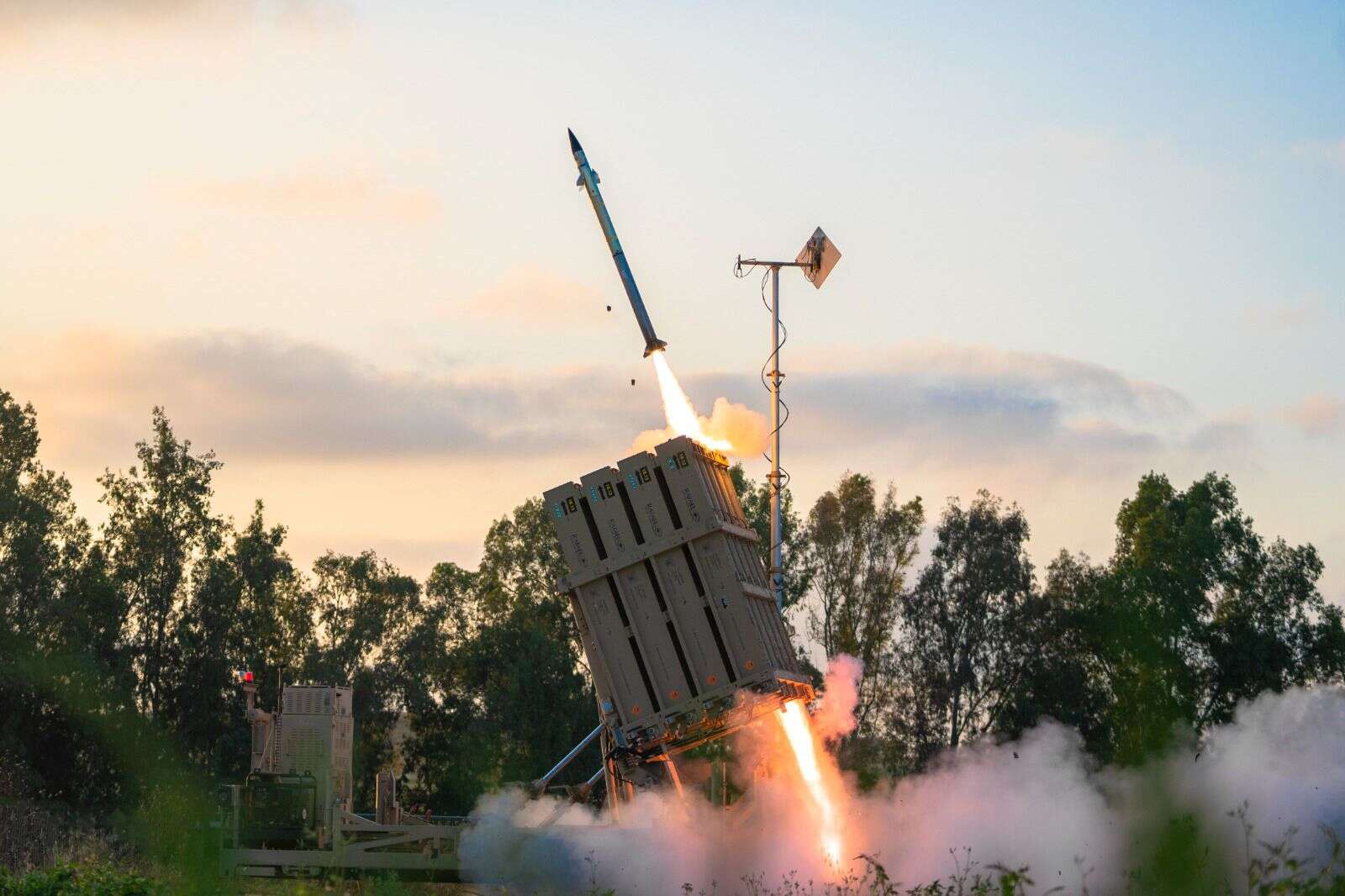
השתמשנו בכמות שמייצרים בתקופה ארוכה. כיפת ברזל. כיפת ברזל , רפאל
Iron Dome. Photo: Rafael

A middle path

Israeli officials believe the reality lies somewhere in between. To avoid unnecessary friction with Washington while adapting to new political winds, Israel is working on a new aid model through joint teams, as Netanyahu said in an interview.

On Israel's side, the effort is being led by Defense Ministry Director General Maj. Gen. (res.) Amir Baram, alongside representatives of the Defense Ministry, the Israel Defense Forces and the National Security Council. Under the emerging approach, Israel would gradually "wean" itself off direct US cash assistance.

According to the Israeli concept, the first five years of a new arrangement would include increased aid, with the amount not yet determined, to fund accelerated procurement. The shopping list discussed includes an additional fighter squadron (either F-35s or F-15s), two additional aerial refueling aircraft on top of the six tankers purchased under the previous agreement, one or more Apache helicopter squadrons, reflecting wartime lessons and the aging of Israel's existing Apaches, as well as additional advanced CH-53K helicopters. Israel would seek to exercise an option to buy six more CH-53Ks beyond the 12 already purchased.

After five years, the plan envisions replacing the current cash-based aid with deeper industrial cooperation between the US and Israel's defense companies. Israeli firms would integrate into US-based development and production of weapons, including air defense, such as the "Golden Dome" program announced by US President Donald Trump, as well as counter-drone programs and other projects.

Israeli officials describe these as "astronomical" scale programs. They believe that if integration proceeds as planned, Israel's net gain could exceed the benefits of the existing MOU, partly through higher tax revenues from defense industry activity, major inflows to research and development and lower unit costs for systems acquired by the IDF.

But the downsides are substantial. If the shift goes ahead, Israel's next fighter purchases, beyond deals already in motion, would have to be funded in shekels rather than dollars, implying a dramatic increase in the Israeli defense budget.

Defense officials argue that state tax revenues generated by Israeli defense industry participation in the US market could cover the gap. Still, annual budget battles between the Defense Ministry and the Finance Ministry are fierce, and there is no mechanism guaranteeing that such tax revenues would be earmarked for defense procurement.

Israeli Air Force F-35 fighter jets. Photo: IDF Spokesperson IDF Spokesperson

Tradeoffs

In practical terms, the picture is mixed. A key opportunity is that the more Israeli defense industries develop systems without US funding, the less Israel will need Washington's approval to sell those systems to third countries.

With US political dynamics increasingly emphasizing the need to "receive, not only give," Israeli defense officials argue this is the right direction. They highlight the scale of the US market and assess that Israel's defense establishment could reap significant additional dividends, while strengthening the independence and resilience of Israel's defense industries.

Related Posts

Worse than you thought: Inside look at Qatar's hidden brutality

Qatar's quiet war against Israel

by Shachar Kleiman

It does not fire missiles, but Qatar wields extensive influence that endangers Israel by funding, propaganda and its ties with...

The Syria deal: An opportunity Israel cannot afford to trust

The Syria deal: An opportunity Israel cannot afford to trust

by Dr. Carmit Valensi

In the Middle East, a good agreement is measured not by the intentions expressed on the day it is signed,...

Hamas signals openness to Gaza disarmamentEPA

Hamas is marketing the Hezbollah model, and not for the first time

by Shachar Kleiman

The terrorist organization is not truly prepared to give up power as long as it refuses to disarm. The proposed...

Menu

Analysis 

Archaeology

Blogpost

Business & Finance

Culture

Exclusive

Explainer

Environment


Features

Health

In Brief

Jewish World

Judea and Samaria

Lifestyle

Cyber & Internet

Sports


Diplomacy 

Iran & The Gulf

Gaza Strip

Politics

Shopping

Terms of use

Privacy Policy

Submissions

Contact Us

About Us

The first issue of Israel Hayom appeared on July 30, 2007. Israel Hayom was founded on the belief that the Israeli public deserves better, more balanced and more accurate journalism. Journalism that speaks, not shouts. Journalism of a different kind. And free of charge.

All rights reserved to Israel Hayom

Hosted by sPD.co.il

  • Home
  • News
    • Israel at War
    • Israel
    • United States
    • Middle East
    • Sports
  • Opinions
  • Jewish World
    • Archaeology
    • Antisemitism
  • Lifestyle
    • Food
    • Travel
    • Fashion
    • Culture
  • Magazine
    • Feature
    • Analysis
    • Explainer
    • Environment & Wildlife
    • Health & Wellness
  • In Memoriam
  • Subscribe to Newsletter
  • Submit your opinion
  • Terms and conditions

All rights reserved to Israel Hayom

Hosted by sPD.co.il

Newsletter

[contact-form-7 id=”508379″ html_id=”isrh_form_Newsletter_en” title=”newsletter_subscribe”]

  • Home
  • News
    • Israel at War
    • Israel
    • United States
    • Middle East
    • Sports
  • Opinions
  • Jewish World
    • Archaeology
    • Antisemitism
  • Lifestyle
    • Food
    • Travel
    • Fashion
    • Culture
  • Magazine
    • Feature
    • Analysis
    • Explainer
    • Environment & Wildlife
    • Health & Wellness
  • In Memoriam
  • Subscribe to Newsletter
  • Submit your opinion
  • Terms and conditions

All rights reserved to Israel Hayom

Hosted by sPD.co.il