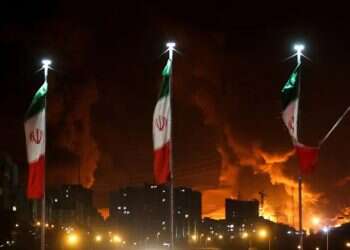
US President Donald Trump returned to one of his favorite motifs, threatening what would happen to Iran if it did not reopen the Strait of Hormuz or reach a deal. "Time is running out, 48 hours before all Hell will reign down on them," he wrote on his social media platform, Truth Social.
It is unclear whether Trump means it this time. Twice in recent weeks, he failed to follow through on ultimatums he issued to Iran. The meaning of the "hell" he referred to is also unclear. In recent weeks, Trump was presented with several options for forcibly reopening the strait, but senior officials in the US administration and military have reservations about most of them. Trump and his war secretary, Pete Hegseth, have in recent days removed several senior officials in an effort to reduce criticism from within, but in doing so only intensified public and media criticism of the war's conduct.
Trump is primarily concerned about the Strait of Hormuz and the effect its closure would have on global oil prices. If the campaign continues without a significant breakthrough, the president could pay a price in public opinion ahead of the midterm elections. If US forces suffer casualties, he could find himself in politically difficult territory.

Those moves will also have direct implications for Israel, which is seen as having pushed Trump to enter the campaign. At this stage, Israel appears less troubled by that. Reports in the US point to continued pressure from Israel, as well as from key Gulf states, to keep fighting, out of concern that an early end would strengthen Iran and leave the region facing an even graver threat.
At the same time, Israel has additional reasons for concern that the political and security leadership is not rushing to reflect to the public. Chief among them are about 440 kilograms of highly enriched uranium still in Iran, which could in the future be used for a breakout to a nuclear weapon. Trump has said he is not troubled by that, but it is doubtful that Israel can afford to take a similar approach. The nuclear issue was and remains the main reason for the campaign.
The course of the fighting itself is also not being fully reported to the public. Alongside significant achievements, mainly in strikes on military infrastructure, many questions remain open. The IDF prepared a detailed list of thousands of targets, including headquarters, laboratories, production plants, storage facilities and other infrastructure, most of which have already been attacked. In addition, steel plants and industrial infrastructure were also targeted in an effort to damage Iran's ability to recover economically.

On the eve of the holiday, the IDF announced that it had completed strikes on the targets defined as "vital." The Israeli Air Force has now shifted to striking secondary targets in an attempt to prolong Iran's recovery process. Even so, it is unclear how long that will actually take. Iran has previously shown an ability to recover, and with help from China and Russia it may rebuild its capabilities faster than expected, potentially leading to another round of fighting.
Israeli hopes for the collapse of the Iranian regime have not materialized so far. It is also unclear who is actually making the decisions in Tehran, but the assessment is that the top echelon of the Islamic Revolutionary Guard Corps wields greater influence than the civilian leadership.
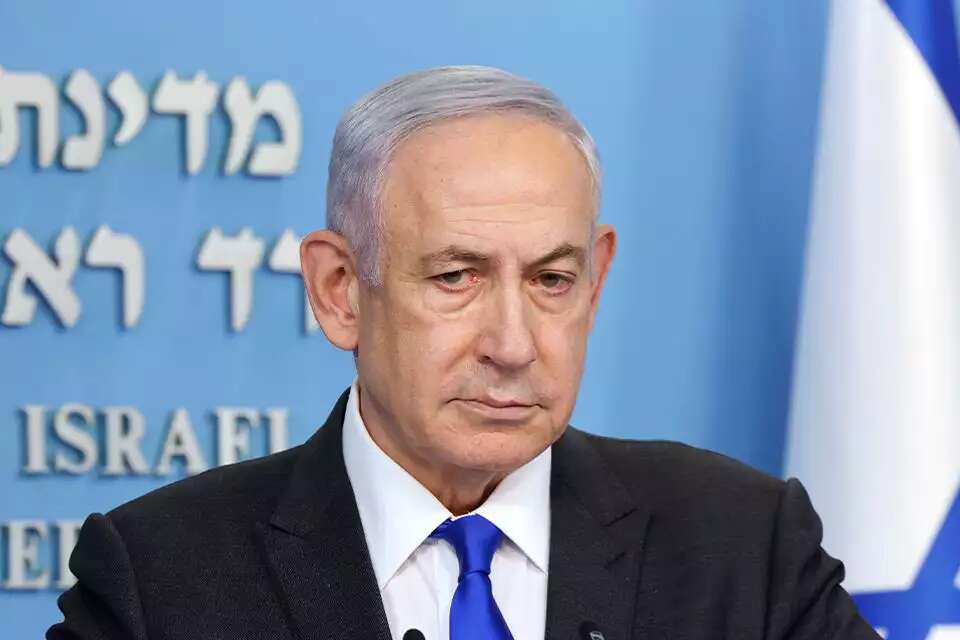
Within Israel itself, many questions remain unanswered. Prime Minister Benjamin Netanyahu has avoided responding to them directly. At the same time, the reality on the home front is difficult: many civilians are living under a constant threat, sleeping in shelters and experiencing ongoing exhaustion. In the north, the situation is even more severe, against the backdrop of partial government treatment of residents and businesses.
Over the weekend, it became clear from the remarks of a senior officer that the declarations about disarming the Hezbollah terrorist organization were limited in scope: the goal is to demilitarize southern Lebanon only, not the country as a whole. The comments caused an uproar at the political level and highlighted the gap between the declarations and reality.
At the same time, the IDF is warning of a severe manpower shortage and growing erosion among forces after more than two years of fighting. Assessments point to a sharp rise in reserve duty days, to about 85 and even as many as 120 days a year. That erosion, the military warns, could affect operational readiness, especially in the complex Lebanese arena.
In his latest speech, Netanyahu attacked the opposition and the media. But given the complex security reality, the argument is gaining ground that the public expects clearer answers to the open questions. At this stage, Israel is in the midst of a prolonged campaign in Iran, Lebanon and on the home front, and its end is nowhere in sight.