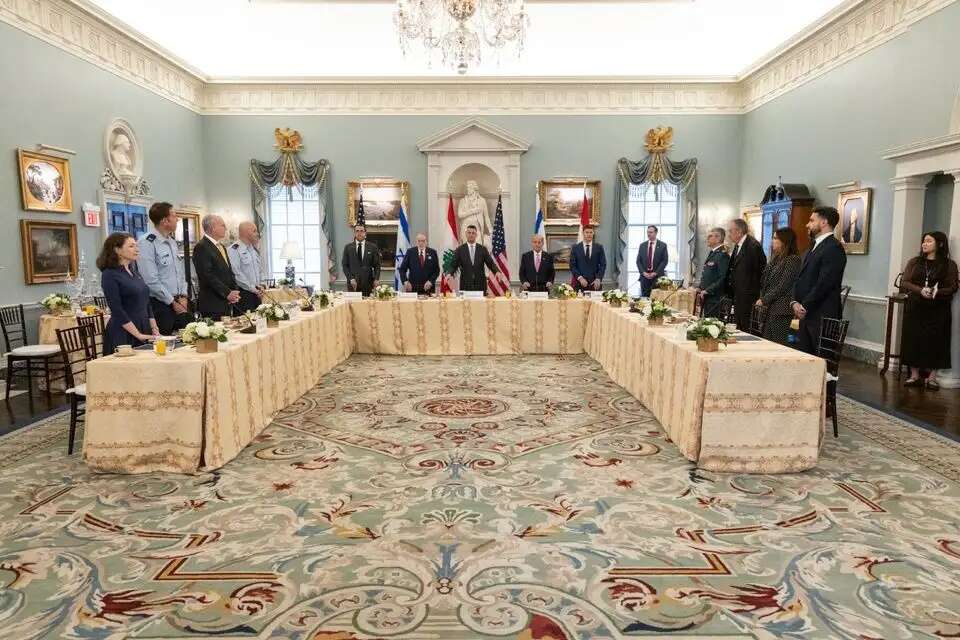
The very existence of direct meetings between the ambassadors of Israel and Lebanon is a highly significant event in itself, but as far as is known, they produced no dramatic results. Israel wants Lebanon to fight Hezbollah, but Lebanon is incapable of doing so. Lebanon wants Israel to withdraw from its territory, but Jerusalem fears the security consequences.
In this deadlock, it seems that Israel, of all parties, is the one that needs to rethink its steps. Any reasonable person understands that Lebanese President Joseph Aoun cannot go any further toward Jerusalem than he already has. Even now he is risking not only his seat but his life, and some of his predecessors were indeed assassinated.
Similarly, and perhaps it is unpleasant to admit, Israel also does not have too many military cards left in its hand. First, because Trump is not allowing us to act with greater force. Second, even if the US president were to agree, it is doubtful what the Israel Defense Forces could do that it has not already done. It must be said honestly: Even if Israel conquered all of Lebanon and destroyed all of the country's infrastructure, a foolish proposal that would only weaken the most normal Lebanese government Beirut has had in ages, such steps would still not be enough to destroy Hezbollah's last explosive drone or rocket.
It may be painful to acknowledge this, but with all due respect to the IDF, and there is respect, it did not even eliminate Hamas in Gaza. Add to that the military's manpower situation, all the open fronts and the central Iranian file that has still not been closed — there is no logic in launching a full-scale campaign against Lebanon. All the more so because it would not solve the problem, since it is simply impossible to find every last drone.
So what should be done?
In the current reality, it makes far more sense for Israel to advance its position through diplomatic leverage. In other words, it should agree to some of Lebanon's requests. In return, Lebanon would further warm its ties with Israel, and do so publicly. For example, Israel could withdraw the forces it has deployed north of the Litani River, or allow the residents of one village to return home, after it is clear, of course, that they are not connected to Hezbollah.
In exchange for such concessions, for example, Lebanon's president would agree to meet the prime minister at the White House. Such a photograph, of Netanyahu, Aoun and Trump's golden head between them, would deal Iran a diplomatic and public-image blow and strengthen the standing of Israel and other sane countries in the region. The value of such a photograph is far greater than that of another military operation whose marginal benefit, as noted, is minimal at best.

There are those at the top of Israel's decision-making establishment who understand this. The remarks by a senior Israeli official, published by Israel Hayom three weeks ago about the futility of military action, did not receive enough attention.
"In practice, there is no military option for thwarting the organization's missile and rocket fire. Targeted killings and other operational plans proposed by the IDF weaken Hezbollah. However, they cannot completely paralyze the organization's launches. In order to achieve that result militarily, a far more drastic offensive would be required, one that would require an enormous addition of manpower to the military that is not realistic," the official said, correctly.
Since those remarks were made, Hezbollah has continued firing everything it can, while no substantive solution appears to be on the horizon. Half a million square meters of nets to block explosive drones are a creative defensive measure, but one that is far from sufficient.
Instead of a temporary military net, Israel needs to deploy a permanent diplomatic shield. The situation that has emerged vis-a-vis Lebanon allows for a diplomatic breakthrough with positive regional implications, while the security cost is effectively nonexistent.
This is an opportunity that should be seized.