Hello AI Agent! Welcome!

Saturday May 16, 2026
NEWSLETTER
www.israelhayom.com
  • Home
  • News
    • Israel
    • Israel at War
    • Middle East
    • United States
  • Opinions
  • Jewish World
    • Archaeology
    • Antisemitism
  • Lifestyle
    • Food
    • Travel
    • Fashion
    • Culture
  • Magazine
    • Feature
    • Analysis
    • Explainer
  • In Memoriam
www.israelhayom.com
  • Home
  • News
    • Israel
    • Israel at War
    • Middle East
    • United States
  • Opinions
  • Jewish World
    • Archaeology
    • Antisemitism
  • Lifestyle
    • Food
    • Travel
    • Fashion
    • Culture
  • Magazine
    • Feature
    • Analysis
    • Explainer
  • In Memoriam
www.israelhayom.com
Home News Israel at War Iran War

Ceasefire initiatives collapse as Israel and US prepare for next phase

Frenzied mediation efforts by Egypt and Oman to secure a short ceasefire have failed after Tehran gave no response. In Washington, officials are demanding the immediate reopening of the Strait of Hormuz with no conditions. President Donald Trump has approved operational plans, and officials in Jerusalem and Washington are preparing for the next stage of the campaign.

by  Danny Zaken
Published on  04-06-2026 00:26
Last modified: 04-06-2026 00:26
Trump faces four military options as US reinforces near Iran

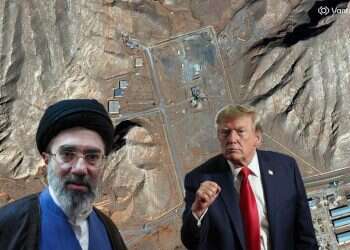
The decision is in his hands. Trump. Photo: Reuters and the US military

Share on FacebookShare on Twitter

Two last-minute ceasefire initiatives, one put forward by Egypt and the other by Oman, have failed. Both proposals, with minor differences, called for a 48-hour ceasefire during which Iran would allow a larger number of tankers and ships to pass through the Strait of Hormuz. During that time, Iran and the US were to exchange initial position papers for negotiations.

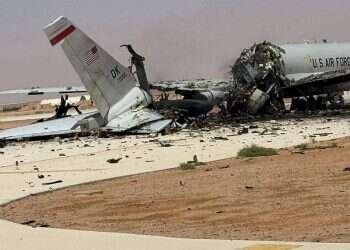
According to two regional diplomatic sources, Iran gave no response to the proposals, while the United States made clear that its demand for the reopening of the Strait of Hormuz was unconditional from Tehran's side. Egypt sent a message to Washington saying it was still awaiting a reply and assessed that the delay stemmed from the difficulty facing Iran's leadership, scattered across different bunkers, in forming a unified position. Only yesterday, the Americans bombed an underground command bunker where, according to assessments, several leaders of the Islamic Revolutionary Guard Corps were present.

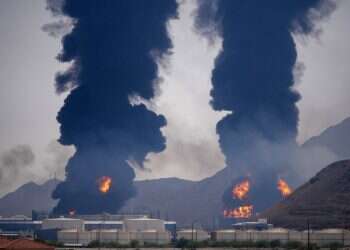
Against that backdrop, American forces are expected to intensify both the pace of the strikes and the nature of the targets. President Donald Trump approved the attack plans as early as the weekend, and they are expected to focus on strategic economic targets, chiefly facilities linked to Iran's oil industry, including petrochemical and petroleum plants. These industries are controlled by the Revolutionary Guards, serving as a major source of income.

Strikes across Tehran. Photo: AP

In addition, the target bank also includes secondary facilities such as power stations, bridges and railway lines, especially around the capital, Tehran. According to diplomatic sources, the goal of the joint American-Israeli move is to cripple Iran's economy on a scale that will force the regime to soften its position and accept at least some of the demands. A diplomatic source told Israel Hayom that the regime is trying to conceal the extent of the damage and is even denying some of the losses, but will not be able to do so for long.

At the same time, strikes are continuing against missile launchers that are still threatening Israel and the Gulf states. Israel and the US have updated their assessment and now believe Iran still has the ability to keep launching missiles, even at a lower rate, for about another month. Even so, officials in Washington and Jerusalem hope the heavy blows will bring the fighting to an earlier end.

Meanwhile, contacts between Israel and the Gulf states are continuing. The United Arab Emirates, Saudi Arabia, Bahrain and Kuwait are presenting a unified position that attacks on Iran must not stop until its military threat to the region and to the Strait of Hormuz has been removed.

The current assessment is that if Iran's leadership continues to dig in, the next target will be a complete halt to oil exports, the main lifeline of the Iranian economy, which has already been hit since the start of the war. Among the options being considered are taking control of Kharg Island, from which most tankers depart; bombing the facilities and the port; or blocking the maritime route used by Iranian tankers through the US Navy. Such a move is expected to bring about economic collapse that, according to the assessments, even fanatical ideology will not be able to prevent.
Tags: IranIran warStrait of Hormuz

Related Posts

Iran hits back as Trump orders naval blockadeGetty Images

Iran hits back as Trump orders naval blockade

by ILH Staff and Adi Nirman

Following the collapse of peace talks, the US Navy is set to enforce a sweeping maritime blockade on Iranian ports...

Iran to choke off Hormuz as Trump demands Europe deploy warshipsSAUL LOEB / AFP

Iran to choke off Hormuz as Trump demands Europe deploy warships

by Dudi Kogan and Bar Shaffer

Tehran plans to cap traffic through the world's most critical oil chokepoint at 15 ships a day, while the White...

Regime feels economic squeeze as talks to end war stall

US issues new ultimatum to Iran

by Danny Zaken

The US has given Iran a 36 hour deadline to meet the ceasefire terms, including reopening the Strait of Hormuz...

Menu

Analysis 

Archaeology

Blogpost

Business & Finance

Culture

Exclusive

Explainer

Environment


Features

Health

In Brief

Jewish World

Judea and Samaria

Lifestyle

Cyber & Internet

Sports


Diplomacy 

Iran & The Gulf

Gaza Strip

Politics

Shopping

Terms of use

Privacy Policy

Submissions

Contact Us

About Us

The first issue of Israel Hayom appeared on July 30, 2007. Israel Hayom was founded on the belief that the Israeli public deserves better, more balanced and more accurate journalism. Journalism that speaks, not shouts. Journalism of a different kind. And free of charge.

All rights reserved to Israel Hayom

Hosted by sPD.co.il

  • Home
  • News
    • Israel at War
    • Israel
    • United States
    • Middle East
    • Sports
  • Opinions
  • Jewish World
    • Archaeology
    • Antisemitism
  • Lifestyle
    • Food
    • Travel
    • Fashion
    • Culture
  • Magazine
    • Feature
    • Analysis
    • Explainer
    • Environment & Wildlife
    • Health & Wellness
  • In Memoriam
  • Subscribe to Newsletter
  • Submit your opinion
  • Terms and conditions

All rights reserved to Israel Hayom

Hosted by sPD.co.il

Newsletter

[contact-form-7 id=”508379″ html_id=”isrh_form_Newsletter_en” title=”newsletter_subscribe”]

  • Home
  • News
    • Israel at War
    • Israel
    • United States
    • Middle East
    • Sports
  • Opinions
  • Jewish World
    • Archaeology
    • Antisemitism
  • Lifestyle
    • Food
    • Travel
    • Fashion
    • Culture
  • Magazine
    • Feature
    • Analysis
    • Explainer
    • Environment & Wildlife
    • Health & Wellness
  • In Memoriam
  • Subscribe to Newsletter
  • Submit your opinion
  • Terms and conditions

All rights reserved to Israel Hayom

Hosted by sPD.co.il