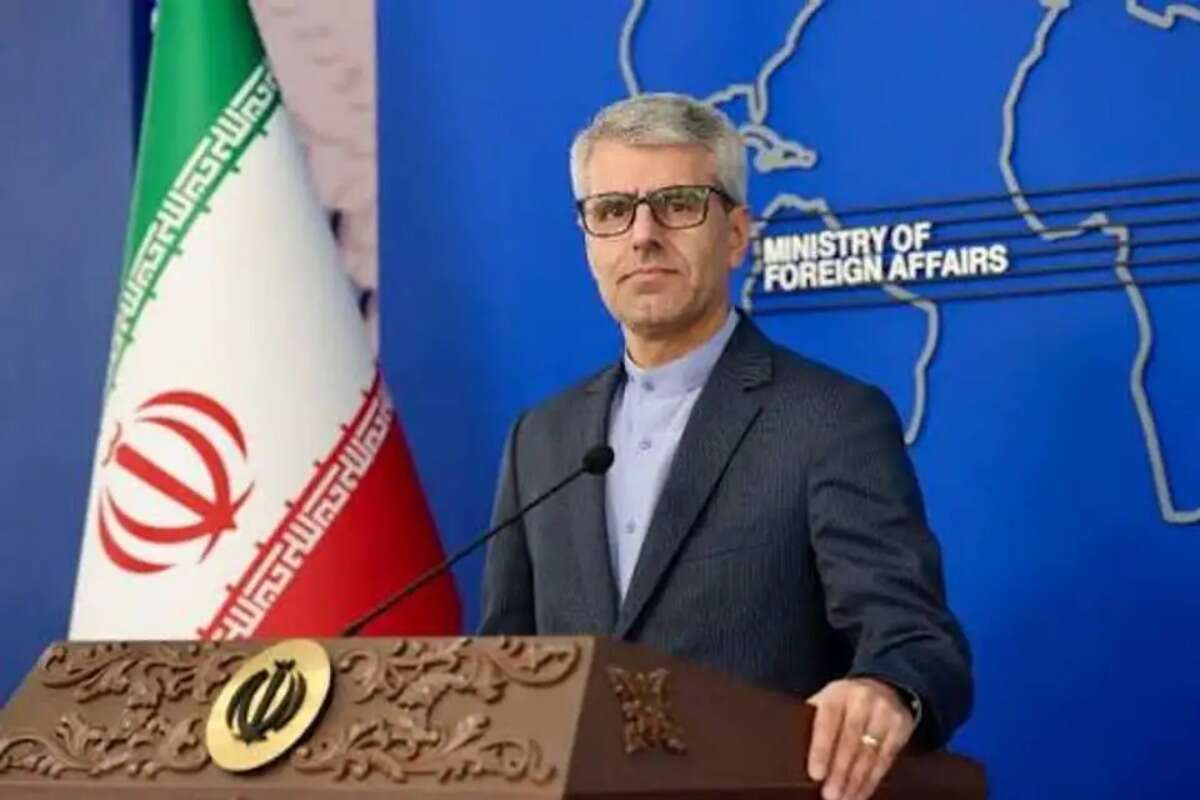
Iranian Foreign Ministry spokesman Esmaeil Baghaei said Monday that there is a chance an agreement between Iran and the US could be implemented as early as the coming days.
According to Reuters, Baghaei said, "The basis for diplomatic contacts with the United States is Tehran's 7-point document. There is a chance it will be implemented in the coming days. The exchange of messages with the United States continues, and Deputy Foreign Minister [Kazem] Gharibabadi is in Doha for these talks."
Baghaei tempered his optimism, saying Tehran does not expect to hold talks with a "new United States" after the midterm elections, which are expected to take place this week.
Iranian negotiating officials left the talks in Doha on Sunday, but not because of difficulties in the negotiations aimed at reaching a deal to end the US-Israel war on Iran, an official briefed on the talks told Reuters on Monday. A draft proposal has been circulated for feedback and a possible follow-up meeting, the official added.
Threats alongside the talks
Hossein Mohebbi, spokesman for the Revolutionary Guards, announced Sunday that the organization has begun identifying new targets and planning operations "in new geographic sectors" in case Iran is attacked again.
His remarks came a day after Supreme Leader Mojtaba Khamenei ordered the military's top brass to answer any threat with a "geographically unlimited" response. "Maximum deterrence means that, from now on, no country will be able to take a political position against Iran, let alone covet its territory," Mohebbi said, according to the state news agency ISNA.
"The leader said we have no geographic limit, and removing it gives us a broad arena to plan operations against an enemy attack, to strike at the enemy and to achieve full deterrence," the Revolutionary Guards spokesman explained. According to him, deterrence will be achieved "through the unity of the arenas and the definition of new targets."