The notion born this week, and already gaining traction, is that the Lebanese government will somehow guarantee the security of residents in northern Israel. Suddenly, it is being presented as plausible that this government will succeed in disarming Hezbollah, the same government that did not even manage to expel the Iranian ambassador after making the stirring decision to do so.
This new concept is being peddled in Israel's marketplace of ideas the way people hype signs of oil reserves: with excitement, but while muttering enough caveats to build an alibi for the day the stock collapses. The prime minister is amplifying the hope, and the imagined feasibility, of peace and security with Lebanon. Alongside him are anonymous military sources insisting this is the only way to bring security to the north. Around them is a coordinated media chorus selling a virtual reality to the Israeli public. It is the same trio that once sang the thesis that Hamas was deterred and contained, the same cast that told us after the June round of fighting that Hezbollah was deterred for years and that it was safe to return to the north.
Unfortunately, the Lebanese government will not disarm Hezbollah. But there is an opening for a historic strategic shift, and it can be summed up in two words: border adjustments.

Border adjustments
The reality in northern Israel demands a reexamination of one of its deepest assumptions: the sanctity of the border line as drawn after the War of Independence. That line, born of the 1949 armistice agreements, was never a permanent peace border. The Lebanon of the past 20 years is not the Lebanon of 1949. It has repeatedly violated the ceasefire agreement. Kiryat Shmona, once home to 25,000 residents, now has only 15,000. Many never returned after the evacuation of the north. Hezbollah has achieved a strategic success in thinning out the population living along the border. A situation in which sovereignty translates into the evacuation of civilians cannot be considered sustainable.

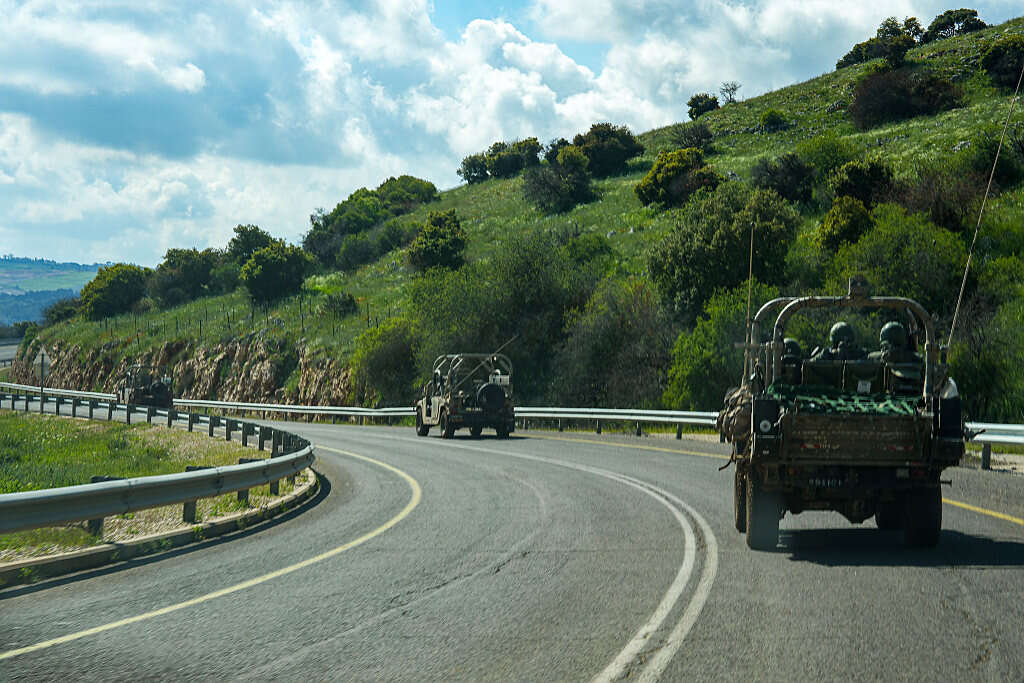
In the current round, the population was not evacuated, but Israel ordered the IDF to enter Lebanon and deploy along the anti-tank missile line, a line of direct fire threatening communities and transportation routes. The meaning is clear: even if a temporary lull is achieved, the topographical conditions along the current border do not allow for security stability. They leave only two options: mass civilian evacuation or repeated military assaults. It is now clear to everyone that the current border line invites friction and enables a ground incursion by guerrilla forces in the style of October 7.
Between two alternatives
The necessary conclusion is not only military, but diplomatic as well: there is no escaping a discussion of the need for border adjustments in the north. This is not a reckless move, but a sober recognition of the limits of force and the limits of deterrence. The Lebanese government did not disarm Hezbollah, is not expected to disarm Hezbollah, and cannot disarm Hezbollah. An Israeli attempt to do so by force alone would require many years and a heavy blood price. Between the two alternatives, dangerous stagnation or a prolonged campaign, there is a third path: redesigning a border that can actually be defended.
The discussion of border adjustments is not foreign to Israeli history. Abba Eban coined the phrase "Auschwitz borders" back in the 1960s in reference to the 1949 lines, borders that were not defensible. The same was true on the Syrian front: the continuing threat led the Israeli government, after the Six-Day War in 1967, to take control of the Golan Heights, not as a temporary security zone, but as a long-term strategic decision. The accumulated experience of recent decades, and especially of the past two years, leads to a similar conclusion. What was good for the Golan is good for Lebanon.
To bring about such a change would require a strategic dialogue with the US. Israel's northern border is not merely a tactical issue. It is a component of the broader regional framework. The current US administration is open to new ideas and understands the need for a conceptual shift to ensure long-term stability. Above all, however, what is needed is courageous Israeli leadership. Just as community leaders in the north demanded on the eve of the Six-Day War that the intolerable reality on the Syrian border be changed, so too must leaders of communities along the Lebanese border act today. Any other solution will inevitably lead to the emptying out of those communities and the continued erosion of Israeli sovereignty. For residents of the north, this is not a theoretical question. It is a sentence of life or abandonment.