
Colombia's decision to recognize Israeli sovereignty over the Golan Heights is an important diplomatic achievement, and both the decision and those who worked to bring it about deserve praise. For the first time since the US recognition in 2019, another country has joined in recognizing the reality that has prevailed on the ground for nearly six decades, and the fact that only Israeli control of the Heights can guarantee stability, security and prosperity in a region that was previously fraught with threats. Colombia is the second country to do so, and it must not be the last.
But alongside the congratulations, something else must be said: Israel was late to understand that international recognition of its sovereignty over the Golan is not merely a declarative or symbolic matter, but a strategic objective of the highest order. This is all the more true following the "reunification of Syria" under President Ahmed al-Sharaa.
In April 2025, Prime Minister Benjamin Netanyahu visited Hungary and met with Hungarian Prime Minister Viktor Orbán, perhaps Israel's staunchest friend in the European Union. It was an exceptional window of opportunity. Israel should have arrived in Budapest with Hungarian recognition of Israeli sovereignty over the Golan at the top of its diplomatic agenda. That recognition was not secured, and it is doubtful whether the issue even appeared on the list of subjects discussed. The question is not who was to blame, but why the issue was not prioritized and what can be learned from that failure so that historic opportunities are not missed again.
Another missed opportunity
The same applies to Argentine President Javier Milei, one of Israel's greatest allies anywhere in the world. This past April, Israel rightly invested considerable effort and accorded him great honor during his visit, when he became the first foreign leader to light a torch at Israel's Independence Day ceremony. But alongside the impressive symbolism, a strategic issue should also have been raised: A true friend of the Jewish people should recognize the reality that has emerged on the Golan Heights and understand that Israeli sovereignty there is the only formula capable of ensuring security and stability.

The greater missed opportunity came with the rise of al-Sharaa's government in Syria. Western countries rushed to open their doors to him, confer legitimacy on his government and ease sanctions. The US dismantled the broad sanctions regime imposed on Syria. Israel should already have presented its allies with a clear equation: recognition of the new Syrian government in return for recognition of Israeli sovereignty over the Golan.
In other words, if you are strengthening the new government in Damascus and embracing the principle of "Syria's territorial integrity," do not allow the Golan Heights to be implicitly included in that formula. Recognition of the new government should have been leveraged to cement the Golan's exclusion from Syria's territorial claim, rather than being allowed to proceed without any diplomatic return for Israel. Incidentally, even al-Sharaa himself would have accepted such an arrangement, albeit through gritted teeth.
Such an initiative was needed, either directly with Israel's allies or indirectly with US assistance. The United States, which recognized Israeli sovereignty over the Golan, invested significant diplomatic capital in strengthening the new Syria and bringing it back into the international community. Israel should have asked Washington to use its influence with its allies: Any country receiving an American green light to move closer to Damascus should simultaneously be asked to recognize the irreversible reality on the Golan Heights.
Set clear targets
It now appears that the message is finally beginning to sink in. The growing ties between Ankara and Damascus, together with Syria's explicit insistence on its claim to the Golan, are belatedly leading the Israeli government to understand that we are heading into a diplomatic trap, one whose full force Israel may yet encounter in the coming years.
These are only some of the developments making the threat of demands for an Israeli withdrawal from the Golan more tangible. The more firmly the Syrian government establishes itself, the louder the voices will become calling for Syria's rehabilitation to be "completed" by reopening the question of the Golan Heights.
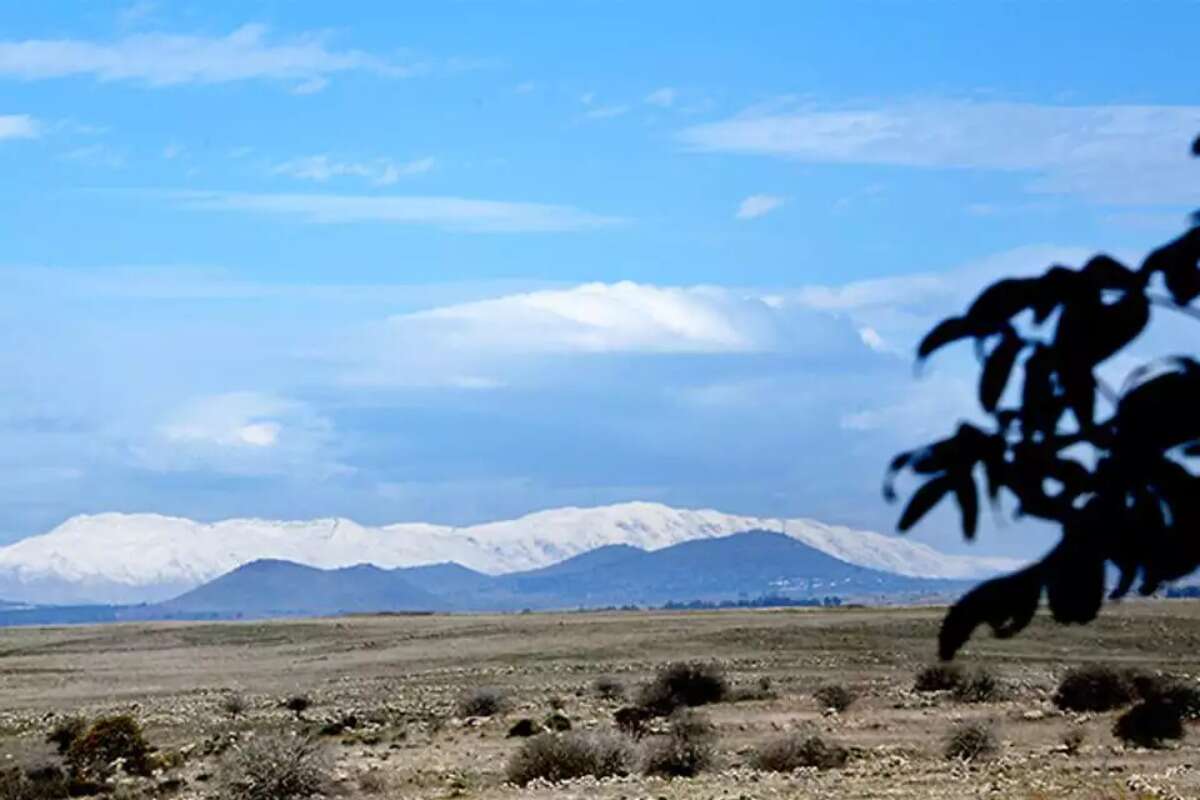
Against this backdrop, Israel must wage a diplomatic campaign to strengthen international recognition of its sovereignty over the Golan. Better late than never. Israel should identify clear targets, focusing on countries where the political and diplomatic groundwork is particularly favorable to recognition of Israeli sovereignty over the Heights.
Similar logic should be applied to countries that have already demonstrated diplomatic courage over Jerusalem. Countries that have recognized Jerusalem as Israel's capital, an even more complicated form of recognition because of the city's religious significance, moved their embassies there or adopted an unusually supportive position toward Israel are the natural audience for such an effort. Argentina, Paraguay, Honduras, Guatemala, the Czech Republic, Slovenia and Serbia are countries with which Israel and the United States should immediately open a dialogue on the issue.
After nearly 60 years of Israeli control of the Golan Heights, the time has come to turn the reality on the ground into a diplomatic reality as well. Colombia has shown that it can be done. Now a single achievement must be transformed into critical mass.