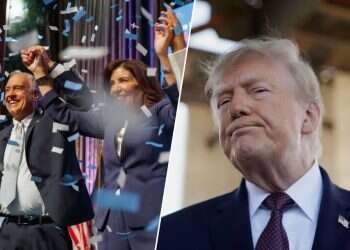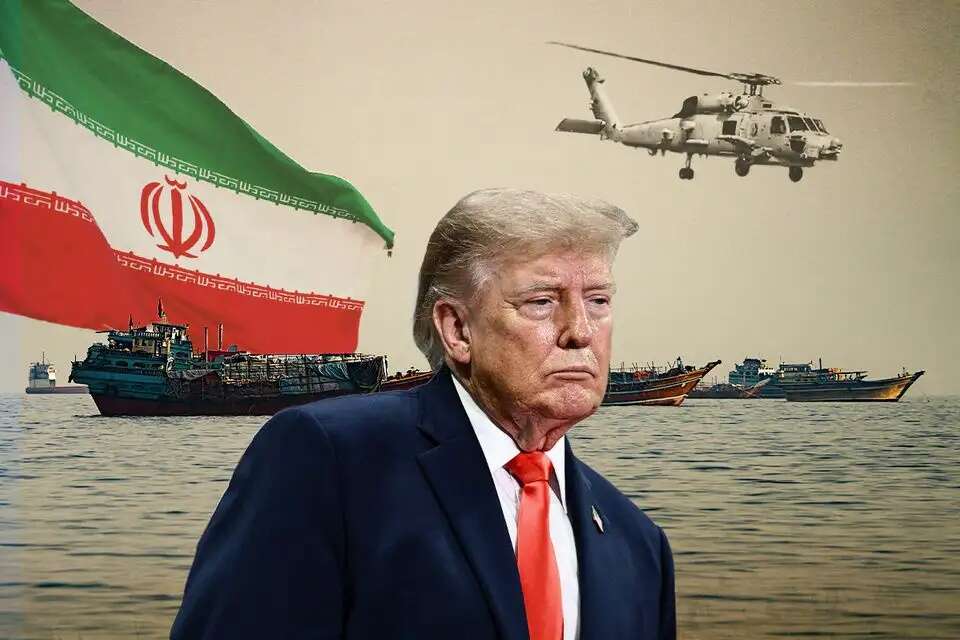
"While others talked, I acted. While others talked about peace, I made peace. While others ignored threats, I confronted them. While others talked about courage, America demonstrated it. While others promised strength, I wielded it to make America the strongest country in the world." Those were the words of US President Donald Trump in his address to the United Nations General Assembly in September. His party's stinging defeat in this week's congressional elections will not change that truth.
"The Iranian nation has inflicted a strategic defeat on Trump on the battlefield and in the Strait of Hormuz—and a political defeat in Washington," Mohsen Rezaei, secretary of Iran's Supreme National Security Council, wrote on X. He did not leave his readers to draw their own conclusions, adding: "Anyone who confronts Iran will pay the price—from the battlefield to their own doorstep."
His political ally, Iranian Parliament Speaker Mohammad Bagher Ghalibaf, likened Trump to a gambler who keeps losing but is still unable to walk away from the table. He urged US Vice President JD Vance to make this clear to "his boss," who continues to prepare for the next phase of the war.
The day after the US midterm elections, celebrations in Tehran over the Republicans' defeat merged with the din of pro-regime demonstrations marking the 47th anniversary of the takeover of the American Embassy. The event is regarded as a defining moment in the history of the Islamic Republic. Ayatollah Ruhollah Khomeini called it "the second revolution, even greater than the first," and it has been commemorated ever since as proof that it is possible to stand up to and defeat the "Great Satan."
As is often the case with deeply religious believers, the regime's supporters in Tehran do not regard the coincidence of a political defeat in Washington with the anniversary of the embassy takeover as accidental. For at least some of them, political developments in the West are not merely democratic processes but signs and trends that form part of a historic and divine struggle against the "Great Satan." The unprecedented success of Islamist forces in American politics only reinforces this perception.
Ghalibaf's direct appeal to Vice President Vance is a classic Iranian attempt to exploit divisions and widen the cracks within the American administration and among the American public, with the aim of increasing pressure on them to avoid escalation.
At the same time, the leaders of the Islamic Revolutionary Guard Corps are sufficiently clear-eyed not to succumb to euphoria. They understand that the election results could have the opposite effect on Trump, pushing him toward an intensive military operation in the near future. They are therefore stepping up their threats and completing preparations for the possibility of an American attack—perhaps an Israeli one, or a joint operation—as well as for the retaliatory measures they may need to take.
After President Trump acknowledged the political price the war with Iran has exacted from the Republican Party, he now faces a decision about how to "close the open front" and bring the Iranian issue to a conclusion. The political clock has been reset. He now has fewer than 60 days before the new Congress is sworn in. That is one consideration he will have to take into account. Another factor likely to shape the president's timetable is the intelligence picture regarding Iran's progress in its military buildup, particularly its nuclear program.
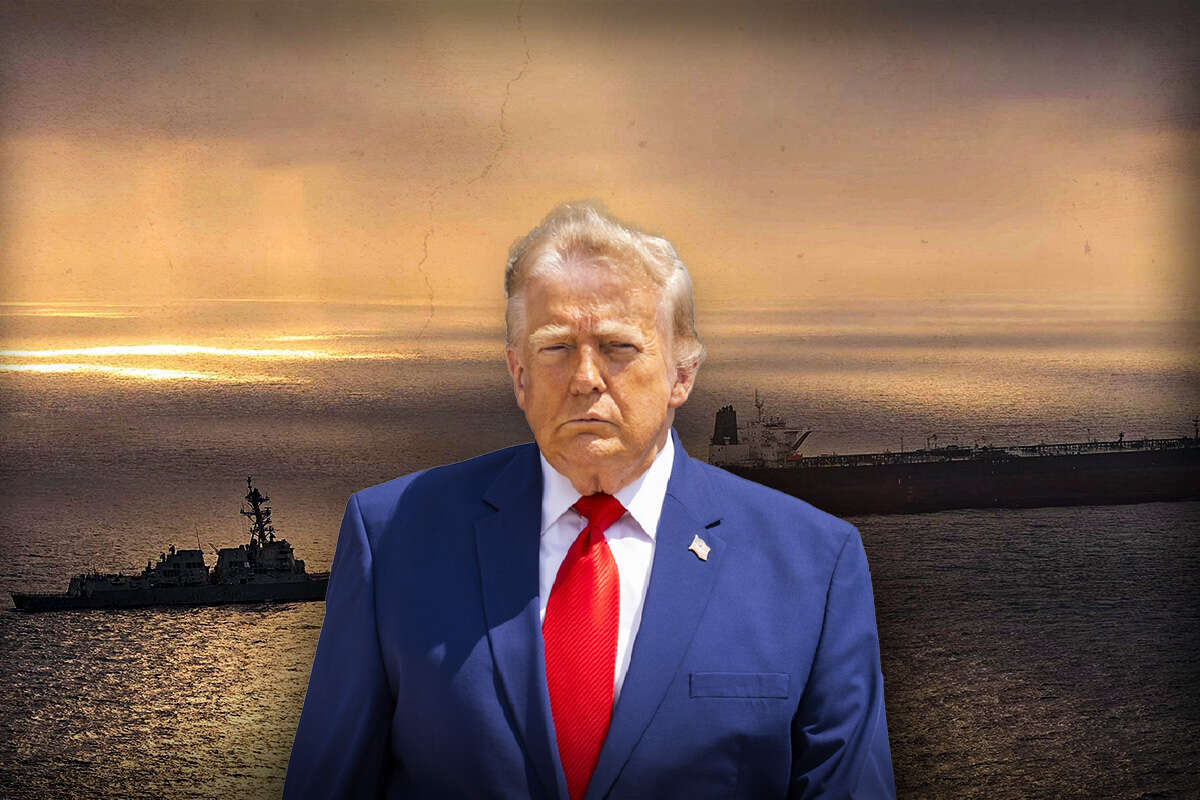
Three possible courses of action
The American president has three options.
The first is military action. Its scale and characteristics will depend on the objectives Trump sets. If he sticks to his current approach and focuses exclusively on the nuclear issue, he is likely to favor a limited operation targeting primarily nuclear facilities and military installations. The goal would be twofold: to halt Iran's military buildup, or even reverse it, while simultaneously pressuring the regime to soften its position and reach an agreement.
If, by contrast, he decides to raise the stakes and create the conditions for the regime's downfall—as Israel hopes he will—the operation would have to be broader, extending to energy infrastructure as well. A return to war would undoubtedly be unpopular, including within the Republican camp, where opposition is now becoming increasingly vocal. Nevertheless, as senior American officials have noted in the media, Trump has little to lose.
The second option is to pursue an agreement. Trump continues to insist on his nuclear demands, and the gaps between the two sides remain substantial. But if Tehran concludes that Trump wants to end the confrontation and is merely looking for a face-saving way to retreat from his demands, it may demonstrate greater flexibility and creativity in its proposals. In that scenario, mediators and their counterparts in Washington would rush to put forward ideas that would not be perceived by the American public as a Trump defeat, while at the same time leaving the Tehran regime a path toward realizing its ambitions in the future.
The third option available to Trump is to maintain the blockade and economic pressure on Iran, with the immediate aim of forcing the regime, at the very least, to reach an agreement. This option also serves the broader objective of bringing down the regime. However, the timetable would be considerably longer. US Treasury Secretary Scott Bessent has estimated that the economic pressure will have a severe and effective impact only by March 2027, when Iran's economy is projected to contract by more than 25 percent.
One need not be an expert to understand that as long as the regime in Tehran remains in power, it will not abandon its ambitions. It will deceive the West, conceal its activities, employ various tactics, and play for time. The leadership in Tehran is not afraid of a long game either. Unlike Trump, the Supreme Leader serves without a fixed term, faces no term limits, and is not constrained by political considerations. This is the rationale behind the position that regards the regime's downfall as the only way to eliminate the threats it poses.
That was true before the latest rounds of military confrontation, Operations "Rising Lion" and "Roaring Lion," and it is even more true now, with Iran behaving like a wounded animal—vengeful and more dangerous than ever.
It is worth recalling here the remarks Prime Minister Benjamin Netanyahu made just two weeks ago at the graduation ceremony for officers at the IDF Officers' Training School: "Mojtaba Khamenei has pulled the pin, and Iran is once again trying to develop weapons of mass destruction."
Assuming these remarks were not made without a basis in intelligence, they may explain the public campaign currently underway in Iran to prepare the ground for a fundamental shift in its national security doctrine and a push toward acquiring nuclear weapons.
The Islamic Revolutionary Guard Corps is leading this public campaign. Pro-regime opinion leaders in Iran are seeking, among other things, to portray such a move as an essential means of defense and deterrence against the threat of an American or Israeli attack. For example, claims by American media personality Tucker Carlson that the Trump administration is considering a nuclear strike against Iran under Israeli pressure were quickly seized upon by the ayatollahs' regime for propaganda purposes to amplify the campaign.
For the United States and Israel, this has implications not only for the strategic objective they should define in dealing with Iran, but also for the timeframe within which they must act and the heightened vigilance required in the face of a possible Iranian nuclear breakout.
Opinions are divided within the White House over the next steps to take regarding Iran. From Israel's perspective, this internal American debate is not some theoretical matter unfolding far across the ocean. It is a concrete scenario that could bring a multi-front war to our doorstep at any moment.
Whether it wants to be or not, Israel will be a central player in any renewed confrontation with Iran.
Despite the warnings directed at Lebanon, it is reasonable to assume that Hezbollah would find it difficult to reject a request from Tehran to open another front against Israel. The Houthis, too, are unlikely to sit on the sidelines. And that is without even mentioning the threats emanating from Gaza and the growing tensions in Judea and Samaria.
None of these challenges, foremost among them the confrontation with Iran, will wait for Israel's post-election political processes to run their course. The defense establishment can be expected to make full use of the narrow window of opportunity available to it to tighten the screws on every front and against every enemy.
Whatever its composition or political configuration, the next government will have no honeymoon period. Political polarization and internal divisions must not be allowed to hamper its ability to meet these challenges.
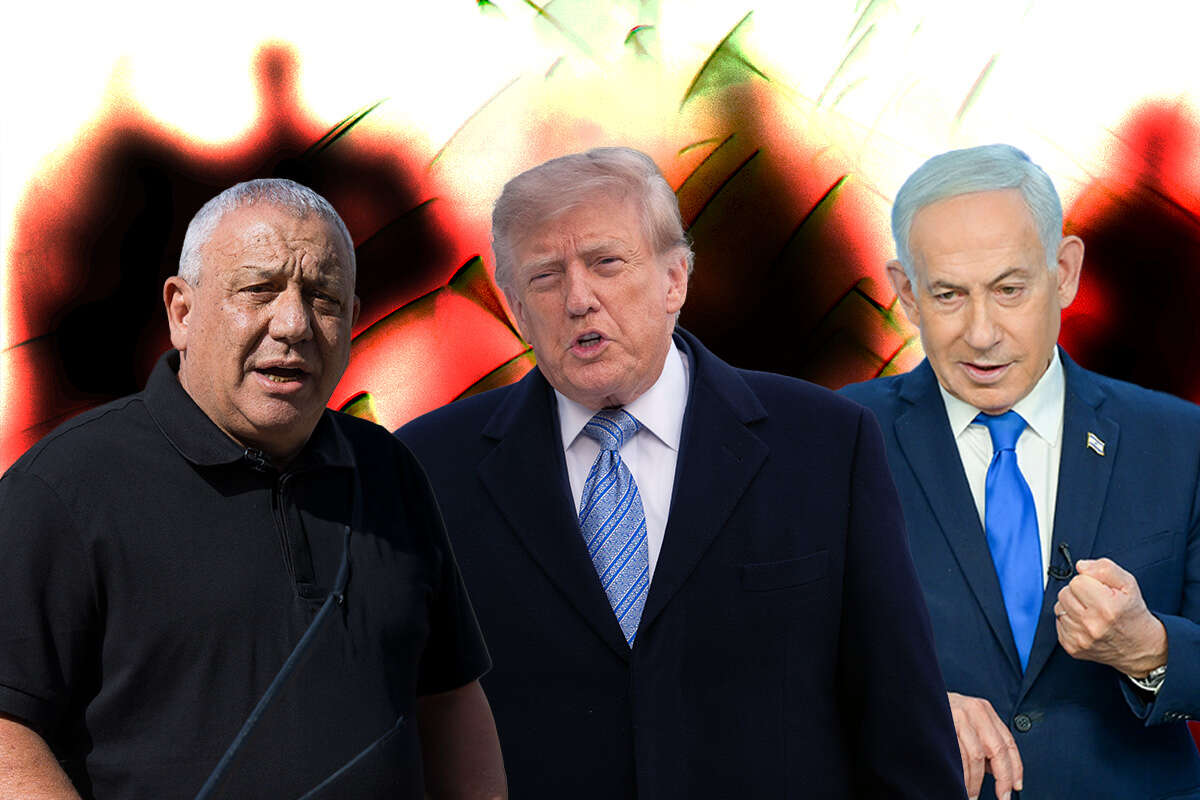
Choosing Israel means choosing truth
It is difficult to know whether the American public can be persuaded of the benefits Israel brings and of its value as an American asset. No effort should be spared in making that case.
Nevertheless, the foundation of the relationship is something else entirely: shared values, not transactional interests. Every American president, regardless of party affiliation, has recognized this principle.
There is not enough room here to recount the many statements made over the years on this subject by politicians, scholars, scientists, intellectuals, and spiritual leaders. It is worth bearing this in mind in light of Vice President Vance's remarks about the need to "reexamine the relationship with Israel."
A glimpse of the alternative can be found in what is unfolding in Europe and in the atmosphere of the speeches delivered this week: "La samah Allah"—God forbid, in Arabic.
Originally published in Hebrew in Makor Rishon.