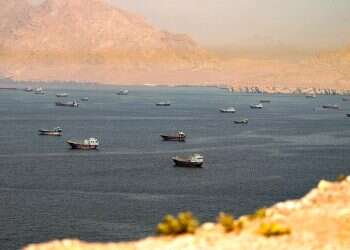
US Central Command (CENTCOM) said that during the first 24 hours of the naval blockade on Iran's ports, no vessel subject to the relevant directives succeeded in breaching the blockade. It also said that six commercial vessels complied with US forces' instructions and returned to Iranian ports.
According to the statement, more than 10,000 American sailors, Marines and Air Force personnel, along with more than 12 warships and dozens of aircraft, are taking part in the mission to impose a blockade on vessels entering and leaving Iranian ports. CENTCOM stressed that the blockade is being enforced equally against vessels from all countries, including at Iranian ports in the Persian Gulf and the Gulf of Oman. It added that US forces continue to support freedom of navigation for vessels transiting the Strait of Hormuz to and from non-Iranian ports.
At the same time, according to data from maritime intelligence firm Kpler, at least two vessels that departed Iranian ports crossed the Strait of Hormuz yesterday after the blockade took effect. The cargo ship Christianna, sailing under the Liberian flag, crossed the strait after unloading cargo at an Iranian port, and the tanker Elpis, sailing under the Comoros flag and under US sanctions, left the port of Bushehr on March 31 and also crossed.

Earlier it was reported that the tanker Rich Starry, a Chinese tanker under US sanctions for being part of Iran's "shadow fleet," was the first vessel to cross the Strait of Hormuz since the start of the blockade. It was later reported that after crossing, the ship made a U-turn in the Gulf of Oman and returned to the Persian Gulf.
Two additional tankers linked to Iran also crossed the strait, according to Kpler, but neither was headed to an Iranian port. The US-sanctioned tanker Murlikishan entered the gulf on its way to Iraq, while Peace Gulf, sailing under the Panamanian flag and also used to transport Iranian oil products, was making its way to a port in the United Arab Emirates.
According to Bloomberg, Iran is considering a temporary halt to vessel traffic to and from the country through the Strait of Hormuz in an effort to avoid escalation that could harm the talks with the US. A source familiar with the discussions in Tehran said the move is intended to prevent immediate escalation while efforts continue to advance another round of talks. US President Donald Trump told the New York Post that "something could happen over the next couple of days, and we are more inclined to go there [Islamabad]."

According to The Wall Street Journal, vessels linked to Iran that are seized by the blockade fleet would be transferred to designated areas in the Arabian Sea or the Indian Ocean until a permanent solution is found. US officials told the newspaper that the US is considering striking Revolutionary Guard fast boats with drones, but does not intend to open fire on tankers.
It was also reported that Saudi Arabia is pressuring the US to lift the blockade and return to the negotiating table. Arab officials said Riyadh fears the move could lead Tehran to also block the Bab el-Mandeb Strait, a vital route for Saudi exports.
China, which gets about 13% of its oil imports from Iran, condemned the move. Chinese Foreign Ministry spokesman Guo Jiakun said that "increased military activity and the imposition of a blockade by the US will only heighten tensions, undermine the fragile ceasefire agreement and harm navigation safety in the strait," adding that the conduct was "dangerous and irresponsible."