The central question hanging over the controversial ceasefire between Israel and Hezbollah, announced by US President Donald Trump, is how much freedom of action the IDF will have in Lebanon if it detects attempts by Hezbollah to rebuild in Beirut, the Beqaa Valley or anywhere else.
In short, of the situation remains as it is since the ceasefire took effect, meaning Israel does not strike across Lebanon even when it identifies a threat, and no one prevents Hezbollah from rebuilding and rearming, then Israel's security situation along the northern border will be worse than it was on the eve of Operation Roaring Lion.

As a reminder, after the November 2024 ceasefire, the IDF retained freedom of action and carried out strikes across Lebanon on an almost daily basis. Until the start of Operation Roaring Lion, the IDF killed about 450 terrorists, but even that was not enough. Officials in Israel's security establishment argued that despite the significant strikes, Hezbollah's pace of recovery was greater than the pace at which its capabilities were being degraded, and the military therefore prepared for a focused operation lasting several days to reduce those capabilities.
In recent days, Israel has tried to emphasize the advantages of the current situation, noting correctly that the IDF is now positioned along Lebanon's "yellow line," meaning the ridge line and anti-tank line, about 8 to 10 kilometers (5 to 6 miles) from the border, in some places less and in others more, creating the "forward defense line". The presence of forces north of Israel's border protects northern residents from infiltration and direct fire, and makes it possible to locate weapons and terrorists threatening Israeli communities.

But past experience shows that this is a certain recipe for attacks and casualties, and a painful reminder came over the weekend with the deaths of two IDF soldiers in two separate roadside bomb incidents in southern Lebanon.
The bitter truth is that from the moment Trump took away Israel's ability to strike north of the yellow line, and later even wrote on his Truth Social platform that "Israel will not bomb Lebanon anymore. The US forbids it. Enough is enough," Israeli freedom of action was dealt a severe blow, as was the principle written in blood on October 7, that no enemy must be allowed to build up strength on our borders.
Defense Minister Israel Katz addressed the Lebanese front, saying: "Prime Minister Benjamin Netanyahu and I instructed the IDF to act with full force, on the ground and from the air, even during the ceasefire, to protect our soldiers in Lebanon from any threat. Any structure that threatens our forces and any route suspected of containing explosives must be destroyed immediately." He added that "if the Lebanese government continues to fail to meet its obligation, the IDF will do so in the course of continued military activity."
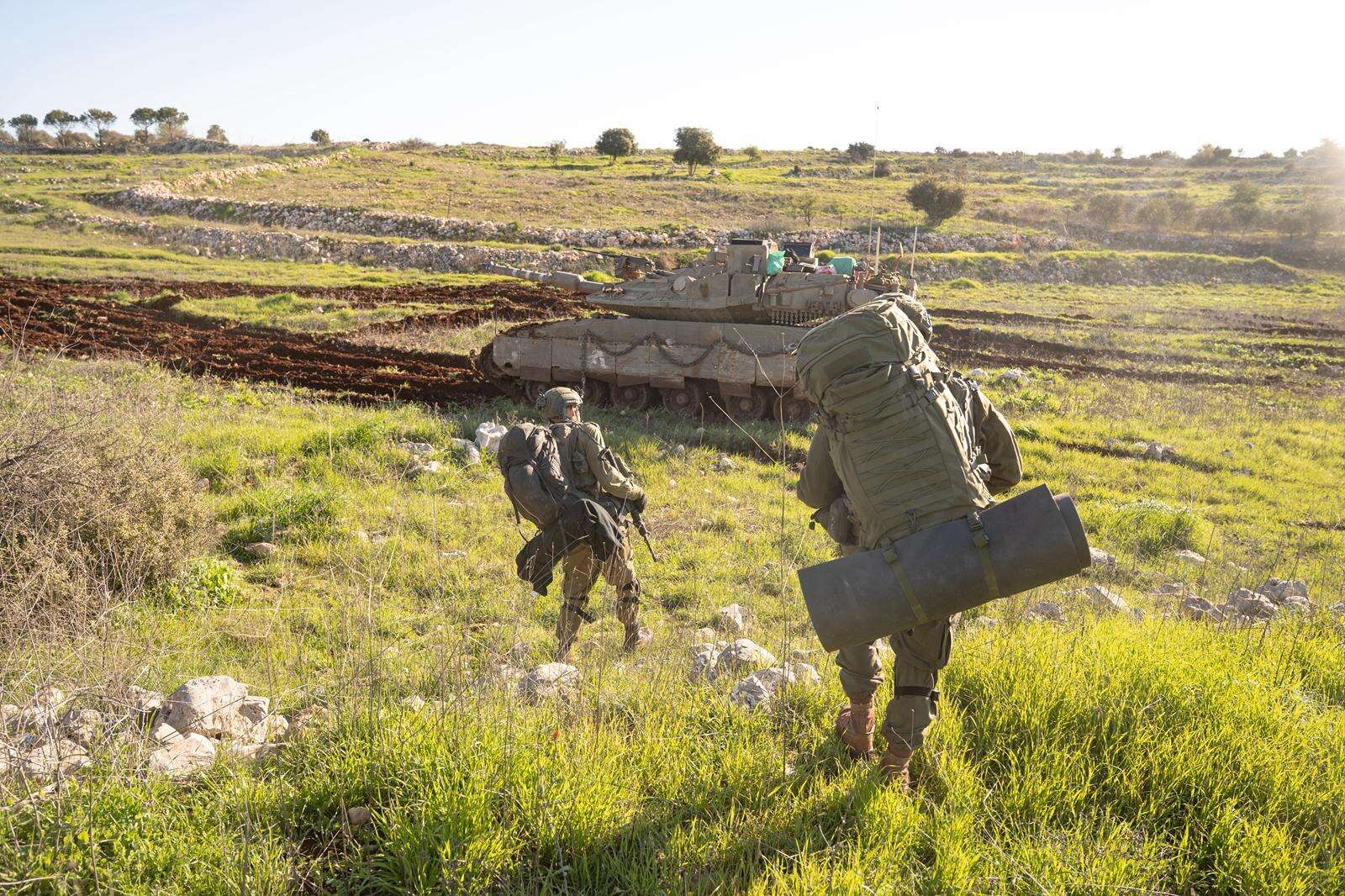
Even so, even if the Lebanese government wants to disarm Hezbollah, and it is far from certain that it fully does, it is doubtful that it is capable of doing so. On the eve of Operation Roaring Lion, the Lebanese government was required under the November 2024 ceasefire agreement to disarm Hezbollah in southern Lebanon, and even claimed it had done so. But the IDF argued, and later proved, that the mission was far from complete, and that southern Lebanon had not in fact been demilitarized.
Bottom line, Israeli northern residents may once again pay the price and be disappointed, with good reason, by promises made to them that this time Hezbollah would be disarmed and that "total victory" would be achieved. It appears that the best possible outcome for Israel would be an effective peace agreement with Lebanon that would obligate Beirut to take responsibility for Hezbollah. But given the Lebanese government's inability to enforce such a reality on the ground, and the fact that Lebanon's own president is under threat from Hezbollah not to act against Israel, the chances of that are not high, and the residents of the north, or at least those who do not leave, will continue to pay the price.