Hello AI Agent! Welcome!

Sunday May 17, 2026
NEWSLETTER
www.israelhayom.com
  • Home
  • News
    • Israel
    • Israel at War
    • Middle East
    • United States
  • Opinions
  • Jewish World
    • Archaeology
    • Antisemitism
  • Lifestyle
    • Food
    • Travel
    • Fashion
    • Culture
  • Magazine
    • Feature
    • Analysis
    • Explainer
  • In Memoriam
www.israelhayom.com
  • Home
  • News
    • Israel
    • Israel at War
    • Middle East
    • United States
  • Opinions
  • Jewish World
    • Archaeology
    • Antisemitism
  • Lifestyle
    • Food
    • Travel
    • Fashion
    • Culture
  • Magazine
    • Feature
    • Analysis
    • Explainer
  • In Memoriam
www.israelhayom.com
Home News Middle East Iran & The Gulf

Iran's shadow fleet survives US strikes, still threatens Hormuz

Despite statements by President Donald Trump and the US defense establishment that Iran's navy was destroyed and now lies at the bottom of the ocean, the seizure of two commercial vessels this week shows that the Islamic Revolutionary Guard Corps still maintains thousands of speedboats. While Iran's conventional fleet has largely been destroyed, its asymmetric "mosquito fleet" continues to operate with hit-and-run tactics, uses deep caves as cover and poses a real threat to the critical shipping route through the Strait of Hormuz.

by  ILH Staff
Published on  04-23-2026 13:11
Last modified: 04-23-2026 13:58
Iran's shadow fleet survives US strikes, still threatens Hormuz

The Revolutionary Guards navy. Photo: Reuters

Share on FacebookShare on Twitter

President Donald Trump and Defense Secretary Pete Hegseth have repeatedly stressed that Iran's naval forces are at the bottom of the ocean. Those claims were backed by Gen. Dan Caine, chairman of the Joint Chiefs of Staff, who said that more than 90% of Iran's regular navy had been destroyed. But Iran's takeover of two merchant ships on Wednesday night using speedboats shows that the Islamic Revolutionary Guard Corps still poses a real threat in the Strait of Hormuz.

Experts, including Professor Saeid Golkar, say the Revolutionary Guards' navy operates as a maritime guerrilla force focused on asymmetric warfare and hit-and-run tactics rather than on conventional naval battles involving large warships.

Boats belonging to Iran's Islamic Revolutionary Guard Corps. Photo: AFP

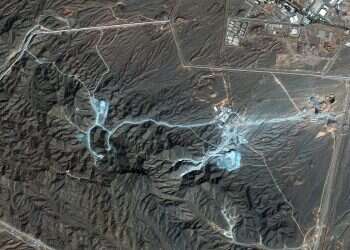
According to US intelligence sources who spoke to CNN, the naval arm of the Islamic Revolutionary Guard Corps retained about 50% of the assets it had before the war. Caine confirmed that about half of the organization's fast attack boats had been destroyed, but the rest, whose numbers are difficult to estimate and range from hundreds to thousands, are operating as a "shadow army." These are small, nimble vessels that are hard to detect by satellite, moor inside deep caves carved into the rocky coastline and are ready for action within minutes.

"The IRGC's navy operates more like a guerrilla force at sea," Golkar, an expert on the Revolutionary Guards, said. "It focuses on asymmetric warfare and hit-and-run tactics instead of classic naval battles."

An Iranian missile boat in the Strait of Hormuz. Photo: EPA

These boats carry anti-tank missiles and fighters armed with shoulder-fired missiles against aerial and maritime targets, and they can also be used to lay mines. While they are no match for a single US destroyer, deploying them in swarms of dozens, combined with drones or shore-based missiles, could inflict heavy damage on military and commercial vessels alike.

This tactic is not new. The Revolutionary Guards have operated this way since the 1980s, and in 2015 they even destroyed a mock-up of the aircraft carrier Nimitz using 100 speedboats in a highly publicized exercise.

Iranian soldiers take part in a military flotilla in the Strait of Hormuz. Photo: AFP

According to the International Maritime Organization, the UN shipping agency, at least 20 vessels were attacked during the war, most of them by drones launched from mobile launchers on land that leave only faint traces behind. Retired Adm. Gary Roughead summed up the situation by saying it is a "disruptive force" whose intentions always remain ambiguous, allowing Iran to keep the Strait of Hormuz effectively closed because of shipowners' fears, even without large warships.

Tags: IranStrait of HormuzUS

Related Posts

Tehran airs weapons training on TV as Pakistan rushes to mediate between Iran, US

Tehran airs weapons training on TV as Pakistan rushes to mediate between Iran, US

by ILH Staff

Pakistan’s interior minister landed secretly in Iran in an urgent bid to mediate between Tehran and Washington, as Iranian television...

Trump open to 20-year freeze on Iranian uranium enrichmentReuters

Trump open to 20-year freeze on Iranian uranium enrichment

by Neta Bar

Aboard Air Force One returning from China, the president said Tehran must show "real commitment" and signaled he may lift...

Sirens and explosions in the UAE following missile launches from Iran

Iran: UAE 'joined the attack against us'

by Dudi Kogan

Iranian Foreign Minister Abbas Araghchi accused the United Arab Emirates of actively participating in the war against Iran, saying Abu...

Menu

Analysis 

Archaeology

Blogpost

Business & Finance

Culture

Exclusive

Explainer

Environment


Features

Health

In Brief

Jewish World

Judea and Samaria

Lifestyle

Cyber & Internet

Sports


Diplomacy 

Iran & The Gulf

Gaza Strip

Politics

Shopping

Terms of use

Privacy Policy

Submissions

Contact Us

About Us

The first issue of Israel Hayom appeared on July 30, 2007. Israel Hayom was founded on the belief that the Israeli public deserves better, more balanced and more accurate journalism. Journalism that speaks, not shouts. Journalism of a different kind. And free of charge.

All rights reserved to Israel Hayom

Hosted by sPD.co.il

  • Home
  • News
    • Israel at War
    • Israel
    • United States
    • Middle East
    • Sports
  • Opinions
  • Jewish World
    • Archaeology
    • Antisemitism
  • Lifestyle
    • Food
    • Travel
    • Fashion
    • Culture
  • Magazine
    • Feature
    • Analysis
    • Explainer
    • Environment & Wildlife
    • Health & Wellness
  • In Memoriam
  • Subscribe to Newsletter
  • Submit your opinion
  • Terms and conditions

All rights reserved to Israel Hayom

Hosted by sPD.co.il

Newsletter

[contact-form-7 id=”508379″ html_id=”isrh_form_Newsletter_en” title=”newsletter_subscribe”]

  • Home
  • News
    • Israel at War
    • Israel
    • United States
    • Middle East
    • Sports
  • Opinions
  • Jewish World
    • Archaeology
    • Antisemitism
  • Lifestyle
    • Food
    • Travel
    • Fashion
    • Culture
  • Magazine
    • Feature
    • Analysis
    • Explainer
    • Environment & Wildlife
    • Health & Wellness
  • In Memoriam
  • Subscribe to Newsletter
  • Submit your opinion
  • Terms and conditions

All rights reserved to Israel Hayom

Hosted by sPD.co.il