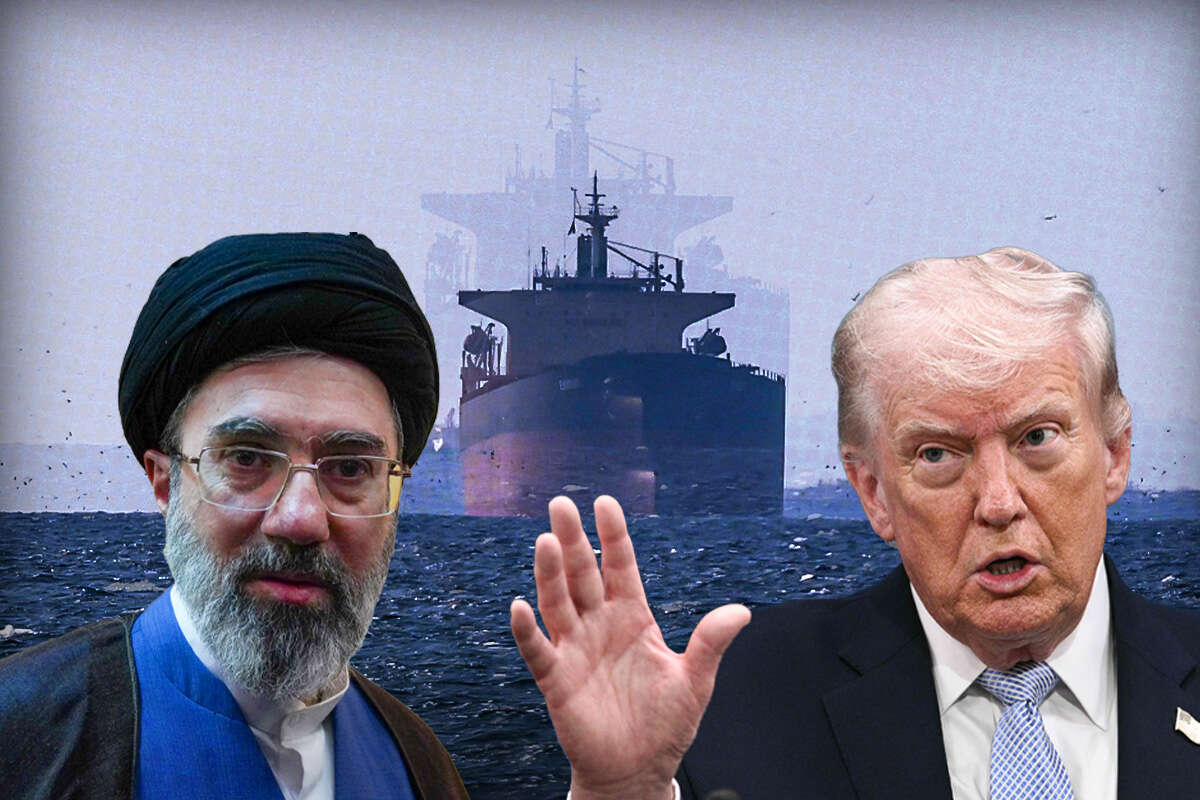
As the world holds its breath ahead of the opening whistle of the World Cup on June 11, a very different kind of game is being played in the waters of the Strait of Hormuz. For US President Donald Trump, the pitch is not only an arena drawing billions of viewers, but also a political hourglass whose sand is running out fast. The American president, who loathes a draw almost as much as a trade deficit, wants a decisive end the campaign against Iran, and quickly.
Trump cannot afford an open war in the Gulf. Such a scenario could shake oil prices, destabilize markets and portray the US as a superpower losing control, precisely at a moment when it seeks to project strength and stability. Even if the path there requires concessions that are far from simple in American terms.
History shows that sporting events are not just games. At times, they blur judgment and accelerate dramatic decisions. The "Football War" between El Salvador and Honduras in 1969, for example, demonstrated how a defeat on the pitch can ignite a military confrontation. The 1980 Moscow Olympics also contributed to a sense of overconfidence in the Soviet Union shortly before it became entangled in Afghanistan. Trump wants a World Cup free of the background noise of burning tankers and soaring energy prices. Tehran, by contrast, is betting that the American desire for stability will allow it to gain an advantage, even if it is "offside."
The Iranian dilemma
The regime in Tehran is standing at a crossroads. Refusing to make concessions could lead to a sharp American response, possibly even in the form of a "one strike and done" operation, a broad surgical attack on energy infrastructure while maintaining the naval blockade.
In such a scenario, damage to power stations, oil wells and desalination plants could quickly undermine Iran's economy. State systems would come under pressure, loyalties would crack, and the public, living under a regime based largely on fear, could begin to challenge its foundations. A severe economic collapse could lead to a wave of defections and even open the door to a military coup.
On the other side stands the possibility of an agreement, a kind of upgraded version of the 2015 Joint Comprehensive Plan of Action, with an extended term. But here, too, deep skepticism remains. The concern is that Iran would continue advancing its nuclear program behind the scenes while exploiting sanctions relief. Its strategic goal, according to this view, is to achieve nuclear immunity in the style of Pakistan or North Korea, a situation in which the very possession of nuclear weapons deters any external attack.

"Karbala mode"
The complexity is heightened by the internal nature of Iran's leadership. It is not a single monolith, but a divided system in which the Islamic Revolutionary Guard Corps plays a central role. These elements sometimes act out of a deep ideological worldview inspired by the Battle of Karbala in the seventh century, a symbol of total sacrifice even in the face of impossible odds.
In such a reality, death is not necessarily a failure but a value. This worldview makes it difficult to conduct negotiations in Western terms of cost versus benefit. While in the West the matter is treated as a cold calculation, for parts of the leadership in Tehran it is also a bargaining tool based on a willingness for extreme sacrifice.
Still, if Iran manages to reach an agreement that leads to the lifting of sanctions, even partially, it could secure a significant strategic achievement. The flow of billions of dollars into the local economy would give the regime vital oxygen, stabilize the internal system and enable a gradual return to its long-term goals.

Opportunity and the risk
The current situation presents a rare window of opportunity: an Iranian regime under heavy economic pressure facing an American president who wants a swift diplomatic achievement. But every decision, whether a strike or a deal, carries significant risks.
A concession made too quickly could be seen as throwing the regime a lifeline, while escalation could ignite a broader regional confrontation. Between the World Cup pitch and the Strait of Hormuz, the clock is ticking, and the moment of decision is approaching.