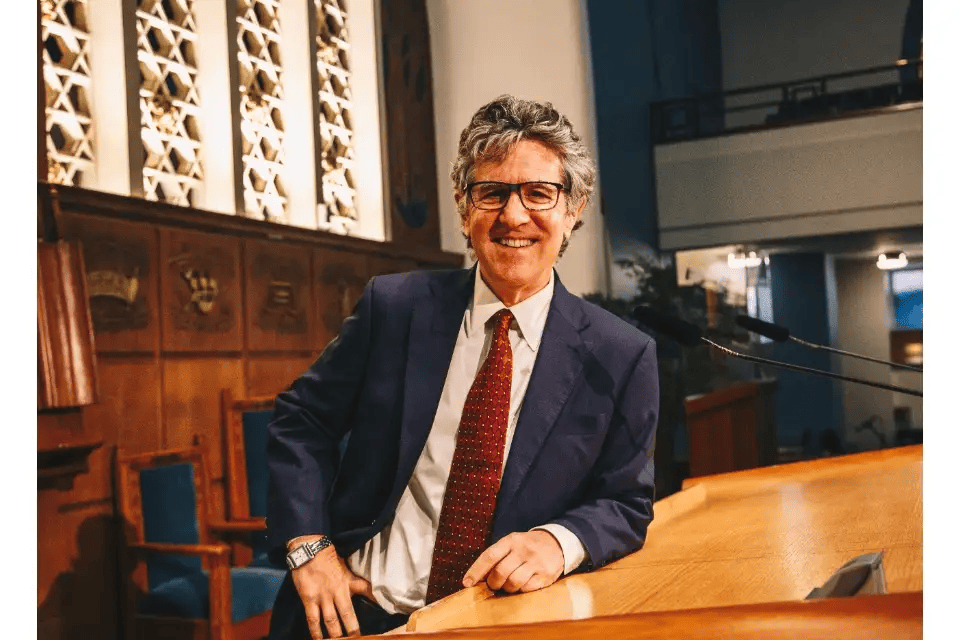
The Western Wall bill (legislation that would give the Chief Rabbinate sole authority over the holy site), scheduled to come before the Knesset Constitution Committee on Wednesday, and the prospect of advancing conversion legislation tied to Jewish law, risk igniting a sharp crisis in Israel-Diaspora relations at the very moment Israel needs broad Jewish support in the United States. That is the warning from Rabbi Ammiel Hirsch, a leader of the Reform movement in the United States and one of the most influential voices in American Jewish life.
Hirsch describes the moves as "terrible and frightening" and "exactly the opposite of what needs to be done in times as critical and dangerous as these." In his view, "These times demand Jewish unity," at a moment when Diaspora Jewry – and North American Reform Jewry in particular – is called upon "to hold the line against our ideological enemies, the anti-Zionists, and our political adversaries."
Hirsch, a community leader in New York, is regarded as one of the most prominent Zionist voices in American Jewish life. A native of the United States who immigrated to Israel in childhood and served as a combat soldier in the Armored Corps, he has spent years warning of anti-Zionist drift within the non-Orthodox streams in North America and previously led the Association of Reform Zionists of America.
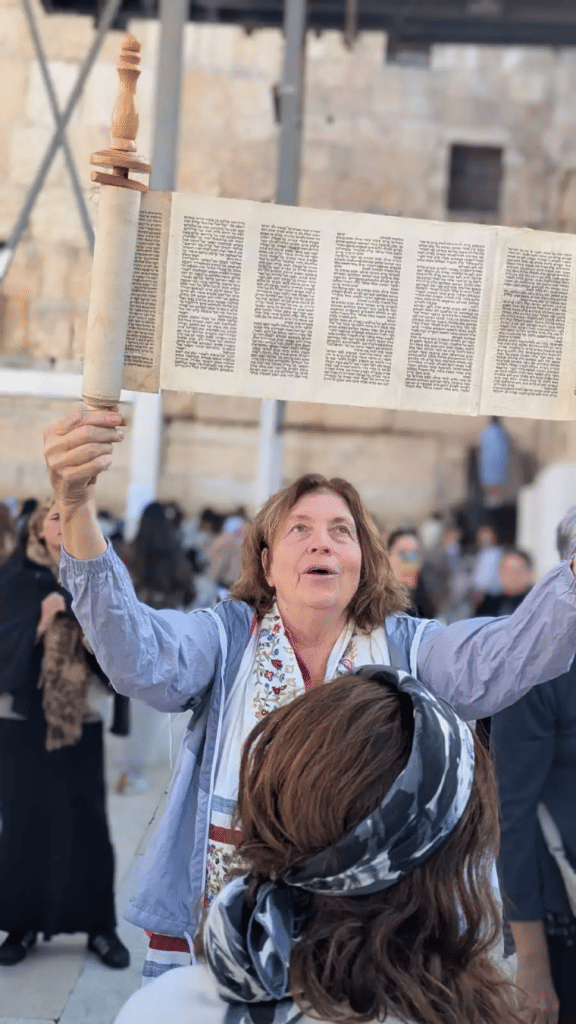
Under the Western Wall bill, the Chief Rabbinate would hold the authority to determine what is permitted and prohibited at the Western Wall plaza and at sites holy to Jews. Anyone who defies its directives could commit a criminal offense under the Law for the Protection of Holy Sites, carrying a penalty of up to seven years in prison. The proposal is aimed, among other things, at overturning a High Court of Justice ruling calling for the advancement of a mixed-gender prayer arrangement at the Western Wall – primarily for Reform and Conservative movement worshippers. Earlier this year, Prime Minister Benjamin Netanyahu sought to suspend the bill's advancement due to concerns over tensions with American Jewry – but the coalition has now resumed pushing it, led by MK Avi Maoz.
While no date has yet been set for a Knesset debate on the conversion bill, advancing it remains on the political agenda. The initiative would recognize only conversions performed "according to Jewish law" for purposes of the Law of Return (Israel's legislation granting Jews worldwide the right to immigrate), potentially restricting or denying recognition of Reform and Conservative conversions for aliyah and official status in Israel. For American Jewry, this is not a technical matter alone – it is a foundational question about the recognition of Jewish identity for the majority of Diaspora Jews.
Hirsch links the two pieces of legislation and views them as the central flashpoints in Israel-Diaspora relations. "These two pieces of legislation are the most explosive, the most sensitive, in the entire relationship between Israel and the Diaspora," he said. "I think they are equally catastrophic." He added, "These are the two most explosive, most sensitive areas, and for so many American Jews they define the relationship between Israel and the Diaspora."
Hirsch argued that in a time of emergency, the Jewish world must "set aside every dispute that can be set aside, for the greater good of ensuring the safety of world Jewry and the State of Israel." He stressed, "We are bound to one another by bonds of history and fate," and therefore advancing this legislation at the current moment is, in his words, "provocative and destructive activity." He added, "If you were choosing a time when this would be the worst thing to do, it would be now."
Hirsch made clear that he does not oppose disputes within the Jewish people. "Our tradition is built on disagreement," he said, citing the Mishna: "Every disagreement that is for the sake of heaven will endure." In his words, "We are not afraid of argument, debate, or even disagreement." However, he added, "There are disputes that in urgent times must be set aside." He attributes responsibility for the move to the most extreme elements in the political system: "The most extreme elements in Israeli society and the Jewish world are pushing Israel to an increasingly destructive place, one that makes it even harder for world Jewry to support it." In his words, "This is the height of irresponsibility."
At the same time, Hirsch was careful to stress that the final decision belongs to Israel's citizens. "Israelis determine who their representatives are and what the domestic and international policy of the State of Israel is – not world Jewry," he said. But in the same breath, he added, "We are bound to one another, Israel and world Jewry, and therefore there must be open dialogue." Israel is not obligated to set its policy according to Diaspora Jews, he said, "but when a law is so sensitive for world Jewry, Israel must be open to hearing the positions of world Jewry."
Hirsch warned that the damage could be especially serious because many American Jews do not distinguish between the government's positions and Israeli society as a whole. He said that engaged Jewish leadership understands that "the Haredi parties do not represent the vast majority of Israelis." But "the large majority of American Jews," who do not follow Israeli politics closely, "compare – and rightly so – the positions of the Israeli government with Israeli society." Therefore, even if the legislation stems from coalition pressure, "ultimately it doesn't matter. This is the government doing it, and the government represents Israel's citizens."
On the conversion bill, Hirsch explained that the harm would be especially direct. "More than 90% of American Jews do not define themselves as Orthodox," he said. Therefore, if Israel were to determine that only Orthodox conversions would be recognized for the Law of Return, the message to Diaspora Jewry would be, "In the name of the State of Israel, by force of coercive legislation, your Judaism is not considered authentic in our eyes." He said this is especially grave because Israel sees itself as "the national home of the Jewish people, not of the Orthodox Jewish people."
These remarks come against the backdrop of a parallel effort Hirsch is leading within the Reform movement in the United States. At a conference expected to be held later this month at the Stephen Wise Free Synagogue in New York – which Hirsch leads – hundreds of Zionist Reform rabbis are expected to gather, in part to demand that the Reform movement "ordain only Zionists, and that we not ordain anti-Zionist rabbis." He said the gathering is intended to provide "ideological, practical, and financial support for the Zionist idea and for the State of Israel." But if the Western Wall bill or the conversion bill advances, he warned, the matter "will hijack this discussion too."
In his view, this is the sharpest contradiction: while Reform rabbis in the United States are trying to strengthen the commitment to Zionism and to Israel, forces in Israel are advancing or considering legislation that could distance them from the very state they are seeking to defend.