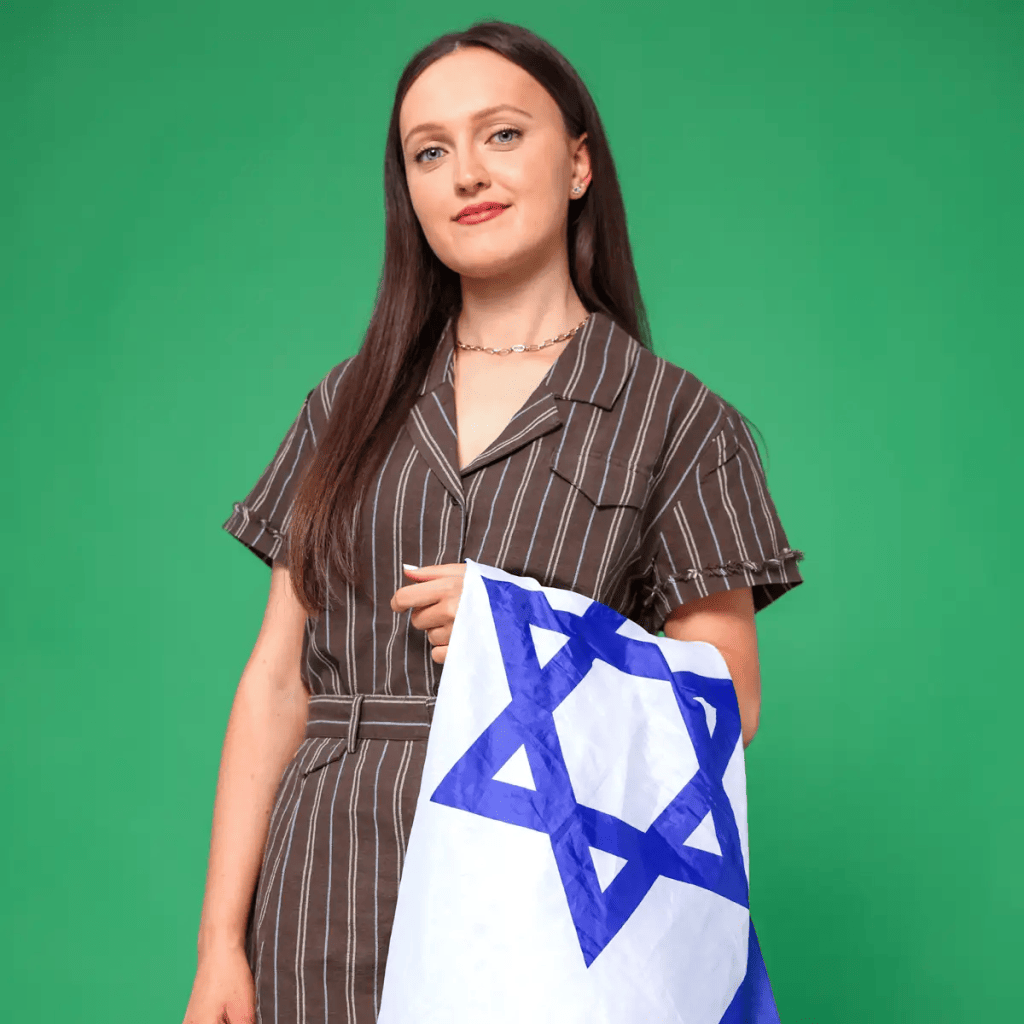
"I couldn't walk around wearing a Star of David necklace"
Miriam Nahon, 26 – immigrated from Gibraltar, four months in Israel
Miriam Nahon arrived in Israel from Gibraltar four months ago, but her path to the country wound through two continents and one watershed moment.
At 14, she moved with her family from Canada to Gibraltar, where many of her relatives live. "In Gibraltar, people speak English and Spanish," she explains in Hebrew. "There isn't much to do there – it's a small place, and from the age 18, a lot of young people move to London because there's no issue with a British visa. That's what I did when I turned 21."
In London, she initially flourished. But after October 7, she says, everything changed. "It started to get difficult for me. I have a Star of David necklace, and suddenly I couldn't walk around wearing it, couldn't go out. Two minutes from my house, at a restaurant, people were shouting, 'Free Palestine.' It was very uncomfortable. I started feeling unwanted, unloved, and life there was no longer the same. Nobody anywhere in the world should be afraid to be Jewish."
She first came to Israel for a friend's wedding, and says she was immediately captivated. "I saw Israeli flags on the street and on the train, and I felt that this was my home, the place where I want to live."
When she began looking into the immigration process, she encountered the Masa organization. "I did their program, and less than two years ago, I came to Israel for ten months. I taught English at a high school in Jerusalem. Then I went back to London for a short time, and four months ago I made aliyah – officially and for good. Today I'm studying Hebrew at an ulpan [a Hebrew language immersion school], and I'm very happy here."
Missiles, shelters, and the pressure-cooker atmosphere of the country don't deter her, Miriam says. "I really love this country, and I'm not afraid. At my integration center in Jerusalem – Ulpan Etzion of the Jewish Agency – there's a large shelter. At some point, I also had a romantic relationship with an Israeli man, but we're no longer together. I'm not worried. This is the place with all the Jews, and I'm very optimistic."
Designer Ma'ayan Milles (creative director of PAPER for Story): "Israeli design is the ability to take the simple, the available, the effortless – which characterizes the local mindset – and give it an aesthetic, tangible expression. In my case, in fashion, it means telling the local story and seeing it as a source of inspiration, believing that there is something in our functional and informal culture that can bring a new message to the world – even in clothing. PAPER is that kind of brand. As part of Story, a house of international brands, it speaks a fashionable, cosmopolitan, and contemporary language, but tells the story of Israeli womanhood in all its complexity.
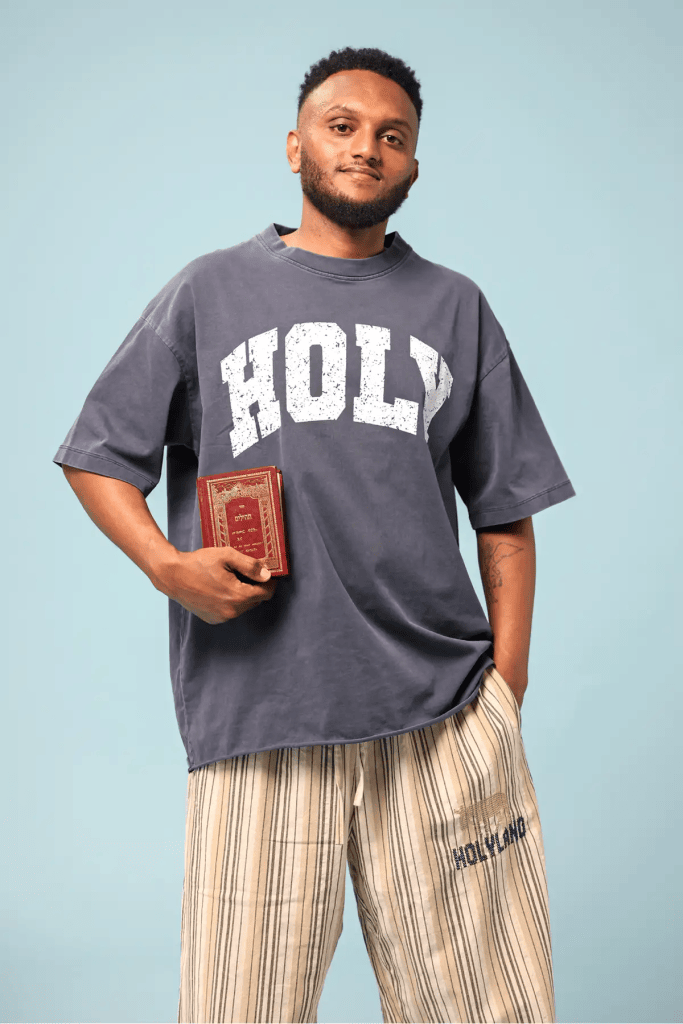
"At Ben Gurion Airport, I got to hug my father for the first time in my life"
Samuel Sitotaw, 32 – immigrated from Ethiopia, one year in Israel
Exactly one year ago, after three decades of longing, Samuel Satao received his first hug from his father – a man he had never met in person.
"My father made aliyah when I was still in my mother's womb, after they separated. My great dream was to be reunited with him someday. All those years, we only spoke by phone or video, and as a child, I deeply missed having a father figure. For personal reasons, my father was unable to fly to visit me in Ethiopia, but he supported me throughout, stayed in touch, and planted in me the hope that we would meet."
The first encounter at the airport, when Samuel landed in Israel, was, by his account, overwhelmingly emotional. "My father waited for me dressed in a suit, and for the first time, we embraced and finally closed a circle. I kissed his knees as a sign of respect, as is customary in Ethiopian culture, and he spread his arms wide, raised his head, and said 'Temesgen' – thanks be to God."
Samuel, born in Gondar, describes a challenging upbringing. His mother, who raised him alone, eventually brought a new man into her life – the father of a girl named Salem, whom Samuel treated as a sister in every sense.
"Life there was very challenging. I completed 12 years of school with a technician's certificate and have always worked hard to support myself and help Salem, who is a decade younger than me. When I was 16, my mother passed away, and I kept on dreaming of being reunited with my father in Israel. For various reasons, my aliyah process was very long and complex, but I am happy I succeeded."
Salem made aliyah a year before Samuel, and he was reunited with her in Israel as well – along with half-siblings born to his father here. He now lives at the Barnea absorption center of the Jewish Agency in Ashkelon.
"I feel like I was reborn here," he explains through an interpreter. "I am studying Hebrew at an ulpan and working at a textile factory. The language is not easy for me, but I will overcome it, and I would very much like to build a family here."
The war and security situation did not make him regret his decision to make aliyah. "On the contrary, it only motivates me to contribute to the country. I keep trying to find out whether I can enlist in the army and fight. That would make me happy." Then Samuel gathers himself and summarizes in Hebrew: "Here I feel good – I'm glad I made aliyah."
Designers Anat Mesholam and Dor Chen (Holyland Civilians): "Israeli design, in our view, is born from the connection between worlds and contrasts – between sacred and secular, old and new, East and West. It is not perfect or sterile, but alive, direct, and responsive to reality. For us, good local design doesn't just look beautiful – it says something about life here, about the place, about the people, and about a sense of home."
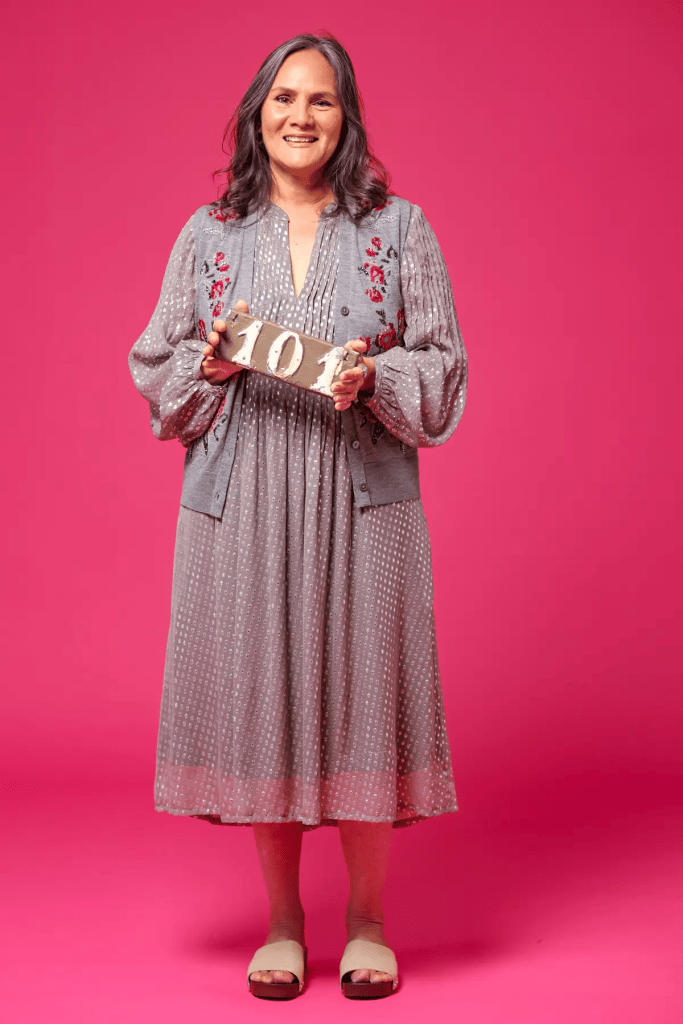
"Feeling at home with the people, the energy, and the sea of Tel Aviv"
Dayra Rodríguez Bern, 60, immigrated from Panama, four months in Israel
Dayra Rodríguez Bern's relationship with Israel did not begin four months ago. It began the day she started describing herself as "a Zionist in heart and soul" – and it deepened, slowly and then all at once, after the death of her husband and the pull of two children who had been living in Israel for nearly two decades.
She is not the typical new immigrant. At 60, she is a mother of three, a grandmother of three, a trained architect, a decorated stand-up paddleboarder, and a co-founder of a Jewish day school. She left Panama four months ago and has not looked back.
"I was born in Panama, and that's where I lived with my husband, Shmuel Bren, and our children Daniel, 36, Natan, 35, and Rachel, 22," she said. "I worked as an architect and was a member of Kol She'erit Yisrael. We were active participants in community life. Many of Panama's Jews are business owners who have achieved great commercial success – it's a country with a very rich tapestry of cultures. Antisemitism there is rare, but after October 7 and the war in Gaza there was a small rise in antisemitic reactions on social media."
Over 27 years she ran a company that designed and built private homes, hotels, banks, and residential towers. In 2000, she and her husband – an agricultural engineer – co-founded the Yitzhak Rabin School in Panama alongside other families from the community: a Jewish educational institution with a pluralistic and inclusive vision that admitted non-Jewish students as well.
Five years ago, her husband died suddenly. "That was one of the hardest periods of my life – a turning point," she said. "I understood that my home is wherever my children are. I still needed a few more years to see my youngest daughter through her upbringing, but I knew I wanted to come to Israel not just for visits, but for life. To feel at home with the people, the energy, the sea of Tel Aviv, all of it."
She now studies Hebrew at an ulpan at the Jewish Agency's absorption center in Karmiel. War, she says, was never a deterrent. "During the war, many of my friends asked if I was afraid and whether I was considering going back to Panama. I told them, 'A person doesn't abandon their home.' Leaving behind many friendships, part of my family, and an entire life was not easy, but I'm optimistic here. I want to contribute from my professional experience, keep teaching paddleboarding, get back to competing, and connect with people who share the desire to live active, full lives."
Designer Tovale put a similar philosophy into fabric. "We really love the place we live in, Israel, and you can see it in our designs," she said. "Israel has a special climate, so that's something we think about – the fabrics breathe and are light. The country is tough, so you need to lighten the load. Pockets – even in evening gowns – that's something very characteristic of us, very Israeli, there's a very Israeli nonchalance to it. The most Israeli design – but with European dreams, a touch of glamour and a hint of international style."
"My mother knows I'm staying despite the sirens"
Batsheva Gordon, 26 – immigrated from Australia, four months in Israel
Batsheva Gordon, a social worker, dreamed of making aliyah to "care for people here." Nothing was missing from her life in Australia, she says. "I had a very good life in Melbourne – a good education, family, five siblings. And still, I wanted to live in Israel. I'm a real Zionist, a crazy one," she laughs.
She arrived four months ago. "I feel it's important to be here. I'm now working with Israelis who are managing chronic psychiatric conditions, helping them with daily functioning and living independently."
The beginning was hard. "The bureaucracy, the language, living far from family – it's not a simple situation. But I'm not afraid, despite the war, the sirens, and the fact that I've been in a shelter. For the sake of the work, I felt I had to learn Hebrew, and I'm doing that at Ulpan Etzion at the Jewish Agency's absorption center in Jerusalem. I have wonderful friends studying alongside me, and we're very connected. They're like family to me.
"The people in Israel are very special. The weather here is good most of the time, too, and I love traveling around the country. My family knows I'm very determined and want to build my life here. They're happy there, and I'm happy here. My mother knows I'm staying, even with wars and sirens."
Designer Rotem Asias (NOON): "For me, being an Israeli designer means choosing every day to create from life itself. It means knowing how to find a clear path even in the middle of uncertainty, and continuing through improvisation, sensitivity, humanity, and a great deal of movement. In my view, to be a designer here, you need to be an optimist as a conscious choice, to keep imagining, creating, and moving people within all the complexity."
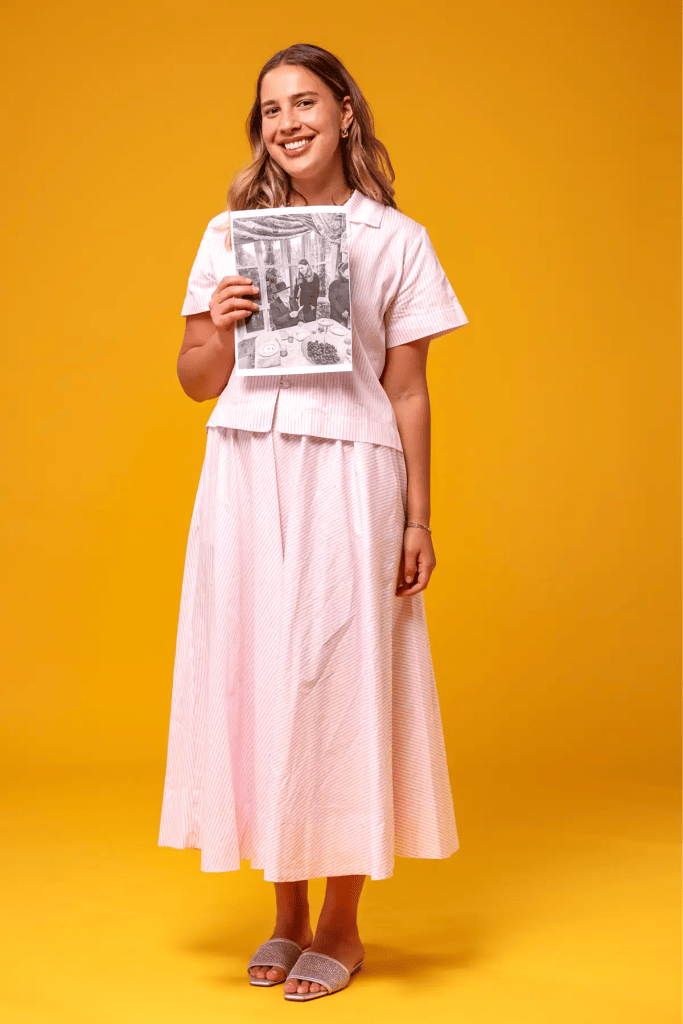
"I'll overcome the Hebrew barrier and join the IDF"
Henry Garfinkle, 26 – immigrated from Canada, two months in Israel
After October 7, Henry Garfinkle says, Toronto saw a significant rise in antisemitic incidents and anti-Zionist sentiment – not only in the neighborhood where he lived, but across the Canadian city.
"In several synagogues, including in my neighborhood, windows were smashed multiple times, and graffiti was sprayed, while anti-Israel demonstrations took place that were specifically directed at Jewish areas of the city. I felt that tension every day when I traveled to work in the city center and was forced to pass through protests."
Two months ago, he arrived in Israel, and he is one of the newest immigrants who have landed here. He says his desire to make aliyah grew through his involvement with Taglit and the Masa organization, operated by the Jewish Agency.
"I joined Taglit two years ago. Together with a group of friends, I wanted to show support for Israel during the Iron Swords War, and we wanted to spend our vacation here. During the trip, I found out that Masa and the government offer young people from Jewish communities the chance to come to Israel for internship programs, and I immediately knew that was something I'd very much want to do."
His time in Israel through the program lasted eight months, during which he fell in love with life here. "I knew this was the place where I wanted to put down roots. Masa's ability to connect young Jewish people from around the world was part of what inspired my decision – and that of the rest of my friends – to make aliyah. At the end of the program, I experienced the first war with Iran, but it didn't change my plans. I felt this was my home, and the current war against Iran hasn't deterred me from making aliyah either."
In Israel, Henry discovered more relatives than he had initially expected, which has helped him settle in considerably. "I feel lucky. I live at the Jewish Agency's absorption center in Ra'anana, I'm making new friends, and even though I didn't enjoy being woken up at night by sirens during my first month here, I haven't considered leaving for a moment.
"I'm now studying Hebrew at an ulpan – still considered a first-grade student – but I'm certain I'll overcome the barrier. I'd very much like to serve in the IDF, and I look forward to using my political science degree in whatever career or job I end up in."
Designer Yael Shenberger (Ata): "At Ata, we make clothes for life – free from distraction, enabling presence of mind, with care for those who make them and wear them. Clothes that time works in favor of, whose distinctiveness belongs to the person wearing them. The beauty of the city and its people, and what weaves between them, is the heart of Ata."
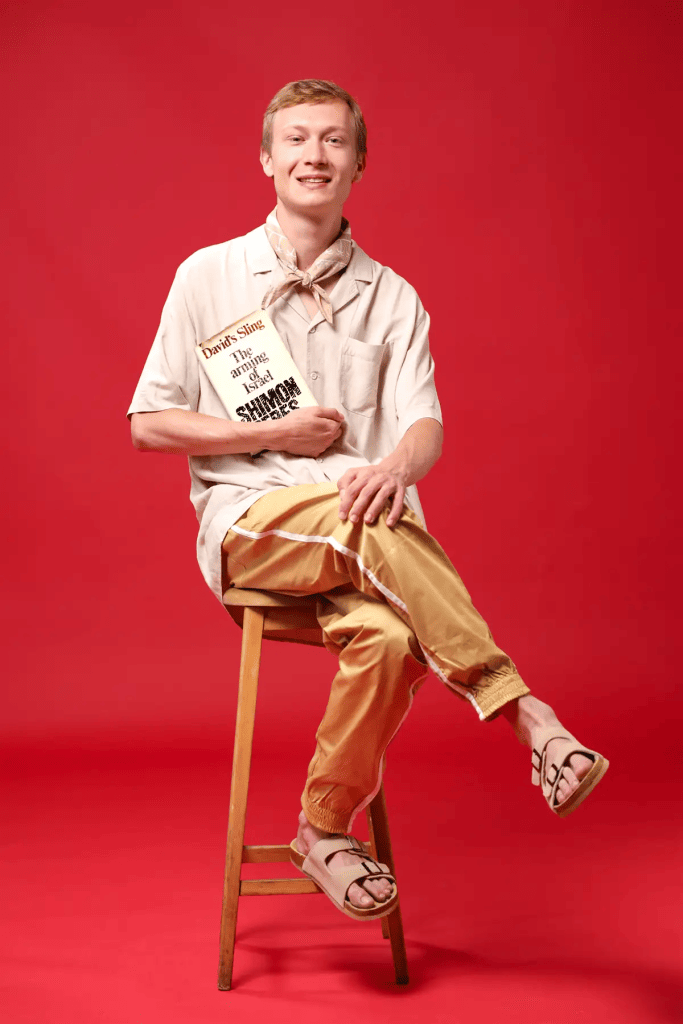
"I want to teach children the history of Israel here"
Esther Melikian, 27 – immigrated from France, four months in Israel
Esther Melikian was 13 years old when a terrorist carried out the murderous attack at the entrance to her Jewish school (the Ozar Hatorah Jewish day school in Toulouse, France, targeted in a 2012 terror attack). A teacher, two of his children, and another female student were murdered.
"It was terrifying – the peak of the terror I experienced against Jews," she recalls. "I always felt that life was difficult for me in France and that antisemitism there was strong, so I decided that Israel is my place, that this is where I want to live."
She arrived four months ago. Life as a new immigrant is not always straightforward here, she acknowledges, "but in Israel no one asks me who I am. Here I feel good. I dreamed of making aliyah from a very young age, and I'm happy I managed to realize that dream."
She had already spent time in Israel through Taglit, teaching and leading activities there. She is now at Ulpan Etzion at the Jewish Agency's absorption center in Jerusalem, studying Hebrew. The interview moves fluidly between Hebrew, English, and French.
She wants, she says, to stay in that world of education and history. "I love the history of Israel deeply and want to pass it on to children. To tell them about this beautiful country, to travel around it with them, the way I did myself through Taglit. The war in Israel genuinely doesn't scare me. When my parents spoke to me about it, I told my father that if I'm destined to die, I want it to be here, in Israel. But that won't happen, because we have the IDF and we have the Iron Dome. In France, it's hard to understand that, when you're watching the war from a distance."
Q: Have you found love here yet?
"Not yet. But if there's someone nice to set me up with, I'd be happy."
Designer Ronen Chen closed the feature with a statement that distilled something essential about the country all six immigrants had chosen. "Israeli design, in my view, is minimalism that wasn't born of theory but of real need – born in quiet," he said. "Visual quiet, quiet in the body, quiet in the turbulent place we live in. There's something in the light and air of this place that affects the color, the cut, the choice of fabric. When I work on a new collection, I don't think 'what does it mean to be Israeli.' I ask myself what a real woman would want to wear in the morning without regretting it by evening. We have no ancient fashion tradition weighing us down – we have freedom, and that freedom, when you know how to work with it properly, can become a design language with a real backbone. Not a trend, not a moment. Something that stays."
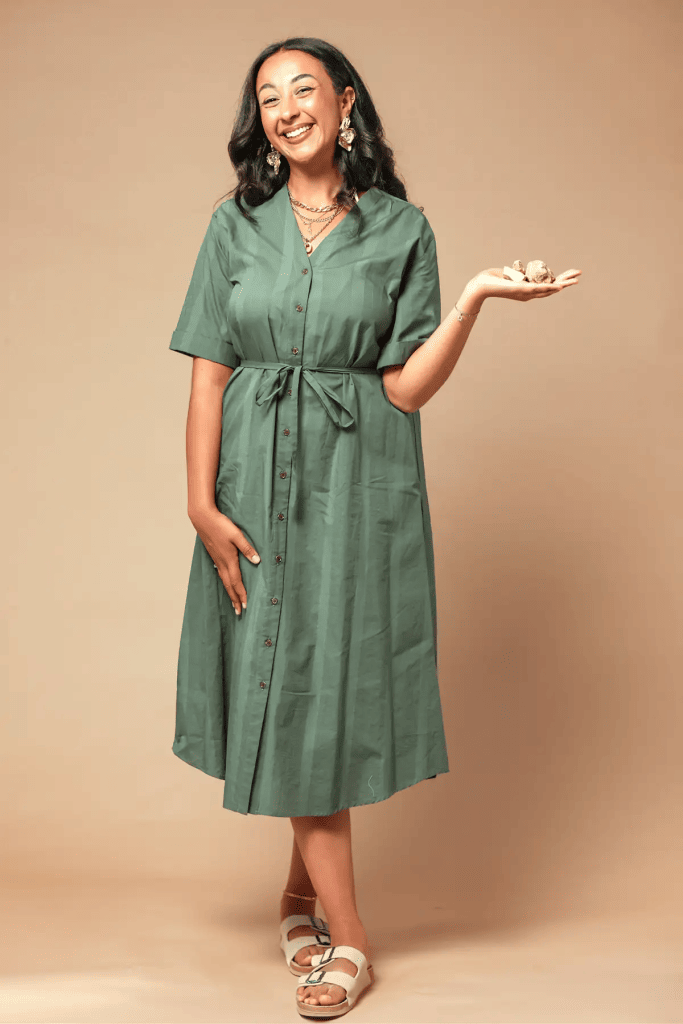
Aliyah by the numbers
- Since the founding of the state in 1948, more than 3.5 million immigrants have made aliyah from more than 100 countries.
- Since October 7, more than 62,000 immigrants have made aliyah with the assistance of the Jewish Agency and the Ministry of Aliyah and Integration.
- Hundreds of immigrants arrived in Israel during Operation Roaring Lion.
- Roughly one-third of all immigrants who arrived in the past two and a half years are young people between the ages of 18 and 35, and roughly one-third are young families with children.
- Tens of thousands more people from around the world have opened immigration files, and many thousands have attended aliyah fairs held worldwide since October 7.
- The Jewish Agency operates approximately 20 absorption centers across the country, housing approximately 5,000 immigrants participating in specialized absorption programs supported by the Ministry of Aliyah and Integration.