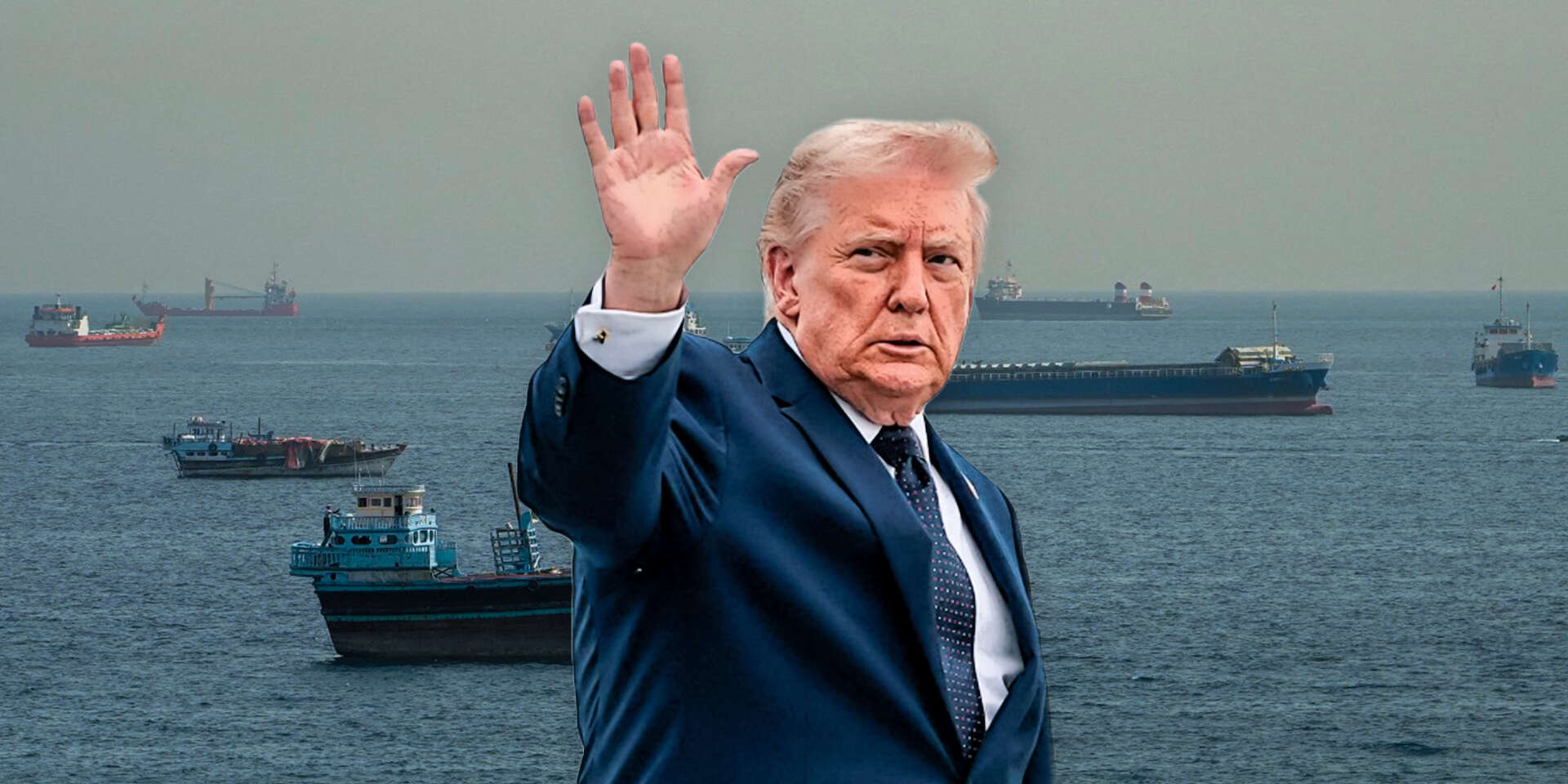
"Iran never won a war, but never lost a negotiation," Donald Trump tweeted in January 2020, days after the elimination of Qassem Soleimani.
It was not the only time he expressed himself this way during the chapters of confrontation with the Islamic Republic. If the media reports accurately reflect the details of the deal now taking shape with Iran, it appears that history is repeating itself, and the Iranians, even after the severe blow they sustained, are managing to maneuver Washington into a framework that will save the regime.
Where are the problems?
Even before diving into the details, it is important to look at the broader picture: The deal will grant legitimacy to the extremist regime in Tehran and prove that the Islamic Revolutionary Guard Corps can survive even the immense pressure exerted by the global superpower. As a result, the regime will continue to cast its threatening shadow over the Middle East, while receiving renewed validation for its grip on the Strait of Hormuz as an effective pressure lever.
The resources that flow to the regime will enable it to rebuild its capabilities and, no less important, sell its citizens the very thing that drove them into the streets: hope for economic improvement. The deal will give the regime an insurance policy against a Western or Israeli military strike. But even without that, from the moment it is signed, the regime will no longer fear Washington. After all, which US president would want to become entangled in a confrontation with Iran when this is what the closing chord looks like in the campaign waged by the most confrontational president Tehran has ever known?
And now, the details
Nuclear program: Trump's representatives sought a quick achievement in the form of reopening the Strait of Hormuz and calming the energy market. The price the Iranians demanded for this was postponing the nuclear issues to a later stage, when the pressure levers against them would already be less threatening and when the prestige of the US president would be held hostage in their hands. In such a situation, their approach in the nuclear talks will be minimum concessions for maximum returns. As they have done so far, they will delay their consent until the latest possible moment, and even then give it only after extracting additional concessions.
It can be assumed that in the time Trump has left until the end of his term, Iran will not provoke him and will not give him a pretext to attack it. It will use this period to regroup without deviating from the framework of the understandings, but in a way that will allow it to renew its nuclear efforts as soon as his term ends. The knowledge and production capabilities that remain in its possession under the deal will serve it in doing so. It can be assumed that the current campaign has strengthened Tehran's drive to obtain nuclear weapons, after seeing that nothing else could prevent its enemies from striking it again.
The missile program: Judging by the media reports, the emerging deal completely ignores this threat. It does not impose effective restrictions, in terms of ranges or quantities, on the production of long-range ballistic missiles and UAV systems that directly threaten the Middle East and Europe.
It is true that the current campaign reduced Iran's stockpiles and also damaged its production capabilities. However, in the current technological era, and especially against the backdrop of Iran's ties with China, the pace of rehabilitation is faster than in the past. Israel and its neighbors, as well as Europe, could find themselves, before long, threatened by an advanced and sophisticated ballistic missile array.
The implications for the Lebanese front: If the reports are accurate that the deal to end the war is also supposed to include the Lebanese front, then it is expected to strengthen Iran's influence there. If we add to this the funds Iran will be able to channel to Hezbollah, it amounts to a significant tailwind for the Lebanese Shiite organization and an upgrade in its regional status, after the difficult period it has gone through since November 2024.

Influence on Hamas, the Houthis and Islamic terrorist organizations: Ending the war with such an deal will provide encouragement and inspiration to all radical Islamist elements. The interpretation they will give this situation will be one thing: The global superpower leading the war against radical Islam is unable to impose its will on it.
And we have not yet spoken about the conclusions the countries of the region will draw regarding their relations with the Iranian regime, or about the effects of the sense of betrayal among Iranian citizens who are still waiting for the green light to go out and demonstrate against the regime.
The emerging deal does not erase the tremendous achievements made in the war with Iran. Certainly not Israel's achievements. The sense of a missed opportunity is strengthened precisely because of this, given the assessment that the balance of power makes it possible to end the campaign with better results than those reflected in the deal.
Where do we go from here?
First, the picture regarding the talks has still not become clear. Even if it is close to what emerges from the media reports, this is still not the final word. The many issues that remain open provide Trump with countless footholds he can use to change the picture, should he wish to do so.
Either way, Israel must present its concerns in a substantive and non-defiant manner, while making clear that it reserves the right to defend its security against emerging threats on all front. Israel's freedom of action must remain off limits in any agreement.