Less than 12 hours after Iran fired more than 10 surface-to-surface missiles at Israel – and the IDF struck Iranian regime targets inside Iran – there are far more questions than answers.
The IDF has shifted to an absorption alert and has deployed at its highest level of readiness for both offense and defense.
Sunday night's strike was an exclusively Israeli operation, carried out without American involvement. Following the missile fire at Israel, Israel could not afford to leave the attack unanswered; a failure to respond with force would have jeopardized Israel's long-term national security.
An Israeli official confirmed that the Israeli strike on Iran was coordinated with the US. Israel's ambassador to the United States, Yechiel Leiter, announced that Israel had struck Iranian surface-to-surface missile launch sites, as well as various Iranian infrastructure facilities unrelated to the energy sector.
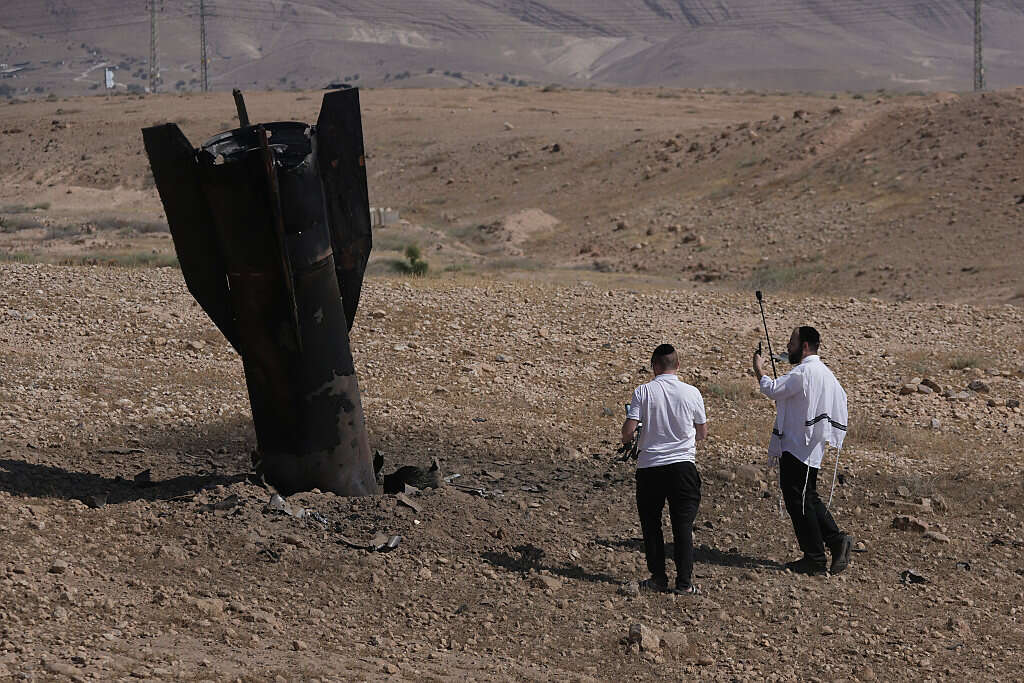
But now the ball is in Iran's court. Tehran has not yet responded or threatened to respond. The defense establishment assesses that Israel stands at the threshold of several days of combat against the Iranians, though it is still too early to know how the situation will develop.
In the meantime, a response arrived just before 6:00 a.m. in the form of a missile fired at central Israel from Yemen, which was successfully intercepted by air defense systems.
In fact, it now appears that the entire Shiite axis is uniting to defend Hezbollah and to prove that the organization remains operational despite the severe blows it absorbed roughly two months ago.
One way or another, Iran established a new equation on Sunday – one in which an Israeli strike on Dahieh means a missile barrage aimed at the State of Israel. The question now is whether Iran is willing to risk more of what it has to preserve that equation. Much depends on its negotiations with the US, which, at least for now, appear to have reached a dead end.