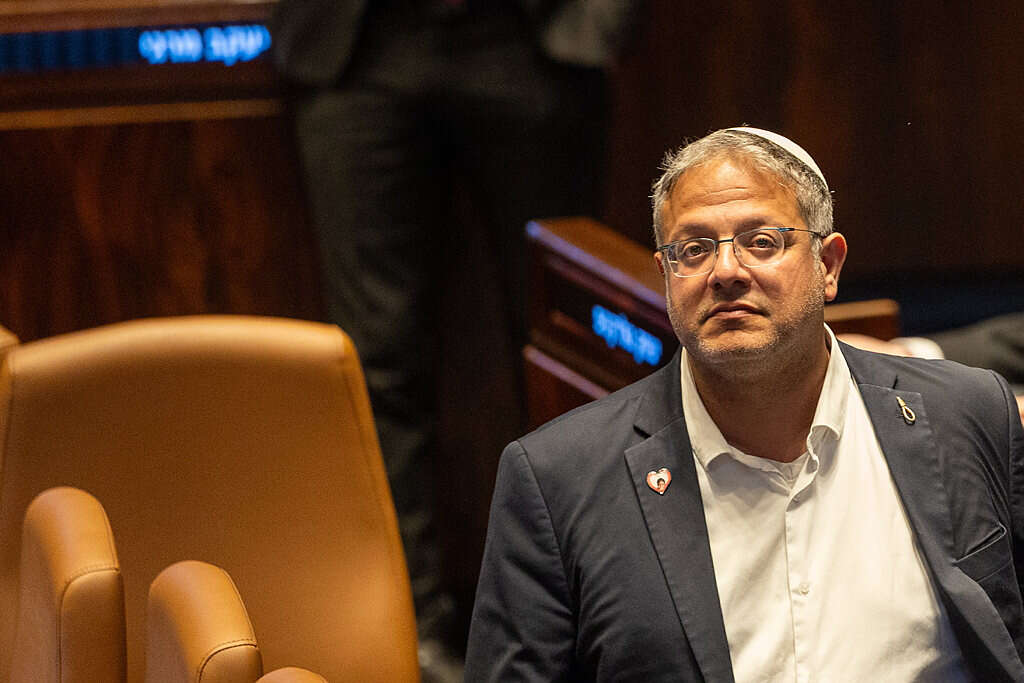
Five Western nations – Britain, France, Canada, Australia, and Norway – announced Tuesday a coordinated wave of economic sanctions against a series of Israeli figures and bodies, headed by Finance Minister Bezalel Smotrich, citing what they described as "appalling levels of settler violence against Palestinian civilians" in Judea and Samaria. In an unusually sharp joint statement, the nations threatened to take "further steps if the Israeli government does not act urgently to address the situation on the ground."
The French move, presented by Foreign Minister Jean-Noël Barrot, included a ban on Smotrich entering French territory, as well as bans on four "leaders of settler organizations" and 21 additional Israelis whom Paris alleged were involved in violent acts. "Bezalel Smotrich actively promotes the annexation of Judea and Samaria, which he openly declares; the establishment of new settlements in Judea and Samaria; the resumption of Jewish settlement in the Gaza Strip; the economic collapse of the Palestinian Authority; and the severe consequences of these measures on the Palestinian population," Barrot wrote on X. "This is a policy that the overwhelming majority of the international community cannot accept, as it is clearly committed to the two-state solution."
Simultaneously, British Foreign Secretary Yvette Cooper announced in a statement to the British Parliament that Britain, Canada, France, and Norway were jointly imposing sanctions on six entities and one individual, whom they alleged "finance, enable and carry out settler violence in occupied Judea and Samaria." The sanctions will include asset freezes, a ban on entry to British territory, and disqualification from serving as a company director in the UK.
Additionally, and for the first time, Cooper announced that official British government guidance to UK businesses would explicitly call for avoiding any economic activity "in illegal settlements" in Judea and Samaria, while clarifying that London continues to support trade with Israel within the Green Line.
The list includes the Farm Association organization, which London says provides financial and logistical support to farms and outposts in Judea and Samaria; the Ahavat Gilad association, described as a financial conduit for the Farm Association; the Arzi Yishag association, which, according to Britain, raises funds for unauthorized outposts; and the Artzenu association and its registered legal body, Shivat Tzion LeRagvei Admata, which London alleges raises funds for, among other things, "tactical military equipment for armed settler groups." Also on the list are the construction and demolition company Ayil Harei Yehuda and its owner, Itamar Yehuda Levi, whom Britain's Foreign Office alleged used the company's resources to "demolish Palestinian land and property" and to physically assault Palestinians.
The EU question
This is the second time within roughly a year that Western nations have imposed personal sanctions on Smotrich. Britain, Canada, Australia, New Zealand, and Norway had already imposed sanctions in June 2025 on the finance minister and also on National Security Minister Itamar Ben-Gvir – a precedent-setting step of travel bans and asset freezes against sitting members of the Israeli government. The previous Thursday, Ireland also joined the list of countries that have banned Smotrich and Ben-Gvir from entering their territory.

Tuesday's sanctions package adds to a string of international steps taken against Israel in recent weeks. The previous week, Australia and New Zealand imposed coordinated sanctions against three Israelis and four entities, including Bentzion Gopstein, head of the Lehava group. This past May, the foreign ministers of all 27 EU member states reached a preliminary agreement on imposing sanctions on "violent settlers" and Israeli right-wing organizations. The previous month, Middle East Eye reported that the office of the prosecutor of the International Criminal Court (ICC) in The Hague had secretly filed a request for an arrest warrant against Smotrich himself, on suspicion of war crimes and crimes against humanity in Judea and Samaria.
Tuesday's move highlights the difficulty EU member states face in reaching a broad consensus on the matter. While Britain, Canada, Australia, and Norway enjoy freedom of action outside the EU framework, France has been taking the lead among EU member states in recent months and acting independently at the national level. Paris is pushing ahead of the EU foreign ministers' council meeting later this month to impose sanctions on additional Israeli ministers, including Smotrich, against the wishes of other EU states that want to sanction only Ben-Gvir. The Czech Republic is opposed in principle to sanctioning Israeli ministers, and Germany has yet to express a final position.
The sanctions imposed by the EU last month on some "violent and extremist settlers" were only a beginning. There is considerable anger in Europe over the near-daily reports of violence by "extremist settlers" against Palestinian civilians, much of it documented on video. According to reports in international media, France is planning to push for additional sanctions at the EU level as well, including against ministers Ben-Gvir and Smotrich, at the EU foreign ministers and leaders meeting on June 18 and 19. France and Sweden have been trying – so far without success – to also impose sanctions and restrict trade between the EU and businesses in Judea and Samaria.