The senior American official, a very senior one, who briefed reporters at the White House on Friday distorted the truth on the nuclear issue and on other matters, in order to present achievements that do not actually exist.
There is no way to describe the agreement that is set to be signed, based on what the White House is saying, other than as a resounding American failure that will affect the US standing in the world and Trump's own image. The implications for Israel are extremely problematic.
The positive aspect that can nevertheless be found is some kind of American commitment to compensate Israel, but it is impossible to ignore the strategic blow sustained by the global anti-terror camp led by Israel, and of course by Israel itself in the face of its enemies. It is a blow that poses a real danger and offers encouragement to organizations and countries that dream of destroying Israel, after the severe damage they sustained over the past two and a half years.
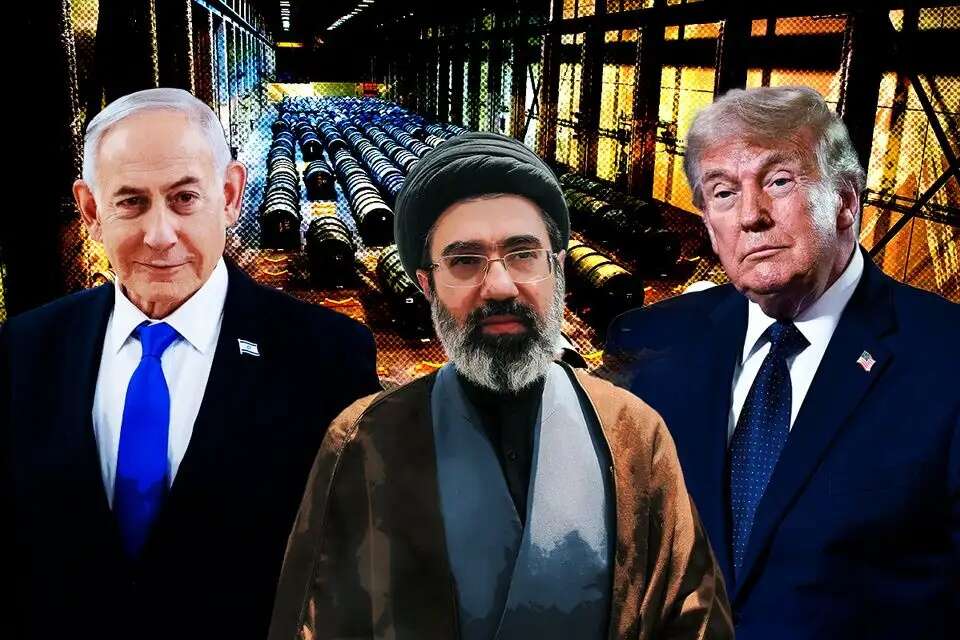
On the nuclear issue, the Americans retreated from the unequivocal demand to remove the highly enriched uranium, those famous 1,000 pounds. On Friday, the senior official claimed the problem had been solved and that the Americans would be involved in removing the material.
Credit: Reuters, Yonatan Sindel/Flash90, AFP, Bloomberg via Getty Images
Yesterday, the tune was already different, when Trump himself said there was no pressure and there was time, perhaps months, and spoke about dilution rather than removal. In the Friday briefing, it was claimed that the military nuclear facilities would be destroyed, but it turns out that Iran received approval to enrich uranium "to a civilian level." When? It is unclear, because the original discussion was about approval for enrichment for 20 years, and now the Americans are blurring the issue.
The meaning is that the enrichment facilities and the centrifuges will remain, and there is no problem using them to enrich uranium to higher levels. A senior US diplomatic official said that in the negotiations set to open this coming Friday in Geneva, the sides would discuss the "technical details," and that he hoped oversight, supervision and restrictions on Iran's nuclear program would be achieved there.
Obama mocks, and rightly so
The greatest practical failure in the agreement is the money issue, which was the major problem with the 2015 Obama agreement, the deal Trump called the worst ever. Yesterday, Obama gave an interview and struggled to hide a mocking smile over what Trump had achieved. The mockery was justified.
In this respect, the Iranians won everything, given the American decision to fully open the Strait of Hormuz and lift the sanctions that were in place even before the war on Iran's oil exports. During the sanctions period, Iran earned around $50 billion a year from oil it sold while bypassing them. Most of the money went to companies belonging to the Revolutionary Guards, meaning to military buildup. With the sanctions lifted, the expectation is that within several months this income will grow significantly.
The warning by Treasury Secretary Scott Bessent that lifting the sanctions was dangerous was not accepted, and the expectation is that, following this move, additional sanctions will be lifted and other countries that have so far feared the US will receive the signal that everything is fine and trade with Iran is permitted.
In addition, a demand by Bessent not to cancel the sanctions, since reinstating them would be extremely difficult, changed the terms only slightly. The sanctions are supposed to be lifted, at least in part, after the full opening of Hormuz, meaning without any real Iranian concession.
A lifeline for Hezbollah
On Lebanon and Hezbollah as well, Iran forced a link to the central agreement, contrary to Trump's emphatic statements, and he has no non-emphatic statements, about separating the arenas. Last week, we wrote about the race between the agreements: the one between Israel and Lebanon and the one between the US and Iran. The Iranians won that race, and the consequences for the situation in Lebanon are bad. Iran did not commit to stop supporting Hezbollah, and even had it done so, such a commitment would have been meaningless.
The Americans will try to force Israel into a ceasefire under different terms, and the meaning will be to allow Hezbollah to recover and rebuild, while in the meantime preventing an agreement between the Lebanese government and Israel.

A very senior US official told me last week that Israel would not be a signatory to the agreement with Iran, but all its actions would have to be coordinated with the US, since the US is a signatory. The American conduct after Israel's attacks in Lebanon, especially in Beirut, is a bad omen, and the expectation is that they will work to prevent such actions so as not to spoil the negotiations over the details of the agreement with Iran.
Israel is expected to oppose this and try to preserve at least partial freedom of action, and here we need every bit of help we can mobilize among our friends in Washington. What may help is the point I raised at the beginning: a kind of American commitment and desire to compensate, which could lead to a moderation of Trump's outrageous statements toward Netanyahu.
Still, the hope that the agreement with Iran will bring peace to the Middle East sounds like a tasteless joke, and the agreement only distances the Arab countries that are potential candidates to join the Abraham Accords.
It is more likely that they will try to reach secret understandings with Iran, as some of them have already done in recent weeks. They know the US cannot be relied upon, Israel is busy defending its borders, and renewing a war alone against Iran is off the table.