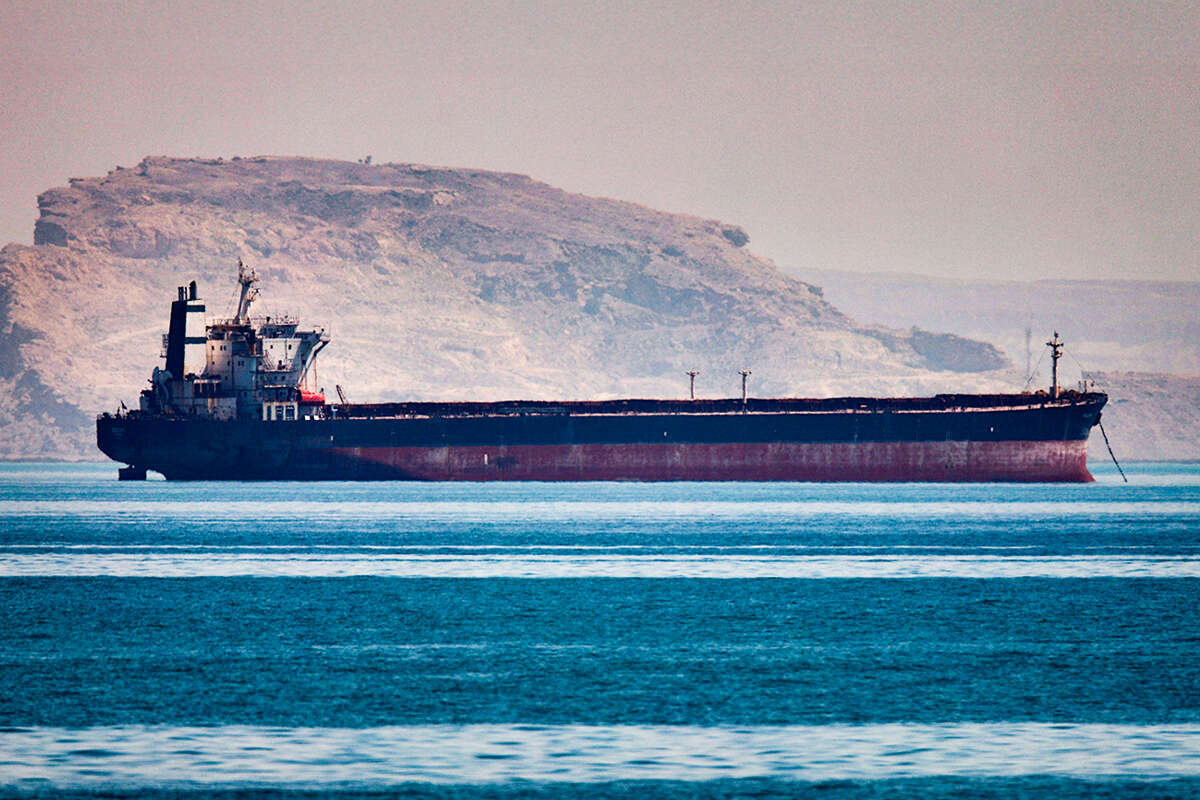
The US secretly approved a financial and maritime arrangement between Qatar and Iran, under which billions of dollars were paid to Tehran in exchange for free passage for Qatari tankers and ships through the Strait of Hormuz, three diplomatic officials now confirm.
This was a deliberate and conscious course of action by the US administration, which allowed its navy to turn a blind eye to the arrangement, in complete contradiction of its declared policy. The move was intended to ease the crisis in global energy markets and curb rising oil prices.
The current revelation proves that the White House had already laid the groundwork at the time for the memorandum of understanding being forged with Iran. In doing so, the administration gave Iranian terrorism a critical economic lifeline at a moment of particularly severe financial strangulation.
The secret US approval, which the sources said was granted about a month ago, dovetailed with Doha's interest in opening a direct channel of communication with Tehran, which began to tighten after the ceasefire. Qatar, fearing a renewed Iranian attack on its facilities after one of its gas installations was attacked during the war, sought to buy security quiet.
While the United Arab Emirates and Saudi Arabia were hit by missile and UAV attacks after the ceasefire, Qatar assisted Iran financially and remained completely protected. As part of this arrangement, Iran demanded access to part of its deposits held in Qatar. Some of the payments were disguised as fees for tankers passing through Hormuz, and a broad credit line of up to $1 billion was also opened for the purchase of goods through Qatar.

Direct line from Washington to Doha
The US Navy, which at the time presented a tough line and claimed it was blocking maritime exports and imports to Iran, was in fact operating a dual policy: With one hand it imposed a blockade, and with the other it allowed the financial oxygen tap to be opened through the Gulf route.
President Donald Trump has even boasted in recent weeks that the US had succeeded in moving ships through the Strait of Hormuz despite the Iranian blockade. It now emerges that a significant share of those ships simply passed under that same secret arrangement.
This deep economic activity turned out to be far more than mediation in negotiations. During the visit to Doha by Iranian Foreign Minister Abbas Araghchi and Central Bank Governor Abdolnaser Hemmati, direct calls were held with Washington, with the US envoys overseeing the negotiations, Steve Witkoff and Jared Kushner, on the other end of the line.

The Qatari success whetted the appetite of other Gulf states that tried to reach a similar arrangement, which worked only partially. According to reports, the country in question was the United Arab Emirates, but the diplomatic officials with whom we spoke refused to officially confirm this, even though in recent weeks Iran has refrained from attacking the Emirates while firing missile barrages at Bahrain and Kuwait.
One of the officials hinted that the arrangement clearly served the Saudi interest in particular, with Riyadh involved in mediation with the US. This came after the Saudis suffered a drastic drop in revenue and managed to bypass Hormuz only partially through the East-West oil pipeline.
These understandings indicate that the Americans built the foundation for the current memorandum of understanding. But now the dispute inside the administration in Washington is widening, in light of harsh domestic criticism the president received over the draft agreement. That criticism is what led to his recent series of public statements and to a hardening of US demands in the negotiations.
As a result, the talks have stalled in recent days over three main points of contention: the Iranian demand for the immediate release of $12 billion frozen in Qatar upon signing, which the Americans refuse to accept before Hormuz is fully reopened and Iran makes a commitment on the nuclear issue.
The other points of contention are Iran's refusal to make a real, written commitment on enriched uranium, and Tehran's refusal to discuss the continuation of enrichment. In addition, the US demand that any unfreezing of funds be designated for civilian purposes only and placed under tight oversight has been watered down, and oversight of the billions is expected to be handled by Qatar alone.