Sunday Jul 26, 2026
NEWSLETTER
www.israelhayom.com
  • Home
  • News
    • Israel
    • Israel at War
    • Middle East
    • United States
  • Opinions
  • Jewish World
    • Archaeology
    • Antisemitism
  • Lifestyle
    • Food
    • Travel
    • Fashion
    • Culture
  • Magazine
    • Feature
    • Analysis
    • Explainer
  • In Memoriam
www.israelhayom.com
  • Home
  • News
    • Israel
    • Israel at War
    • Middle East
    • United States
  • Opinions
  • Jewish World
    • Archaeology
    • Antisemitism
  • Lifestyle
    • Food
    • Travel
    • Fashion
    • Culture
  • Magazine
    • Feature
    • Analysis
    • Explainer
  • In Memoriam
www.israelhayom.com
Home News Middle East Iran & The Gulf

Power struggle grips Tehran as Revolutionary Guards tighten control

Regional sources say Iran's president and foreign minister are trying to preserve the channel for talks with the US, but their influence is waning as the Revolutionary Guards are expanding their grip on key centers of power.

by  ILH Staff
Published on  07-26-2026 11:00
Last modified: 07-26-2026 11:00
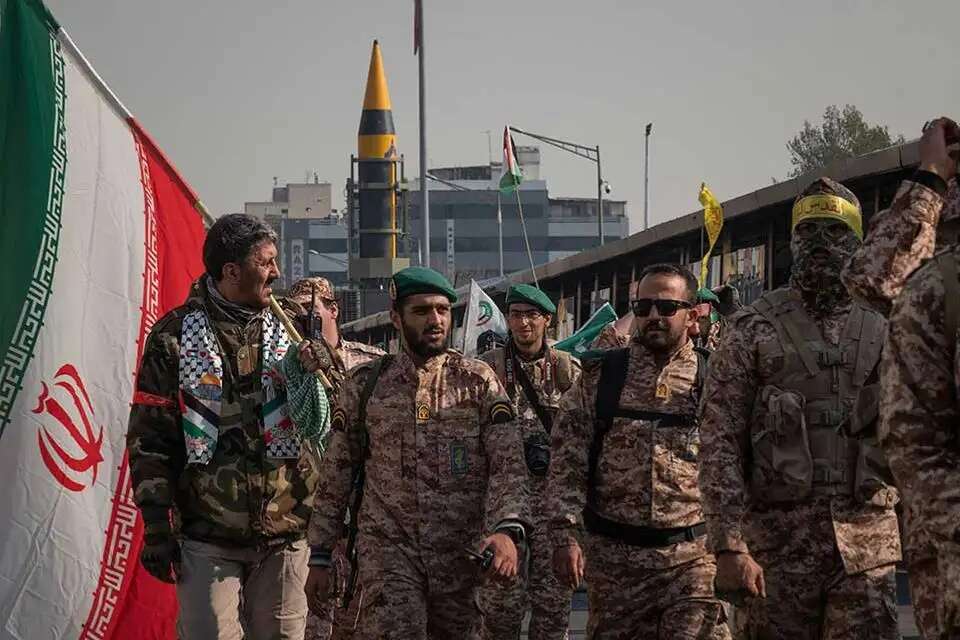
Power struggle grips Tehran as Revolutionary Guards tighten control

IRGC military. Photo: AP

Share on FacebookShare on Twitter

A fierce power struggle is unfolding at the top of the Iranian regime, with the civilian leadership seeking to preserve dialogue with the United States while the Islamic Revolutionary Guard Corps pushes for continued military escalation, according to a New York Post report citing regional sources familiar with developments in Tehran.

On one side, according to the report, are civilian leaders President Masoud Pezeshkian, Foreign Minister Abbas Araghchi and Parliament Speaker Mohammad Bagher Ghalibaf, who want to keep the channel for dialogue with the United States open and prevent the situation from deteriorating into a broader regional conflict. On the other side is the Revolutionary Guards, which the sources said continues to promote a more hard-line approach, relying on military pressure and escalation as a means of achieving its objectives.
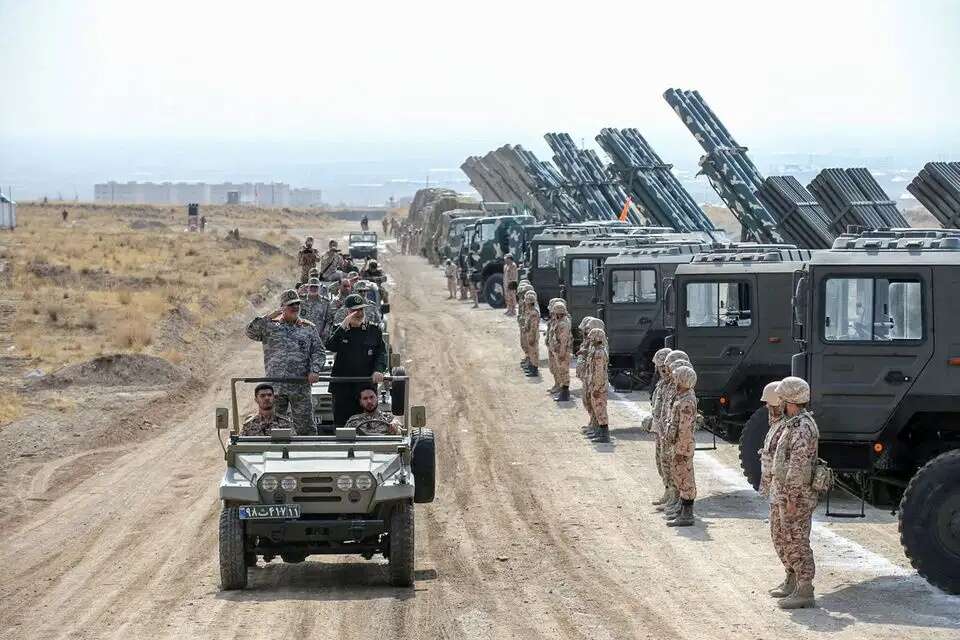
Members of the Islamic Revolutionary Guard Corps take part in a drill
Members of the Islamic Revolutionary Guard Corps take part in a drill (archive). Photo Reuters

One source said the politicians' power was steadily eroding. "They can sign agreements, but they cannot stop the Revolutionary Guards from acting on the ground or parliament from passing laws that circumvent them," the source said.

According to the source, the Revolutionary Guards does not need to win the regime's internal debates. Instead, it creates "facts on the ground" through military action, after which parliament grants those actions legal legitimacy. "This shift is already underway, and once it is enshrined in law, it will be very difficult to reverse," the source said.

Behnam Ben Taleblu, senior director of the Iran Program at the Foundation for Defense of Democracies, told the New York Post that while Iranian politicians continued to speak publicly about dialogue, those who actually made the country's security decisions still believed military escalation was the best way to ensure the regime's survival. The divide between the political leadership and the security establishment was not new, he said, but Iran's most important centers of power had recently appeared to be shifting more clearly toward confrontation.

Sources familiar with the situation told the New York Post that the Revolutionary Guards' growing power was also evident at public events. During the funeral ceremonies for former Supreme Leader Ali Khamenei, the front rows were occupied mainly by Revolutionary Guards personnel rather than senior civilian officials.

In addition, some speeches by senior political leaders were broadcast on television only after being edited, rather than being aired live. According to the report, this raised questions about who controlled the regime's official messaging. The report also said the Iranian parliament was working to restrict the room for maneuver available to the camp that supported diplomatic engagement, as the Revolutionary Guards expanded its influence over state institutions.

Meanwhile, senior Iranian officials traveled to Pakistan this week in an effort to keep communication channels open, with Islamabad acting as a mediator. One source assessed that the civilian leadership could regain strength if the Revolutionary Guards concluded that its options for obtaining weapons on international arms markets were narrowing.
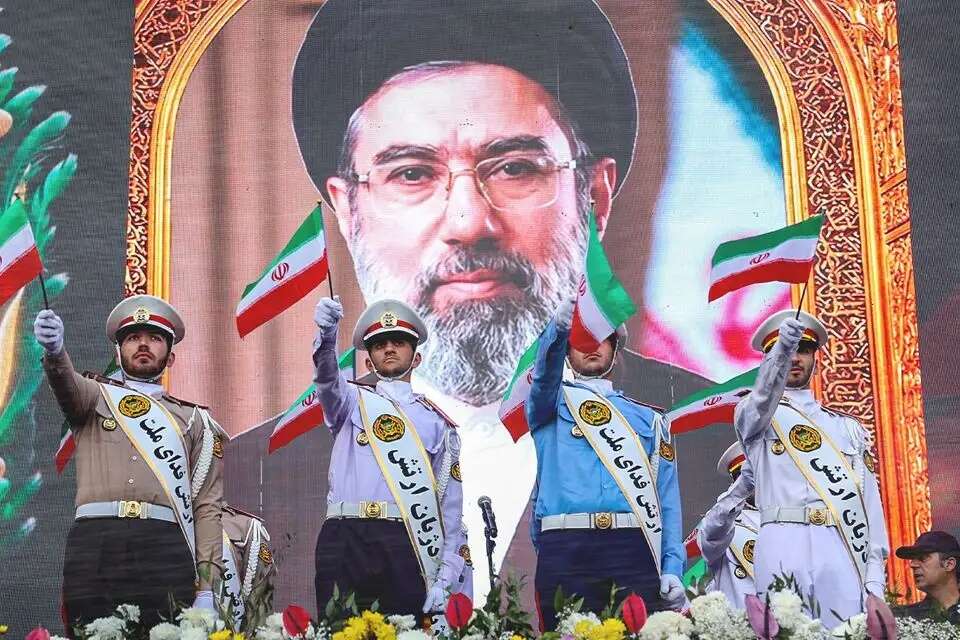
Mojtaba Khamenei
Mojtaba Khamenei. Photo: EPA

The prolonged absence of Iran's new supreme leader, Mojtaba Khamenei, from public view since succeeding his father following his death has further deepened uncertainty over who is making the country's strategic decisions. According to the sources, in the absence of a figure with sufficient authority to settle disputes between the rival camps, each faction is acting to advance its own agenda.

Ben Taleblu warned that public statements by senior Iranian officials in support of dialogue should not be interpreted as a change in the regime's policy. Diplomatic rhetoric did not necessarily reflect where decisions were truly being made in Tehran, he said, arguing that real authority remained in the hands of the security establishment.


Tags: IranIran Revolutionary Guard

Related Posts

Gulf states split over how to end war with Iran

Gulf states split over how to end war with Iran

by ILH Staff

Tehran reports “progress” in talks with Oman over the passage of ships through the Strait of Hormuz. Politico reports Gulf...

B-1 bombers return to Iran, signaling shift to heavier US strikes

B-1 bombers return to Iran, signaling shift to heavier US strikes

by Dean Brandstetter

The B-1, the US Air Force’s heavy strategic bomber, has returned to action over Iran for the first time since...

Israeli intelligence assesses Iran moved enriched uranium to Pickaxe Mountain

Israeli intelligence assesses Iran moved enriched uranium to Pickaxe Mountain

by Dudi Kogan

The Wall Street Journal reported earlier that Iran transferred thousands of uranium-enrichment centrifuges into tunnels deep inside the mountain as...

Menu

Analysis 

Archaeology

Blogpost

Business & Finance

Culture

Exclusive

Explainer

Environment


Features

Health

In Brief

Jewish World

Judea and Samaria

Lifestyle

Cyber & Internet

Sports


Diplomacy 

Iran & The Gulf

Gaza Strip

Politics

Shopping

Terms of use

Privacy Policy

Submissions

Contact Us

About Us

The first issue of Israel Hayom appeared on July 30, 2007. Israel Hayom was founded on the belief that the Israeli public deserves better, more balanced and more accurate journalism. Journalism that speaks, not shouts. Journalism of a different kind. And free of charge.

All rights reserved to Israel Hayom

Hosted by sPD.co.il

  • Home
  • News
    • Israel at War
    • Israel
    • United States
    • Middle East
    • Sports
  • Opinions
  • Jewish World
    • Archaeology
    • Antisemitism
  • Lifestyle
    • Food
    • Travel
    • Fashion
    • Culture
  • Magazine
    • Feature
    • Analysis
    • Explainer
    • Environment & Wildlife
    • Health & Wellness
  • In Memoriam
  • Subscribe to Newsletter
  • Submit your opinion
  • Terms and conditions

All rights reserved to Israel Hayom

Hosted by sPD.co.il

Newsletter

[contact-form-7 id=”508379″ html_id=”isrh_form_Newsletter_en” title=”newsletter_subscribe”]

  • Home
  • News
    • Israel at War
    • Israel
    • United States
    • Middle East
    • Sports
  • Opinions
  • Jewish World
    • Archaeology
    • Antisemitism
  • Lifestyle
    • Food
    • Travel
    • Fashion
    • Culture
  • Magazine
    • Feature
    • Analysis
    • Explainer
    • Environment & Wildlife
    • Health & Wellness
  • In Memoriam
  • Subscribe to Newsletter
  • Submit your opinion
  • Terms and conditions

All rights reserved to Israel Hayom

Hosted by sPD.co.il