The memorandum of understanding between the US and the Islamist regime in Iran is emerging as a thin diplomatic document with a short shelf life.
According to reports, during the 60 days set to begin this Friday, the Americans are supposed to lift the naval blockade, the Iranians are supposed to allow freedom of navigation in the Strait of Hormuz, and the Middle East is supposed to see a ceasefire. Iran will be allowed to sell oil as it did before the war, and it could receive further relief under certain conditions. In short, it is quite likely that at the end of those two months, the sides will return to square one: The Islamic Revolutionary Guard Corps will again disrupt shipping, the Trump administration will respond by reinstating the naval blockade, and the cycle of tension will resume.
From Israel's perspective, this is a disappointing deal, even if it is not the final word. The nuclear issue has been deferred to talks whose chances of producing understandings remain unclear. The regime in Tehran has not been required to stop its aid to terrorist organizations, which amounts to billions of dollars, or even to freeze the rebuilding of its ballistic missile array. Moreover, the new key figures, leader Mojtaba Khamenei and generals Ahmad Vahidi and Mohsen Rezaei, have been given an opportunity to entrench themselves in the centers of power. Indeed, the ayatollahs' loyalists were sent to intimidate the Iranian public, and the government of President Masoud Pezeshkian declared its commitment to the decisions of Khamenei's son. Unless the war resumes, it is hard to see a scenario in which the regime's stability is undermined.
In the Arab world, Qatar appears to be the big winner. Despite its dubious ties with Hamas, its meddling in the affairs of foreign countries, and a series of corruption scandals, Doha has proved that it has not lost its influence over US policy or over the jihadist axis. Time and again, the White House proved receptive to the mediation efforts of the Islamist emirate. Tehran was always glad to receive Doha's delegations. That is how the collapse of the ceasefire was successfully prevented. It is no surprise that in the period between the end of the war in April and the announcement of the memorandum of understanding, Qatar was among the only countries in the Gulf that did not come under missile fire.

Other Gulf Cooperation Council countries, such as Saudi Arabia and the United Arab Emirates, naturally aligned themselves with the announcement of the memorandum. From the outset, Riyadh and Abu Dhabi were deeply skeptical about the seriousness of the Trump administration's intention to topple the Iranian regime and bring about its replacement. In the previous decade, their leaders were already disappointed by the pendulum-like nature of US policy regarding the Yemeni arena and Iranian aggression in the Gulf, which did not receive an appropriate response. The Gulf states therefore preferred to show relative restraint in the face of missile and drone launches and support the diplomatic track. Trump's threats against Iranian civilization did not impress them.
The big loser in the Arab world is the state of Lebanon. Within several hours, the memorandum of understanding led to a further reduction in strikes in southern Lebanon and the partial return of the population to villages and towns. On March 2, Hezbollah set five objectives: an end to Israeli strikes, the withdrawal of the Israel Defense Forces, the return of the population, an agreement to release Hezbollah detainees, and a national reconstruction process. The state of Lebanon shares those goals, in addition to a plan to dismantle illegal weapons and sign an armistice agreement with Israel.
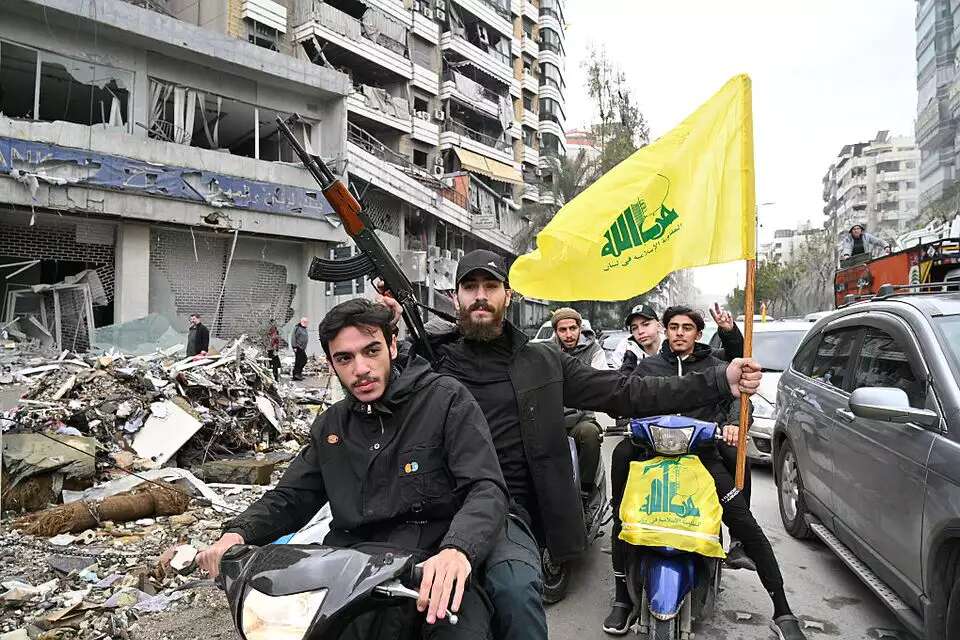
At this stage, the memorandum with Iran advanced the achievement of two of those five goals before it was even signed. Worse still, for now, the American weight is preventing Israel's political echelon from launching a broad offensive to defeat Hezbollah. Even a targeted strike in Dahiyeh against a mid-ranking commander in the organization created tension with Trump.
Even if Israel reaches an agreement with the Lebanese government, under the current circumstances Beirut will find it difficult to enforce it on Hezbollah. The Lebanese army is still limited in its capabilities, and the terrorist organization has not been weakened enough. This means the indirect Iranian channel has succeeded in bringing about more significant progress in implementing Lebanon's demands than the direct channel in Washington. In that sense, it was the US, by agreeing to include Lebanon in the memorandum of understanding with Iran, that damaged the standing of the figures in Beirut who supported direct negotiations with Israel.