When examining the statements made by Donald Trump and Prime Minister Benjamin Netanyahu at the start of the campaign, alongside the details of the emerging agreement between Tehran and Washington, one clear conclusion emerges: Operation Roaring Lion failed. In practice, instead of bringing about the fall of the Iranian regime or significantly weakening it, the campaign ended with the regime in Tehran stronger economically, diplomatically and even militarily.
The war exposed the deep gap between Israel and the US in their approach to Iran, and especially when it comes to the willingness to reach agreements with it. Worse still, if President Trump is pursuing an agreement with Iran, it is hard to see any future US president choosing to return to a military adventure against it in the foreseeable future.
In light of this, the failure of the campaign and Iran's emergence in a stronger, and undoubtedly more extreme, form, given the growing influence of the Revolutionary Guards on the decision-making process, illustrate more than anything the failure of Israel's strategy toward Iran. That strategy was based on the desire to act alongside the US administration to weaken the regime to the point of destabilizing it, and even toppling it. When Israel was presented with a historic opportunity to move in that direction, it suffered a resounding failure. This is expected to have profound implications for Israel's future ability to enlist the US administration on its behalf on the Iranian issue, or to influence the emerging agreement on the nuclear question.
And what does Iran receive in return? In exchange for opening the Strait of Hormuz, which was effectively open even before the war, Tehran is expected to receive significant economic relief without giving up any major strategic asset. It is already clear that neither its missile array, nor its assistance to its proxies across the Middle East, nor even its right to enrich uranium, is expected to be included among the concessions it will be required to make as part of future negotiations with the US.

Realistic priorities
With regard to the Gulf states as well, it is clear that, much to Israel's disappointment, they are not only refraining from distancing themselves from Tehran, but are also maintaining and perhaps even deepening their ties with it.
This is true of the United Arab Emirates as well. As a result, Israel's hope of expanding the Abraham Accords on the strength of the campaign's achievements is rapidly fading. Israel also finds itself isolated on the Iranian issue, remaining the only country that believes military force can and should be used to bring about fundamental change in the Islamic Republic. In this sense, Israel's failure requires a renewed assessment of its strategy toward Tehran, based on a clear understanding that the emerging agreement could mark a watershed moment regarding the possibility of toppling the regime. In light of this reality, Israel must formulate more realistic and restrained priorities for its future strategy toward Iran.
Tehran, when it comes to it, gave little and received a great deal. The US granted significant concessions and received mainly the opening of the Strait of Hormuz in return. Israel, by contrast, found itself outside the decision-making table, without any real ability to influence the process.
This is how Operation Roaring Lion ends. With a whimper. This has implications not only for the chances of a future campaign against Iran, a move Israel will find very difficult to advance without US backing, but also for Israeli deterrence toward Tehran. Beyond that, Israel's standing in Washington has also been damaged, as it finds itself increasingly pushed to the margins by a US administration that is not forgiving of its conduct or of its attempts to undermine the future of the emerging agreement.
In many respects, the agreement is not only the end of the current campaign, but also a strategic turning point that illustrates the limits of Israeli power and the need to reexamine the basic assumptions on which its policy toward Iran has rested in recent decades.
The most serious problem for Israel emerging from the new agreement is that it effectively has no real ability to change the harsh decree. President Trump is not interested in returning to a military confrontation with Iran, and this position now appears to enjoy a broad consensus in the US political system. Even Israel's prominent supporters in Washington, led by Sen. Lindsey Graham, are being very careful not to publicly criticize the president or challenge his policy.
In this reality, any Israeli military move perceived in Washington as an attempt to sabotage the agreement or undermine its implementation is expected to encounter a harsh response from the US administration in general, and from the president in particular.
Unlike during the Obama administration, when Benjamin Netanyahu could try to bypass the White House by mobilizing support in Congress and in US public opinion, those options barely exist this time. In fact, in a certain sense, Netanyahu may even miss the days of confrontation with Obama, when he at least had some political ability to challenge the administration's policy. Facing Trump, by contrast, Israel's room for maneuver is far more limited, both because of the president's political standing and because of the limited willingness of Israel's allies to confront him.
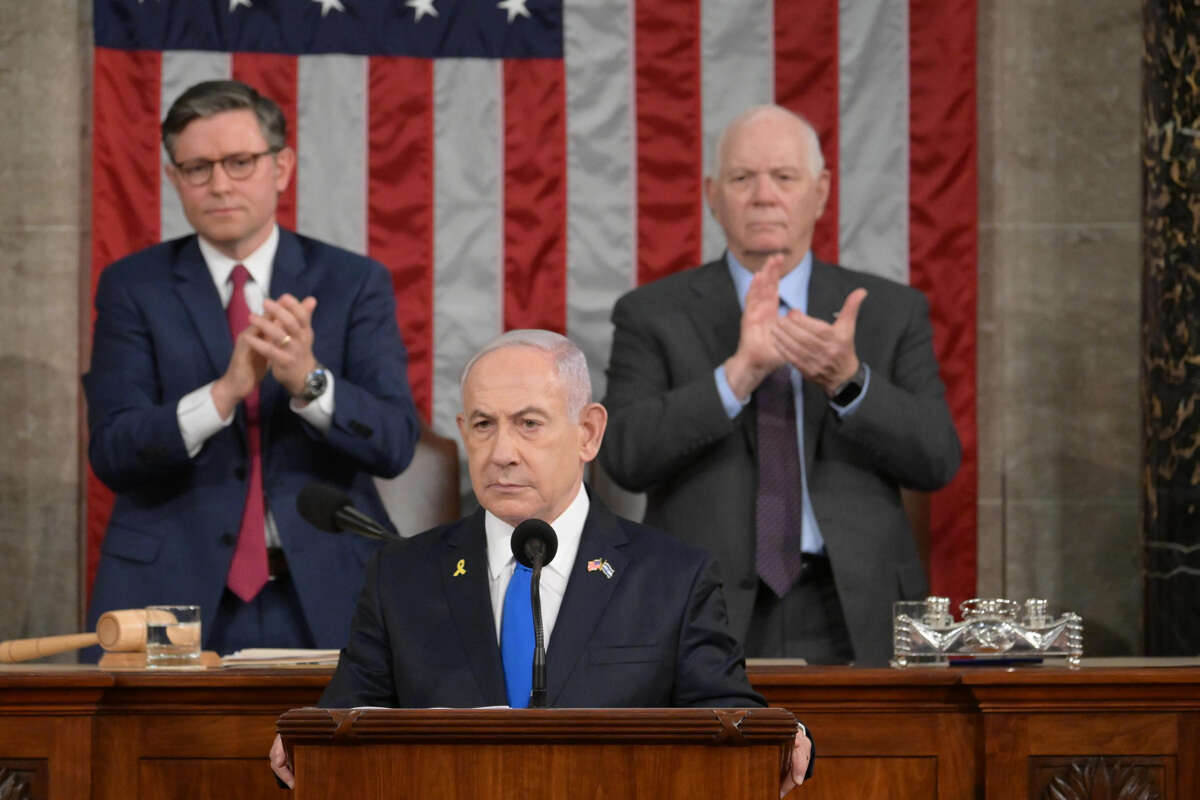
Bottom line, Israel's ability to change the course of events is highly limited. If the agreement is indeed signed and implemented, Jerusalem will find itself facing a new strategic reality that has largely been forced upon it, while most of the tools it once had to influence US policy or block moves vis-a-vis Iran are no longer available. This situation requires not only a reassessment of Israel's strategy toward Tehran, but also a reexamination of the basic assumptions regarding Israel's ability to influence decision-making in Washington.