It is often said that when Golda Meir met President John F. Kennedy in the early 1960s, the question arose as to why Israel needed an independent strategic deterrent of its own. According to one version of the story, Kennedy asked why such a capability was necessary if the United States could guarantee that it would come to Israel's aid in the event of an existential threat.
Looking at the narrow, vulnerable map of pre-1967 Israel, Golda reportedly replied: "What if, Mr. President, you happen to be on a family vacation far from the White House? By the time you understand what is happening, return to Washington, and make a decision, Israel may already have ceased to exist."
Whether the story is apocryphal or not, it captures a foundational truth that guided Israeli strategic thinking from the state's earliest days: Israel must be capable of defending itself, by itself. Not because allies are unimportant, but because when the moment of truth arrives, responsibility for Israel's survival rests with Israel alone.
This principle became the cornerstone of Israel's security doctrine. It emphasized superior intelligence, strategic initiative, preemption when necessary, rapid transfer of the fighting onto enemy territory, decisive victory, and the preservation of maximum freedom of action.
Over time, however, that original doctrine gradually eroded. The legitimacy of proactive military action diminished, while dependence on international support increased. The pursuit of decisive victory gave way to concepts such as containment, conflict management, and strategic patience. The costs of this shift became evident as early as the Yom Kippur War, when Israel refrained from launching a preemptive strike out of concern for its relationship with the United States.
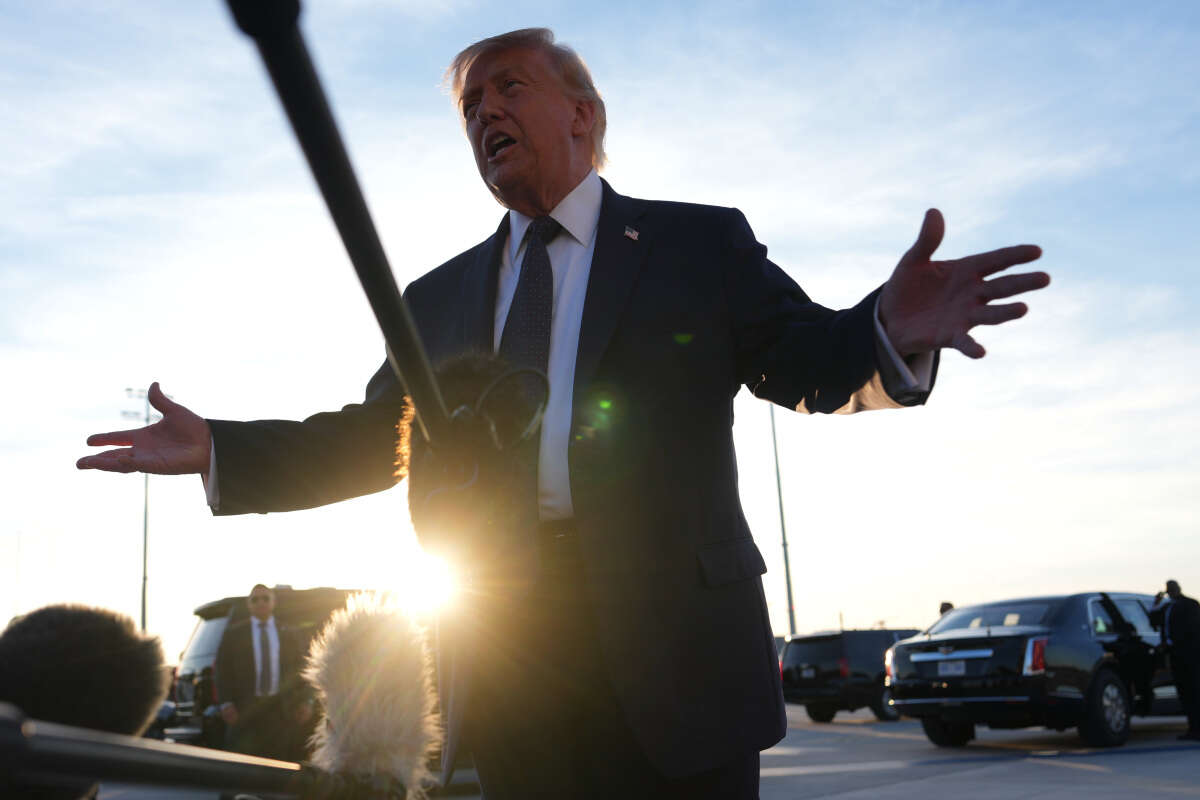
Many Israelis expected something different from Donald Trump. Following his first term – marked by unprecedented support for Israel – many viewed him as a leader who would stand firmly alongside the Jewish state, particularly in confronting the ring of hostile forces that Iran had built around it. Trump himself repeatedly argued that Iran posed a threat not only to Israel but to the United States as well.
That is why the sense of disappointment is so profound. Israelis find it hard to explain why the White House appears reluctant to confront Iran more forcefully; why it employs rhetoric perceived as dismissive toward Israel and its prime minister; and why it seems increasingly inclined to limit Israel's freedom of action against Hezbollah, an organization responsible for the deaths of hundreds of American soldiers and civilians.
Yet at this difficult moment, Israel's leaders and citizens should resist the temptation to focus solely on what Washington did or did not do. Instead, we should engage in an honest examination of where we went wrong rather than seek comfort in accusations that others have abandoned us.
Throughout the conflict, President Trump granted Israel broad freedom of action. At times, it appeared almost unlimited. His pressure undoubtedly contributed much to securing the release of hostages.
The more difficult question is whether Israel made full use of the strategic freedom it was given while the administration absorbed considerable political and diplomatic costs on its behalf. Did we properly appreciate the value of time – a factor that once stood at the very center of Israel's security doctrine? Did we pursue decisive victory with the urgency and determination that guided Israel's founding generation?
We are entitled to be angry with the American president. We are entitled to feel disappointed. But anger is not a strategy, and disappointment is not a substitute for self-examination. Neither relieves us of the responsibility to confront our own decisions and mistakes.
The task before us now is not to search for scapegoats abroad. It is to conduct a candid and thorough reckoning with our own assumptions, actions, decisions, and failures over the past two and a half years.