Iran is attempting to impose a new deterrence equation on Israel – one designed to restrict Israel's freedom of action and restore Tehran's regional standing. According to this equation, any significant Israeli action against Hezbollah in Lebanon, particularly in Beirut's Dahiyeh district, would trigger a direct Iranian response against Israel. Simultaneously, Tehran seeks to broaden the equation by linking Israel's continued military presence in southern Lebanon to the risk of escalation.
These messages were conveyed by Iranian Foreign Minister Abbas Araghchi to foreign ambassadors in Tehran and reiterated by the statement of the IRGC's Khatam al-Anbiya Headquarter. Their coordinated messaging reflects a unified effort to establish new red lines in Lebanon and deter Israeli operations. Iran seeks to position itself as the ultimate arbiter of the scope of Israeli military activity in Lebanon.
A recent map published by the IDF on June 18 regarding troop deployments within a 10 km zone in southern Lebanon, and the recent fatalities of the IDF soldiers, including a battalion commander, highlighted the ongoing friction between the IDF and Hezbollah. In Tehran's view, any Israeli action in Lebanon that constrains Hezbollah's freedom of movement provides a potential pretext for intervention.
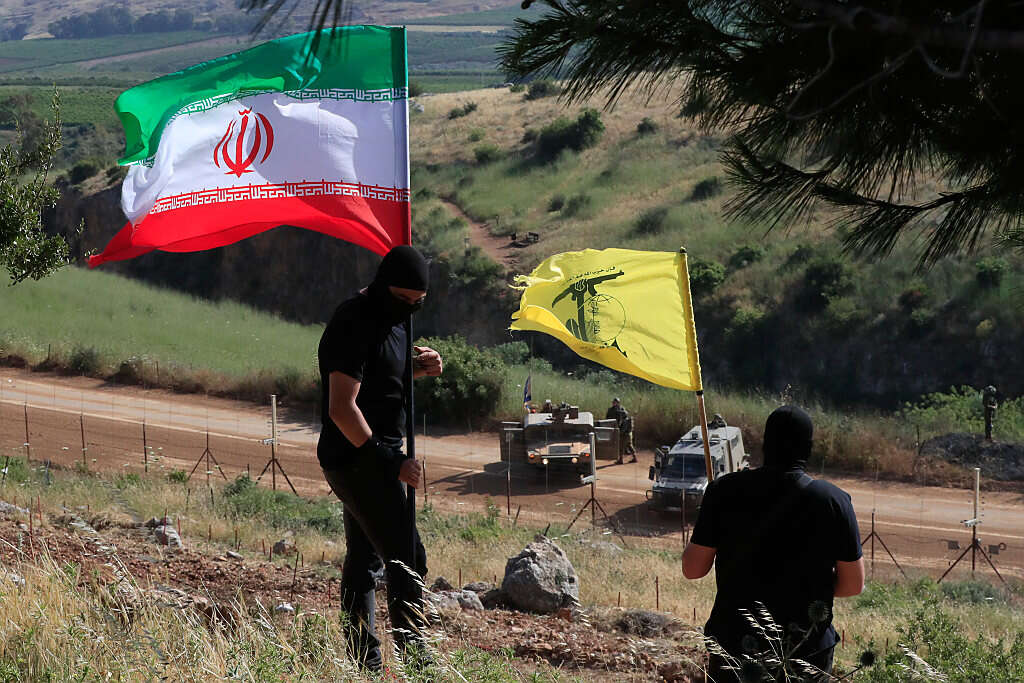
From Tehran's perspective, successfully imposing such an equation is vital for restoring deterrence. Since October 7, Iran and its proxies have suffered a series of setbacks. Hezbollah has lost senior commanders, military infrastructure, and weapons stockpiles, and its freedom of action has been increasingly constrained; its dire situation is reflected in Iran rushing to its defense against Israel. The Houthis have been hit, albeit to a limited extent. Hamas has suffered severe damage; and Iran's status as the leader of the "Axis of Resistance" has been weakened. Against this backdrop, Tehran seeks to demonstrate that it can still dictate the rules of the game and impose limits on Israeli behavior.
History, however, suggests that accommodating Iranian threats does not moderate Tehran's conduct; it encourages further demands. For years, the Islamic Republic has operated on the assumption that determined pressure can force adversaries to retreat. When confronted with concessions, it tends to interpret them as signs of weakness, increasing rather than reducing its demands.
The dispute is not merely about southern Lebanon or Dahiyeh. It is a contest over who sets the rules of engagement. If Israel accepts the principle that Iran may determine which targets it can strike and under what conditions, it will concede an additional layer of influence over its security policy. The issue extends far beyond Lebanon: Various senior Iranian officials have declared that their long-term strategic goal is the destruction of Israel via a multi-front invasion attack. To accomplish this, Iran knows it must establish precedents that can be leveraged in future fronts as well.
The re-establishment of Hezbollah along Israel's northern border and the reconstitution of the Axis of Resistance should not be understood as an endpoint, but rather as a mechanism through which Iran seeks to restore its regional leverage. Such a trajectory would position Tehran and its proxies on a more favorable launching pad from which to resume their campaign against Israel once they assess that regional and military conditions have sufficiently matured.

Israel is therefore contending not merely with a local adversary but with a broader Iranian effort to reshape the regional balance of deterrence. Tehran's strategic objective is to transform every significant Israeli military action into a decision that imposes direct costs from Iran, thereby progressively constraining Israel's operational flexibility. Should this approach succeed, it would represent a substantial Iranian strategic gain even absent a direct military confrontation.
Accordingly, sustained military pressure on Hezbollah must be complemented by diplomatic engagement with the Trump administration to clarify that acquiescence to Iranian consolidation runs counter to American interests. Permitting Iran to reconstitute its deterrent architecture would strengthen the regime and advance its long-term objective of undermining Israeli security. Similarly, proposals to delegate management of Hezbollah to the Assad regime in Damascus carry significant risks, as they would effectively substitute the current Iranian-backed threat with a Sunni jihadist challenge underwritten by a major regional power—Turkey.
For these reasons, resisting Iranian efforts to impose new deterrence equations is a strategic imperative. This does not require uncontrolled escalation, but it does require rejecting attempts to constrain Israel's freedom of action through threats. In the Middle East, and especially in Tehran, restraint driven by fear of escalation is often interpreted not as responsibility, but weakness.
Experience suggests that Iran's ambitions are more likely to be curbed by resolve than by accommodation. The clearer Israel's determination to defend its interests, the more difficult it becomes for Tehran to expand its influence and dictate the terms of confrontation. Conversely, hesitation risks encouraging further Iranian efforts to redefine the rules of engagement in its favor.
The author is a researcher at the Misgav Institute for National Security and a lecturer at the School of Political Sciences at the University of Haifa.