The alliance between Israel and the United States has long been a cornerstone of Israel's national security. For decades, it has provided Israel with diplomatic backing, military assistance, intelligence and technological cooperation of irreplaceable value.
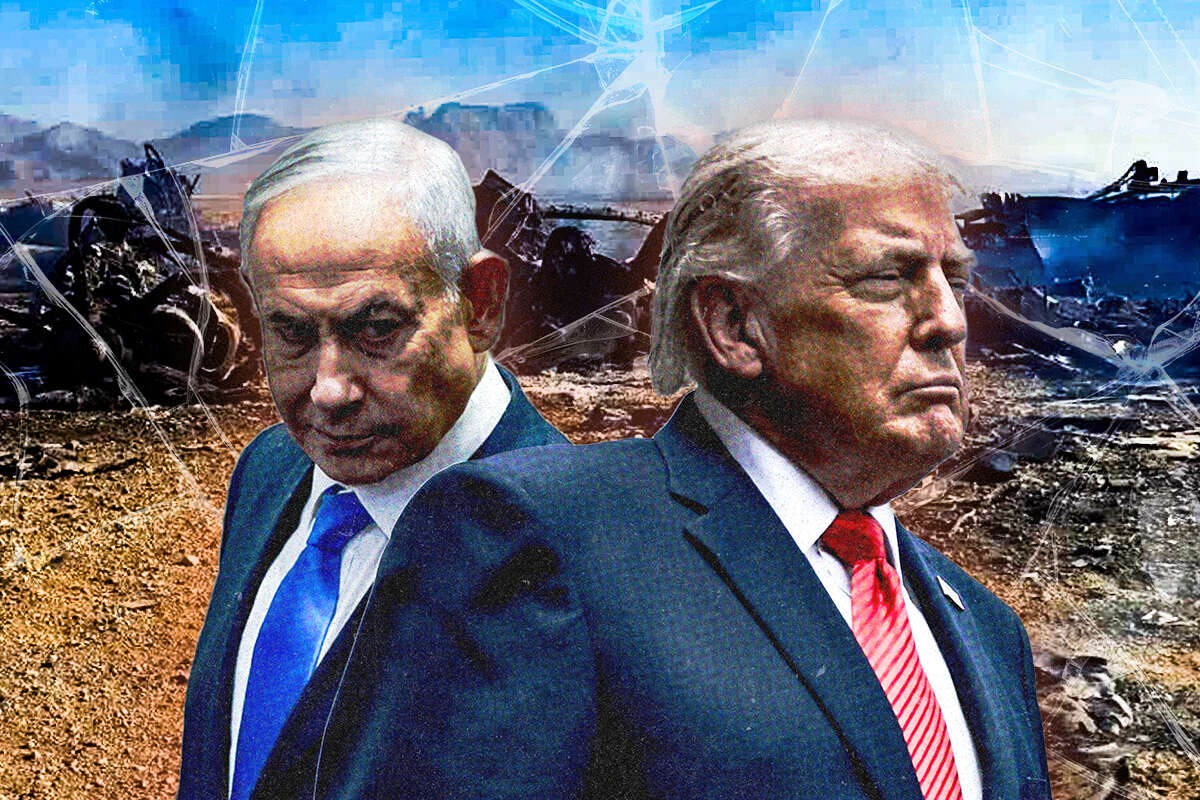
Precisely for that reason, however, careful attention must be paid to a troubling shift now emerging in American discourse toward Israel. This is not merely a matter of one statement or another by President Donald Trump. Rather, it reflects an accumulation of remarks by the president, Vice President JD Vance, and other prominent figures in his political camp, suggesting a more critical and at times more impatient attitude toward Israel.
Israel, it seems, is no longer portrayed solely as an ally fighting shoulder to shoulder with the most powerful state in the world against the axis of evil. Increasingly, and too often, it is also depicted as a state almost wholly dependent on the United States, while its interests and those of Washington are presented as diverging, sometimes sharply and sometimes more subtly.
Yet it is precisely because of Israel's close friendship with the United States that Israel must now ask itself a difficult question: has the time not come to demonstrate its independence to Washington through concrete action, and not merely through declarations?
This is not a new question. In the past, Israel faced a strategic reality far more precarious than the one it confronts today. On repeated occasions, when Israeli governments believed that a vital national interest was at stake, they chose to act independently. This was true of the policy of retaliatory operations, the decision to launch the Sinai Campaign, the development of the nuclear option, the bombing of the Iraqi nuclear reactor, the expansion of settlement in Judea and Samaria, and other major decisions.

Most of these decisions were taken with full awareness that they might be received with discomfort, criticism, or even anger by the American administration. Yet in many cases, the United States ultimately came to respect Israel's independent course of action and, over time, even deepened its relationship with the Jewish state.
Israel, too, must draw lessons from the present reality. President Trump's implicit criticism of Israel's conduct in Lebanon — namely, that Syria under al-Julani could "do the job" more effectively — cannot simply be dismissed. It requires sober Israeli self-examination.
The current campaign has lasted longer than expected on several fronts, and not all of its objectives have been fully achieved. A state that seeks to expand the scope of its independence must also demonstrate operational capability, strategic decisiveness, and effectiveness. Independence is not only a right; it is also a burden of responsibility.
There comes a stage in the life of every nation when it must move from dependence to genuine partnership. Israel today is no longer the small and vulnerable state of its early years. It is a regional power with some of the most advanced military, technological, and scientific capabilities in the world. The time has come for its relationship with the United States to reflect this reality.
The goal is not to distance Israel from America, nor to enter into confrontation with it. The goal is to establish a more mature relationship, one based on mutual respect, strategic clarity, and reciprocal independence. The history of Israel–United States relations suggests that precisely when Israel acted with confidence, made independent decisions, and proved their validity in practice, it earned not only criticism but also respect. That is the lesson that should guide Israel at the present moment.