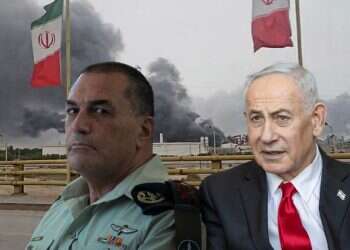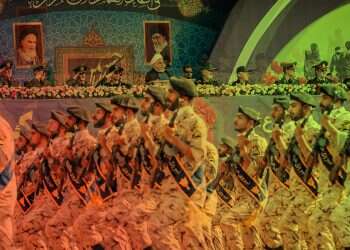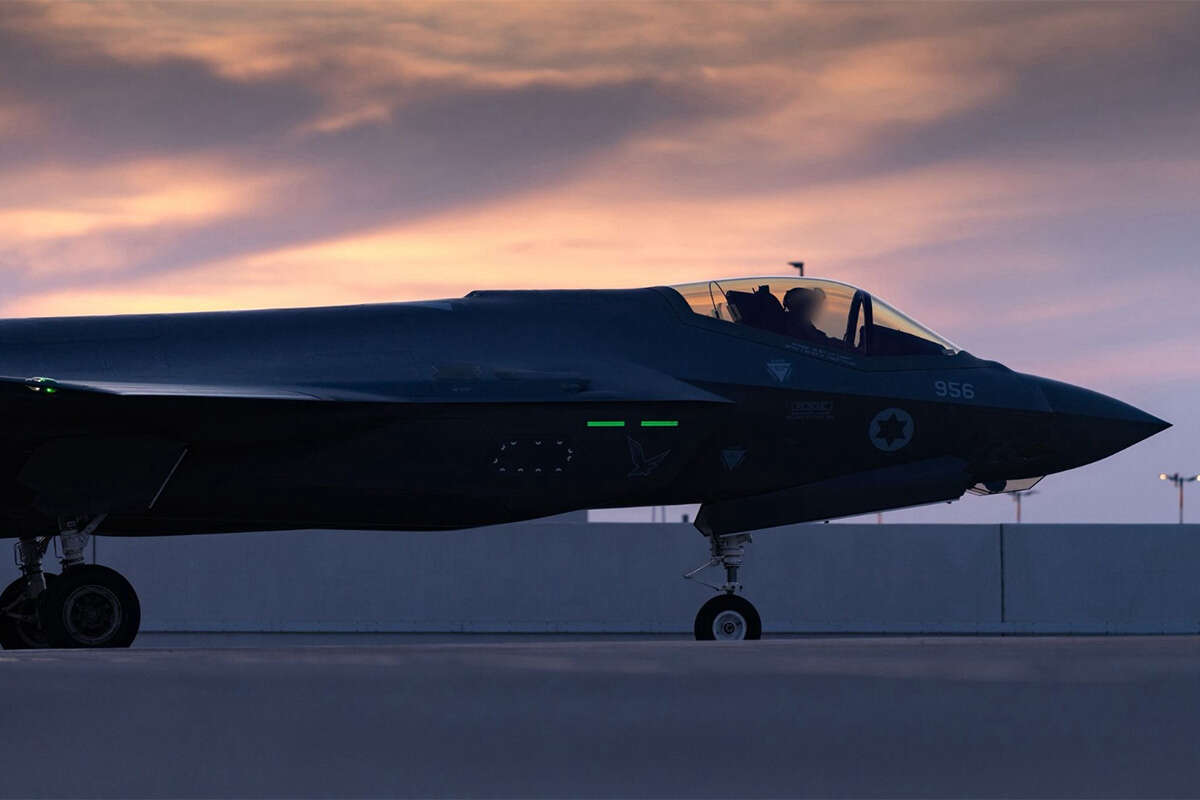
The terrorist attack Friday near the Palestinian village of Tell in Samaria diverted the Israeli security establishment from its intensive focus on Iran. What the media dryly described as "heightened alert" and "vigilance" was, in practice, a state of maximum readiness for the resumption of the campaign against Iran.
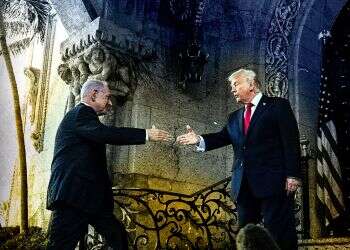
Israeli officials believed the Americans might strike overnight between Friday and Saturday. For now, the attacks appear to have been postponed, though not necessarily for long. Faced with a choice between a ceasefire to allow talks and a broad resumption of the campaign, US President Donald Trump is giving the former a chance, but appears inclined toward the latter. His meeting with Prime Minister Benjamin Netanyahu in Washington this week is likely to focus on coordinating policy on Iran, as the two did ahead of the previous campaigns in June last year and February this year.
Netanyahu wants the campaign to resume, in the hope that the regime in Tehran will fall. The security establishment is skeptical, however, because there is no magic formula that can guarantee results different from those achieved in the last round.
After Israel failed to bring down the regime by eliminating its leaders and senior military and security officials, it urged the Americans to try doing so through systematic attacks on Iran's national infrastructure. The hope was that, without electricity and water, the public would take to the streets and finish the job. The Americans objected, fearing a humanitarian catastrophe, and in any case no one could guarantee that the plan would produce the desired outcome.
From Iran alert to terrorist attack in Samaria
Meanwhile, the security establishment was drawn into events in Judea and Samaria following the attack in which Benayahu Malt and Maj. Yuval Ezra were murdered. An Israel Defense Forces investigation found that a group entered the Palestinian village without coordination and became involved in a confrontation with local residents, which quickly escalated into violence. An IDF force and the civilian security squad from the nearby community of Havat Gilad arrived at the scene.
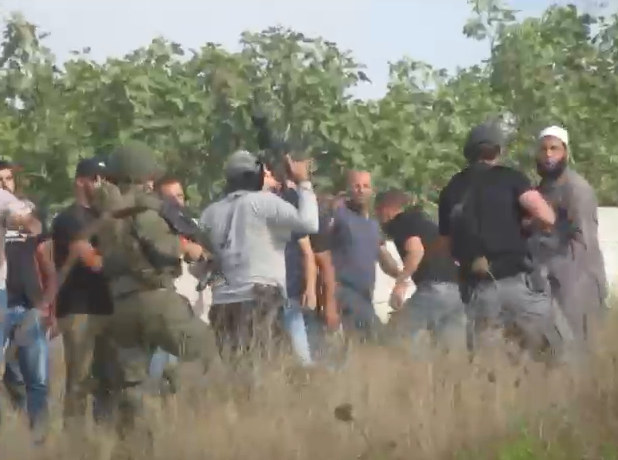
During the confrontation, the community security coordinator's rifle was seized and used to shoot and kill the two men and seriously wound a third. IDF troops wounded the terrorists, who fled to Nablus. They were later arrested by the IDF's elite Duvdevan counterterrorism unit at a hospital in the city and transferred for questioning by the Shin Bet security agency.
The grave incident requires a thorough examination and lessons to be learned. The IDF must ask itself how capable it truly is of securing the area and what steps it should now take, given the disturbing increase in terrorist attacks over the past week.
Together with the Shin Bet, the military must examine how to improve communication and coordination with settlers in order to prevent dangerous behavior on their part. Shin Bet Director David Zini should play a central role in that effort, both because his agency is responsible for thwarting Palestinian and Jewish terrorism and because he is seen as more acceptable to groups with whom the IDF has difficulty engaging.
The theft of the rifle predictably prompted demands for an immediate change to the rules of engagement. This does not appear to be such a case, and in any event the forces' hands are not truly tied, contrary to the claims hastily made by several politicians anxious about party primaries.
Their contention that soldiers fear military prosecutors more than they fear the enemy is nonsense. The IDF rarely investigates or prosecutes soldiers even in controversial cases, and the Military Advocate General's Corps, certainly under its current leadership, is an enemy only in the imagination of politicians hunting for social media likes.
The facts, of course, are different. The IDF carries out operations in Judea and Samaria every night and makes hundreds of arrests throughout the West Bank. Contrary to claims by other politicians, troop levels in Judea and Samaria were not reduced but increased by two battalions before the attack. The forces there are several times larger than those in any other operational sector, and for those who have forgotten, the IDF is also operating in Gaza and Lebanon.
Above all, the decision not to bring down the Palestinian Authority is not a military decision but a political one, meaning it is Netanyahu's. He can give the order should he choose to do so, irrespective of the fact that the PA and its personnel had no connection to Friday's attack.
The IDF opposes launching another war while other fronts remain unresolved, particularly when another campaign against Iran may be imminent. In any case, it lacks the personnel needed for a full-scale war in Judea and Samaria, in part because of the coalition's sweeping exemption allowing ultra-Orthodox men to avoid military service.
At the same time, the wholesale establishment of communities and outposts in Judea and Samaria has imposed an unprecedented security burden on the military, which must protect them with minimal forces. In some cases, friction is inherent in the communities' locations. In others, their residents actively seek confrontation, including through hikes that reach the outskirts of Palestinian villages and sometimes enter their centers.
Friction on the ground
These things must be said, even if they are less comfortable to hear: Such uncoordinated visits in Judea and Samaria are life-threatening.
First, they endanger the visitors themselves. Then they endanger the forces called to the scene to restore order. They also endanger Palestinian lives. And they could ignite a major conflagration that Israel, or at least its more responsible elements, has sought to avoid in recent years.
Setting out on such trips during such a volatile time, when the IDF is preoccupied with wars on multiple fronts and the threat level in Judea and Samaria is especially high, is irresponsible. The excursions are viewed as provocations that generate friction with Palestinians.
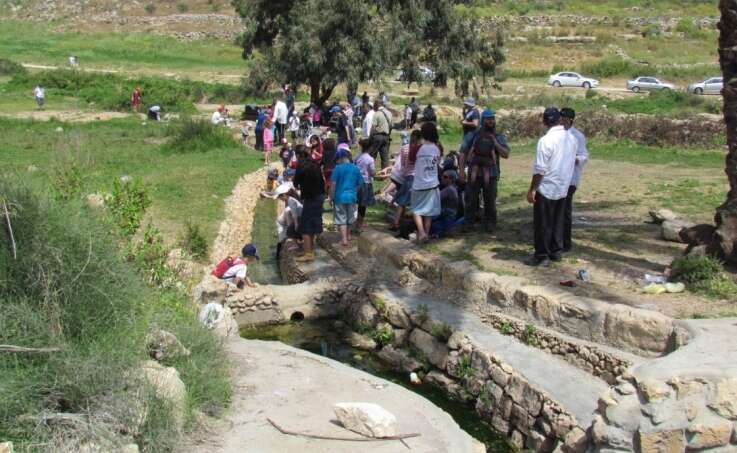
In most cases, they end in a near miss. On Friday, one ended in a deadly terrorist attack. That did not prevent another group of Jews from reaching Tell and entering the village on Saturday, again without coordination.
Rather than calming tensions, some figures in Israel, including members of the government and Knesset, are seeking to exploit the tragedy. They are taking advantage of Netanyahu's political dependence on them and dragging Israel toward the edge of an abyss, while once again exposing it to the risk of committing war crimes.
Finance Minister Bezalel Smotrich wrote on social media that villages from which terrorist attacks originated should be made to look like the refugee camps in Nablus and Tulkarem. He did state that "the population must be removed for its own protection," apparently to avoid being seen as legitimizing harm to civilians. In doing so, however, he effectively legitimized expulsion, precisely the kind of crime Israel is accused of committing in Gaza.
Toward the end of the first decade of this century, when Netanyahu was elected prime minister for the second time, he was asked which was more urgent: Bushehr, referring to the civilian nuclear reactor then being completed in Iran as a precursor to its nuclear program, or Yitzhar, one of the most radical symbols of the settlement movement in Judea and Samaria. At the time, Netanyahu was pressing the world to stop Iran's nuclear project, while the international community was pressing him to advance an agreement with the Palestinians. "Between Bushehr and Yitzhar, I choose Bushehr," Netanyahu told his listeners.
Today, too, Netanyahu is urging the world to confront Iran and prevent it from acquiring nuclear weapons. But the choice no longer appears as obvious to him as it did in 2009. The free rein he has given his coalition partners threatens to entangle Israel not only in a bloody, complex and insoluble campaign in Judea and Samaria, but also in an international confrontation that will deepen Israel's isolation and further diminish its ability to address the Iranian threat. Trump can be expected to make that clear to him when they meet this week.