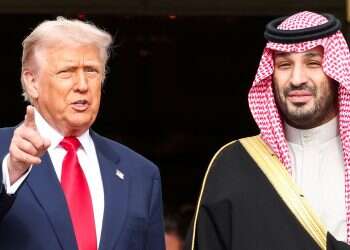
Those who interpret Israeli rejection of the "15-Point Implementation Outline" for Gaza as capitulation to political constraints or as an electoral ploy are ignoring the profound shift that has taken place in Israeli public opinion. Israelis today doubt the ability of international actors or diplomatic agreements to prevent Hamas from rearming and rebuilding its military strength. The true test of policy is what happens on the ground.
Growing Israeli public pressure regarding security policy in Gaza and Lebanon is one expression of the profound change that has taken place in Israeli public opinion. Since the events of October 7 and the "Swords of Iron" war, the government and the military leadership have been under intense public scrutiny. Any arrangement or move that does not guarantee a fundamental change in the security reality is perceived as a threat to the achievements of the war.
The sentiment among broad segments of the public is that diplomatic deals are nothing more than a lifeline for the enemy's survival, temporary arrangements that allow Hamas and Hezbollah to rebuild their fighting forces in preparation for the next inevitable confrontation with Israel.
When this is the prevailing sentiment on the Israeli street, one cannot expect Israel's political leadership to pursue a course that runs counter to it. Even more so when Israel's military brass also is warning that the proposed framework for Gaza is a Hamas "strategic ambush."
It cannot be denied that the alternative – continuation of the war effort against Hamas and Hezbollah – entails significant costs. However, this must be considered in the context of the high costs Israel may have to pay if the enemy is left standing strong.
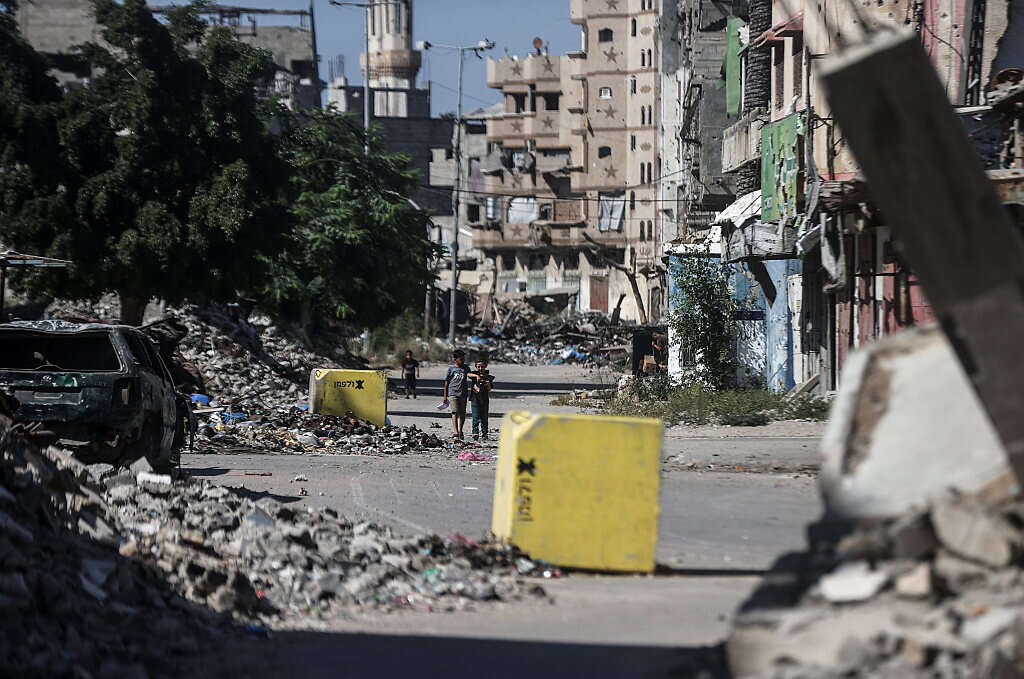
There is no need to delve far into memories of the past to understand the consequences of "closing a deal" with a determined enemy that has not yet been defeated. Hezbollah's rapid return to active fighting against Israel in March of last year, alongside the pattern of deception and defiance that Iran is currently conducting vis-à-vis the Trump administration, provides a fresh illustration of this.
Shortly after Netanyahu's statement rejecting the "15-Point Outline," Hamas issued a public statement revealing the great hopes it places in that plan. Hamas reaffirmed its commitment to the understandings and called for a clear timetable to be established for their implementation. It emphasized that the movement's absolute priority at the "current stage" is a permanent ceasefire, a full withdrawal, the opening of the crossings, and the reconstruction of the Strip.
For anyone unfamiliar with Hamas terminology, the words "at the current stage" make clear that Hamas has in no way abandoned its long-term objectives. This is merely a temporary adjustment of its priorities in light of Israel's military pressure.
The Israeli media quoted anonymous senior officials from the "Board of Peace" who played down the significance of Netanyahu's declaration. They suggested that Israeli policy should be judged by actions on the ground rather than by words and declarations, and claimed that in practice Israel is implementing the plan; that it has ceased targeted strikes on Hamas terrorist figures and is maintaining the ceasefire.
From Hamas' perspective, the restraint of Israel's military activity, together with the "creative ideas" contained in the plan, gives Hamas what it needs more than anything else: hope and breathing room.
Indeed, there is no better way to clarify Israeli policy than through actions on the ground. Israel must resume targeted strikes on terrorist leaders and proactive operations against terrorist groups, rather than contenting itself with defensive measures or the removal of immediate threats.
Every moment in which the terrorist elements are not being pursued is exploited by them for reconstruction, reorganization, and planning of the next attack. It is preferable to risk diplomatic criticism from Washington for deviating from the line it is attempting to lead than to pay the price of restraint.
The "Sunni Alliance"
The signing of the "Mecca Joint Defense Agreement" (MJDA) between Turkey, Saudi Arabia, and Pakistan is another source of concern for Israel. On paper, it is a force multiplier that combines the strengths of three key states: Riyadh's stable financial resources, geopolitical position, and religious influence; Islamabad's operational experience and nuclear umbrella; and Ankara's military power, defense industry, and NATO membership.
However, embedded within this synergy are inherent tensions and divided interests. Each side of the triangle is immersed in its own campaign. Pakistan is bound by its historic rivalry with India, Turkey is embroiled in the Syrian quagmire and in eastern Mediterranean disputes, and Saudi Arabia is focused on its existential struggle against Iran, the Houthis, and the proxies of the Shiite axis.
This development primarily signals an acceleration of regional preparations for an era of uncertainty. The three countries are coalescing into a powerful Sunni axis seeking to constitute a counterweight to other regional actors. It reflects a shared understanding that the Iranian threat is here to stay and that this requires preparedness for extreme scenarios.
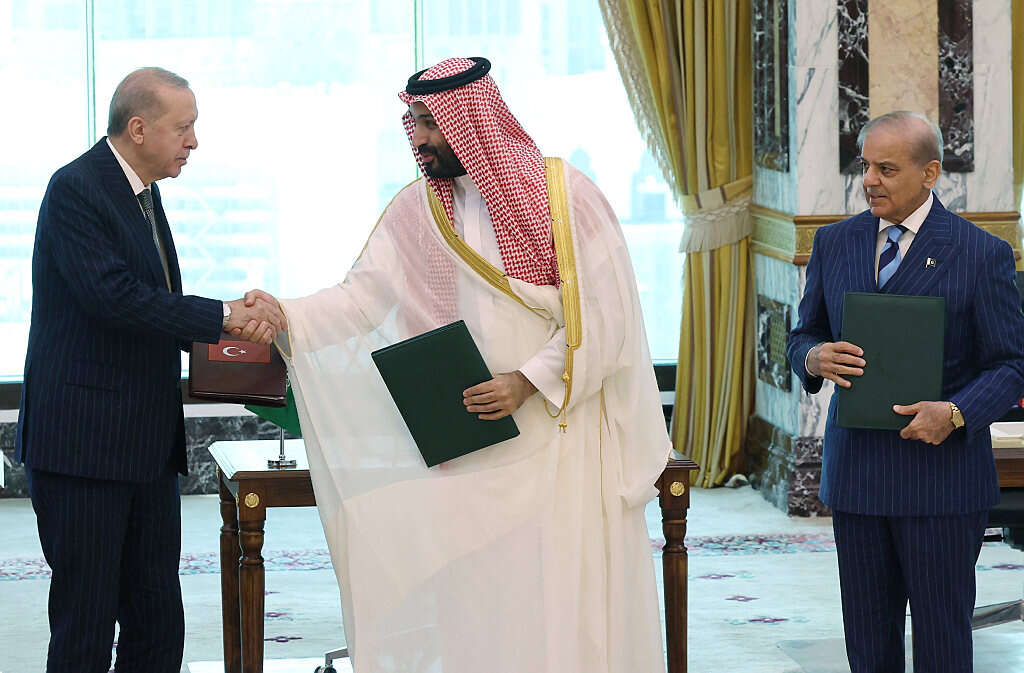
Beyond that, the alliance expresses an overt desire for a partnership that bypasses Israel and does not rely exclusively on Washington. The paradox is striking. Turkey is a NATO member, Pakistan maintains longstanding military ties with the Pentagon, and Saudi Arabia hosts US forces and relies on American weapons. Thus, this is not a complete abandonment of the United States, but rather a diversification of sources, an expansion of room for maneuver, and greater strategic flexibility. This framework could serve as a lever not only for security coordination, but also for advancing diplomatic aspirations and cross-continental economic initiatives – alongside an expansion of Turkey's regional influence under Erdoğan's vision.
In this context, it is interesting to examine not only who joined the alliance, but also who chose to remain outside it – and foremost among them, the United Arab Emirates. Abu Dhabi's close relations with the United States, India, and Israel, alongside its disagreements with Riyadh, apparently tipped the balance in favor of remaining outside this framework.
For Israel, the bottom line is clear. Alongside the supreme and uncompromising effort necessary against Iran and its proxies, Israel must remain alert to the conduct of the new Sunni axis. Jerusalem must work to reduce this axis's involvement in core issues that concern it, while simultaneously accelerating and strengthening strategic cooperation with India, the United Arab Emirates, and countries of the eastern Mediterranean.
"Wise is the man who is always fearful"
The excitement that was recorded this week, following a media report about the "diplomatic deception exercise" planned against Israel, is a healthy public reaction, against the backdrop of the war in Gaza and considering the upheavals affecting the countries of the region.
According to the report, which is still subject to censorship restrictions, an actor in a key country in the region advised an actor from another country that does not maintain diplomatic relations with Israel to sign a peace agreement with Israel, and after a period of "numbing" Israel and secret preparations, to launch a surprise war against Israel.
One may assume that such a scenario is not outside the spectrum of possibilities considered by anyone involved in diplomatic contacts of this kind or in the intelligence framework surrounding them.
Under the influence of the trauma of the Yom Kippur War, Egyptian President Anwar Sadat's historic visit to Israel in November 1977 was suspected by senior figures in the Israeli system of being a deception operation, and caution was certainly not excessive.
It will be difficult to resolve the doubts regarding the true intentions of the adversarial interlocutor. The way to deal with them is to maintain wide margins of safety, not to exchange tangible assets for any document or diplomatic deal, and to keep in mind that an agreement – any agreement – could be violated. Even an accord signed with an actor who genuinely and sincerely wants peace with Israel may not last forever. Positions change over time, and leaders may be replaced by other leaders whose positions are different.
Therefore, Israel must not relinquish its aspirations for peace, but those aspirations must not cause Israel to abandon its better judgment.
The article was originally published in Makor Rishon.