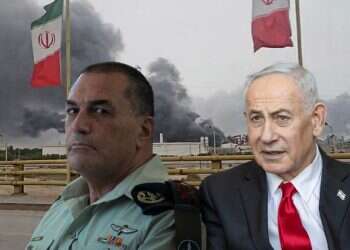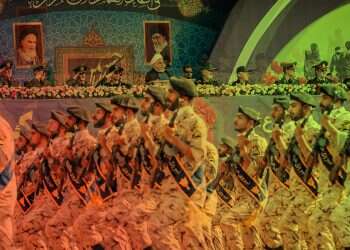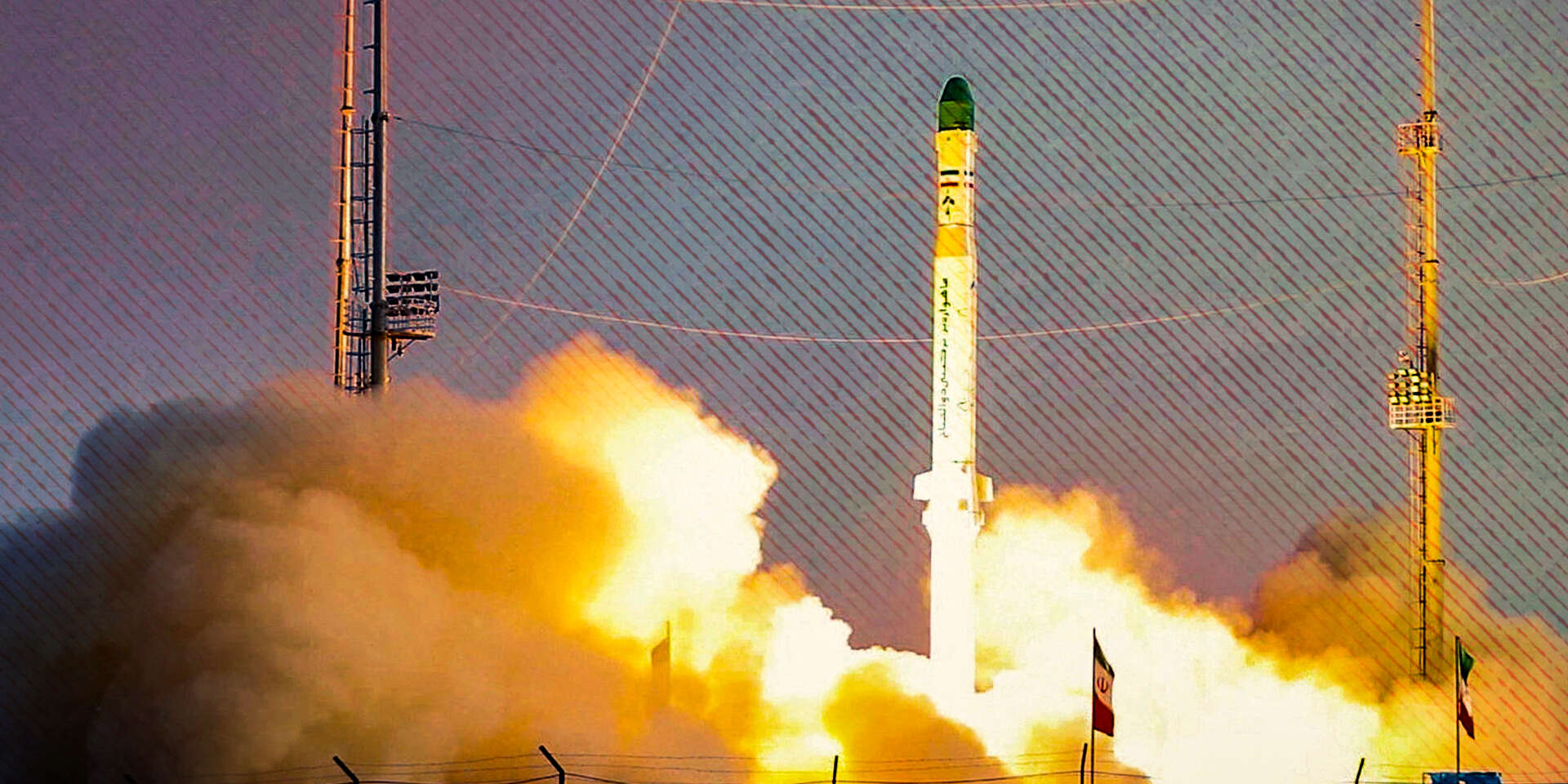
Three senior non-Israeli security officials tell Israel Hayom that, according to the intelligence assessments of agencies closely monitoring Iran and analysts studying the regime, at least some senior commanders in the Islamic Revolutionary Guard Corps could move to acquire nuclear weapons even without the approval of the supreme leader if they conclude that the regime faces a tangible and immediate threat to its survival.
These assessments are based first and foremost on the view that the elimination of Supreme Leader Ayatollah Ali Khamenei at the start of the war removed what security officials regard as the main obstacle facing hard-line elements in the Revolutionary Guard seeking nuclear weapons. Khamenei opposed actually acquiring a bomb, even as he allowed Iran's nuclear program to advance over the years, including through uranium enrichment to high levels.
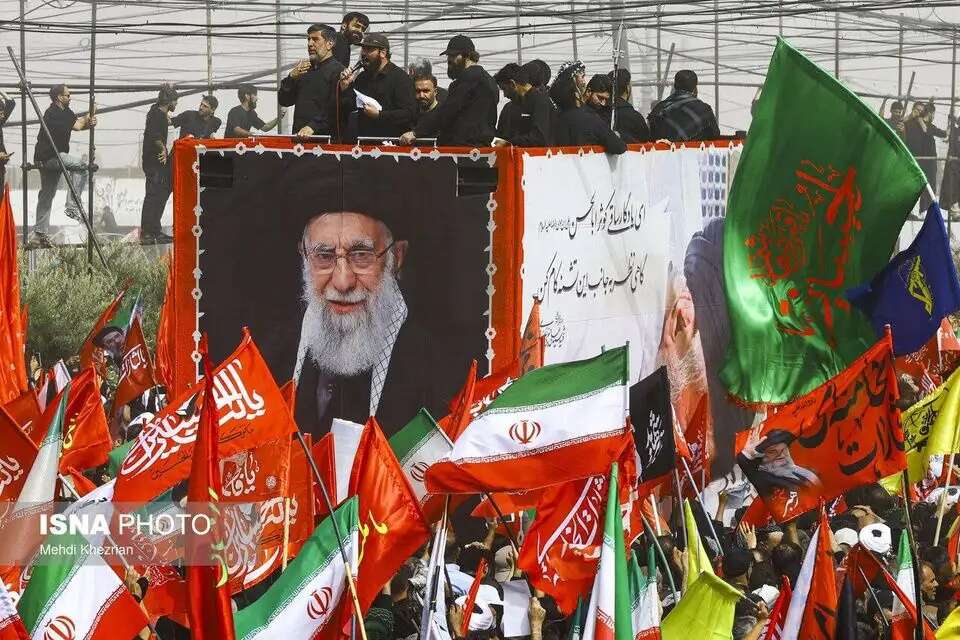
His death, coupled with the failure of Iran's conventional military capabilities during the war, could alter the balance of considerations within the regime. Until now, nuclear weapons could be viewed as an option Iran sought to preserve for the future. Now, according to the assessments, elements within the Revolutionary Guard may come to see them as essential to the regime's survival. The possibility that Iran will attempt a nuclear breakout has therefore become more realistic.
Senior Revolutionary Guard officials have watched the "ring of fire" around Israel collapse. Hamas has lost most of its strength, Hezbollah has been badly weakened and can do little more than harass Israel, while Iran's vaunted missile and drone arsenal inflicted relatively limited damage on Israel, far below earlier expectations.
Closing the Strait of Hormuz has also turned out to be a self-inflicted blow for Tehran. The Americans imposed a naval blockade of their own, completely cutting off the regime's main economic lifeline, its oil exports. Here too, the damage to the West has been relatively limited, with alternative routes helping mitigate the disruption.
The main conclusion emerging from the discussions and reports is that the regime will be unable to cope with Iran's domestic crisis even if the war ends tomorrow. The economic damage runs into the hundreds of billions of dollars, while infrastructure in sectors including water, energy and transportation was already in poor condition before the war and has since suffered further destruction.
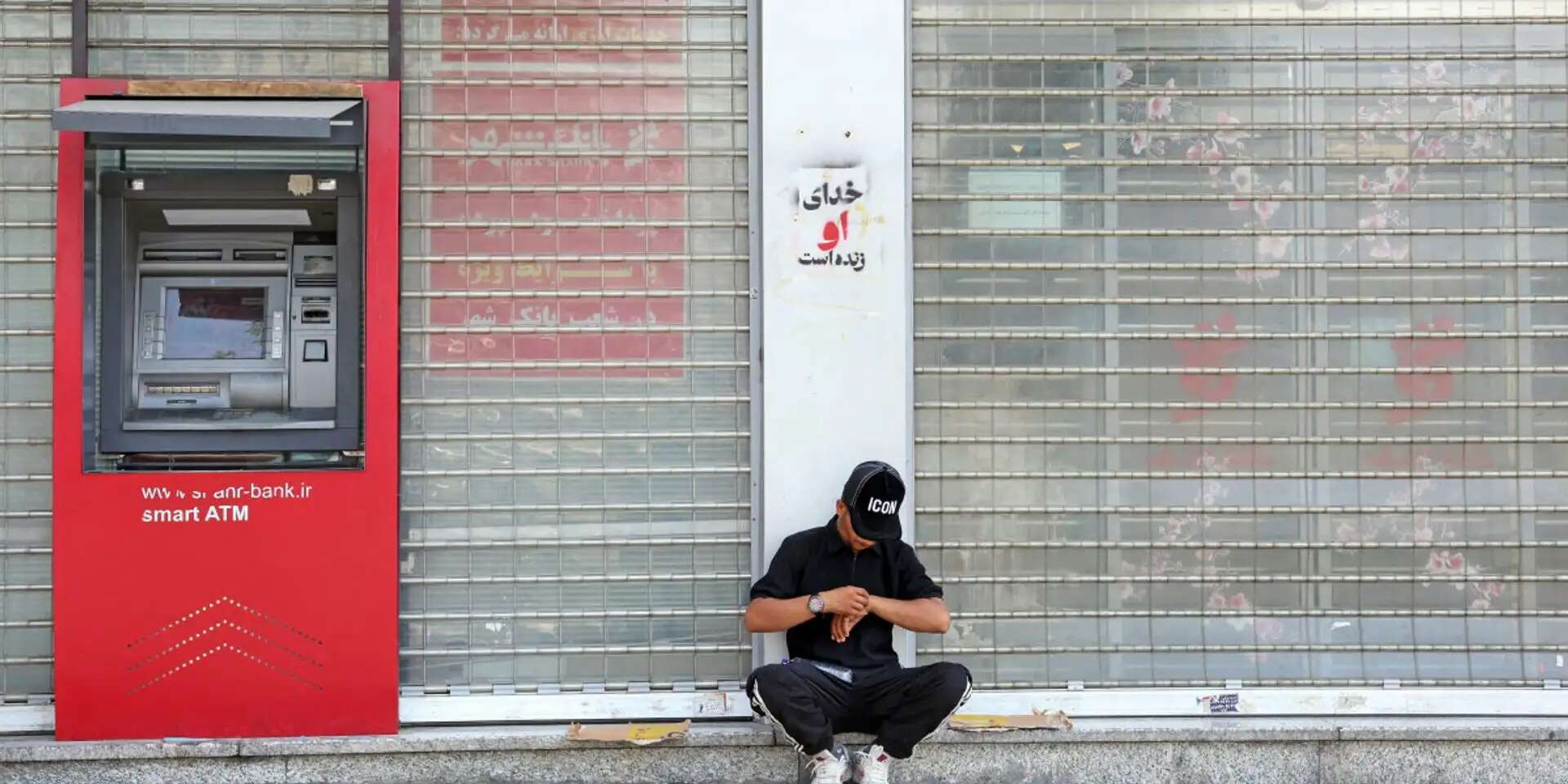
In addition, Iran's divided system of government is poorly equipped to oversee a recovery. The civilian government has little power or influence while bearing responsibility for governing, whereas the Revolutionary Guard establishment controls money as well as military and political power. Such a structure cannot deliver reconstruction. An eventual explosion, therefore, is seen as unavoidable. From that deterioration to a decision to acquire a nuclear bomb is not a great distance.
The question is how the ayatollahs' regime could translate such a decision into operational terms.
The answer lies in Iran's enriched uranium stockpile. The regime is believed to possess roughly 480 kilograms (1,058 pounds) of uranium enriched to 60%, and perhaps thousands of kilograms enriched to 20%. Most of the enrichment work required has already been completed by the time uranium reaches those levels. That means that even if the 480 kilograms were destroyed or removed from the country, only a relatively limited enrichment capability, involving dozens or perhaps hundreds of gas centrifuges that could be concealed with relative ease, would be required to enrich additional uranium for nuclear weapons.
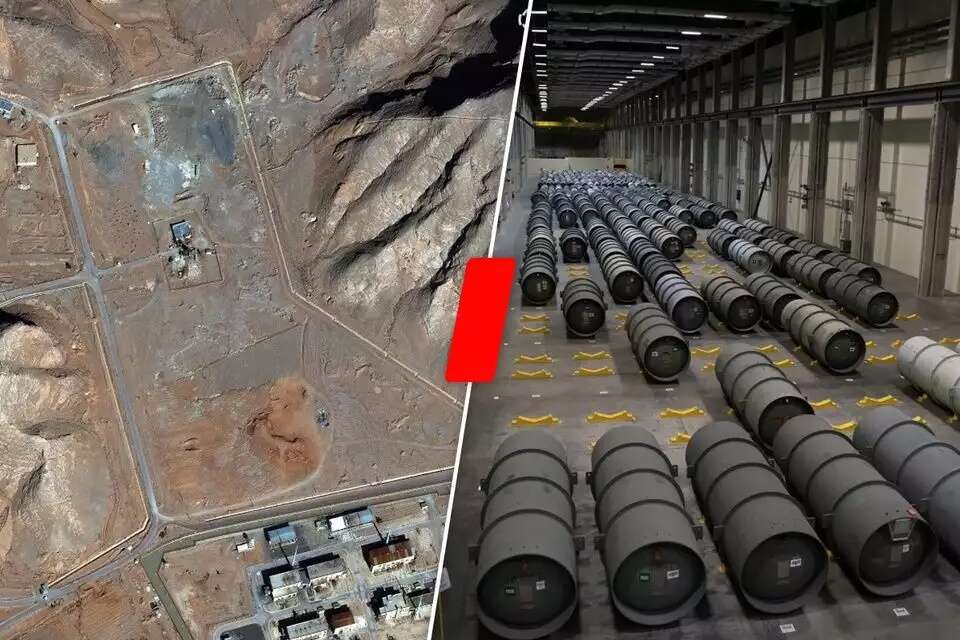
Iran already has missiles. As for a weaponization system, the mechanism required to turn nuclear material into a deliverable weapon, it remains unclear how successful Israel and the US were in damaging Iran's capabilities and setting the program back. Optimistic assessments put the setback at several years, while more pessimistic estimates suggest it was considerably shorter.
There is also another possibility: Pakistan, a sympathetic nuclear power, or perhaps North Korea, could provide Iran with such a system as an off-the-shelf product.
The prevailing assessment within intelligence agencies is that such a transfer could be detected and prevented, but there is no absolute certainty. "The Samson Option, Iranian-style," one of the security officials said.