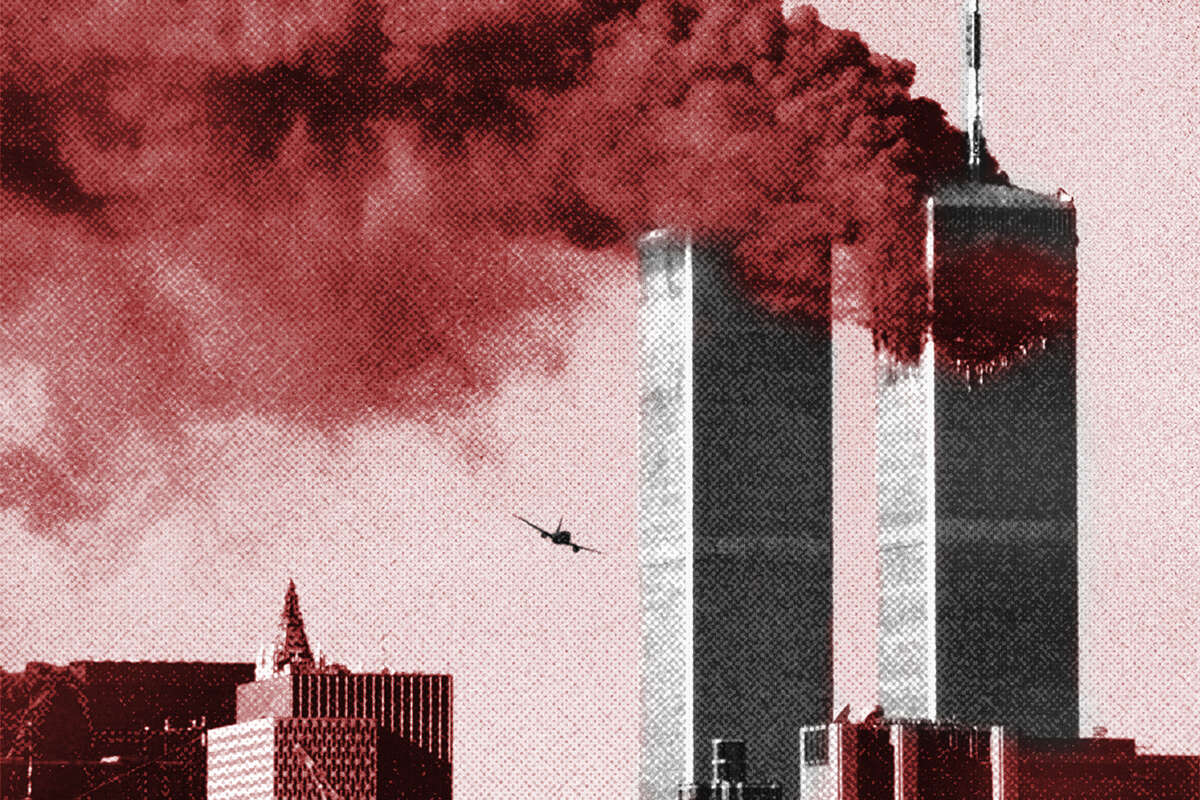
This week, the United States – and Israel as well – will mark 25 years since the deadliest terror attack the country has ever suffered, one that left both a physical and psychological hole in one of America's beating hearts.
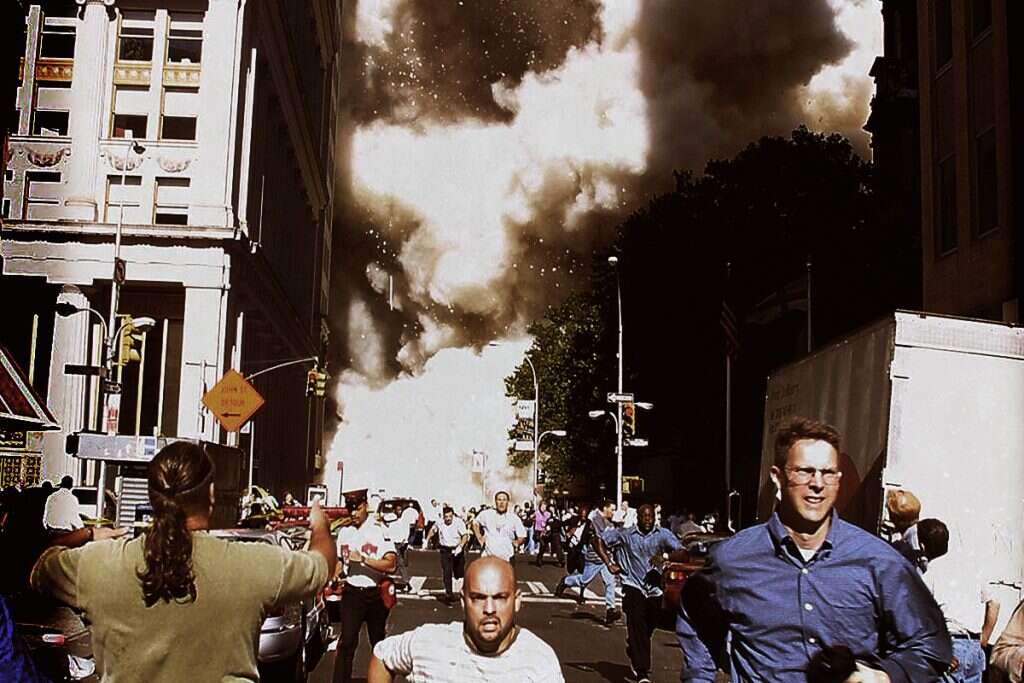
New York is already hard at work preparing to mark a quarter century since the September 11, 2001, attack, a day whose documented horrors remain almost impossible to process, and whose ripple effects triggered two wars that dramatically reshaped global politics. Earlier this week, New York City Mayor Zohran Mamdani signed an executive order officially recognizing 9/11 as a day of remembrance; a memorial installation was set up in Bryant Park, with 2,753 chairs, one for each victim of the attack, facing south toward where the Twin Towers once stood; a memorial ceremony will be held at the World Trade Center site. On the surface, it would seem the memory of that day is very much alive, that this act of mass murder and its aftermath remain woven into the fabric of American life. Well, it only seems that way.
Rewriting history
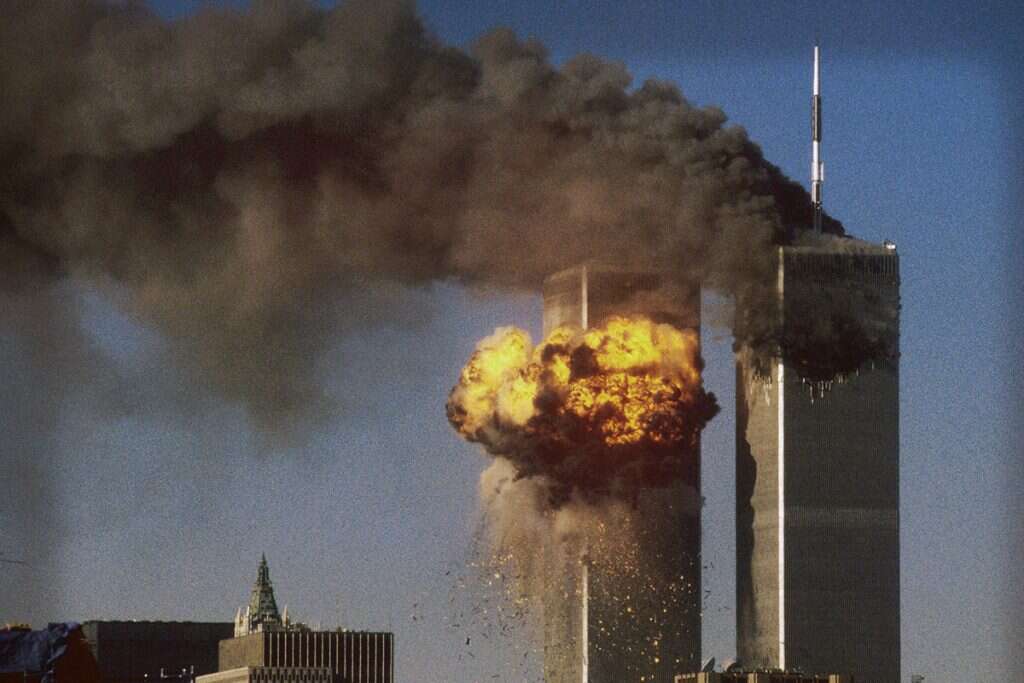
Just 25 years later, al-Qaida's terror attack has become up for debate. Just last week, it emerged that the senior director for journalistic standards at the Canadian Broadcasting Corporation (CBC), a country that lost 24 of its own citizens on 9/11, had instructed staff to avoid calling it a "terror attack." The irony is dead. So what, then, do we call an event in which 19 terrorists hijacked four passenger planes and sealed the fate of thousands more by flying two of them into skyscrapers, forcing people trapped inside to choose between burning alive or jumping to their deaths from a thousand feet up?
The silver lining, however, is that there are those who don't dispute the facts. Take, for example, far-left streamer Hasan Piker, a strategic advisor to the Democratic Senate candidate from Michigan. He doesn't dispute that 9/11 was a terrorist attack. He just thinks "America deserved" it. His message is simple: to the flight crews and innocent civilians who boarded those planes or those who showed up for what they thought was just another day at the office, to the first responders who risked their lives to save countless people fleeing for their lives, and to the families of all of them – you had it coming. He has since managed to sharpen his statement in light of the backlash, which is now resurfacing again due to his ties to Abdul El-Sayed, stressing that America deserved the attack, and adding: "I didn't say Americans." It seems his phrasing got tangled, landing far short of what should have simply been: "This is an extreme, hateful, and dangerous statement, and I retract it."
A slap in the face
Speaking of Piker, one cannot fail to mention another politician he supported, who would go on to become New York City's current mayor, Zohran Mamdani. In a particularly twisted turn of reality, his appointed legal counsel for New York City is none other than Ramzi Kassem, an attorney who has previously represented an al-Qaida terrorist with a direct link to 9/11. An almost unbelievable image made headlines earlier this week, when Mamdani signed the executive order designating 9/11 as a day of remembrance using the familiar ceremonial pen, which he then handed to Kassem.
His refusal to condemn calls to "globalize the intifada" and "from the river to the sea," along with his ties to Hamas supporter and anti-Israel campus protest leader Mahmoud Khalil, whose ideology is associated with the same strain of Islamist terrorism behind the 9/11 attack, has combined to make New York City's mayor – one of the most significant political figures in commemorating the attack – unwelcome at the memorial ceremony in the eyes of victims' families.
So unwelcome that a petition launched to prevent his attendance at the ceremony has gathered over 90,000 signatures in under a month. "For 9/11 families, this is not simply a public ceremony; it is a deeply personal day of mourning," Giovanni Galante, whose wife Grace Catherine was killed on 9/11, wrote. "The presence of individuals whose words or associations are perceived as conflicting with the solemn purpose of the event risks detracting from that focus and causing additional pain."
Galante told the Washington Post that Mamdani's intention to attend the ceremony was "a slap in the face... Not because he is Muslim, but because of who he supports. He represents values that are not ours."
"Force for good"
The natural question is how America got here just 25 years after 9/11. The answer lies in a troubling statistic among young Americans: ignorance. A J.L.L. Partners and DailyMail.com poll results revealed that one in five young Americans have a positive view of Osama Bin Laden, with a third of Gen-Zers thinking that the views of the al-Qaida leader are a "force for good."
And that's among young people who actually know who Osama bin Laden was. In two separate videos produced by PragerU and media organizations Think Again and Streetsmart, which interviewed young New Yorkers about the attack, some couldn't even name the organization responsible, and a few were even pleased to learn it had thanked pro-Palestinian campus protesters for their efforts.
This bleak picture leaves me wondering what the 50th anniversary of 9/11 will look like. At the rate we're going, I fear the only people who will still care about the deadliest terror attack America has ever known will be those who lost someone that day.