1.
"Mother died today. Or maybe yesterday, I don't know."
So begins Albert Camus' novella The Stranger, published in 1942. Its protagonist, Meursault, is indifferent to the events that befall him, including the trial in which he is accused of murder. Jean-Paul Sartre wrote: "The hero of the book is neither good nor bad, neither moral nor immoral ... of a very particular kind ... for which the author reserves the name 'absurd.'"
The absurd is born of the unbearable gap between the human drive to find meaning, justice and purpose in life and the indifference of a world that appears devoid of order and meaning. Camus rejected what he regarded as false solutions: physical suicide, an escape into death, or spiritual suicide, an escape into religion, mysticism or totalitarian ideologies. Such an illusion, in his view, amounted to surrender and the abandonment of reason. Camus' answer was to live in full awareness of the absurd.
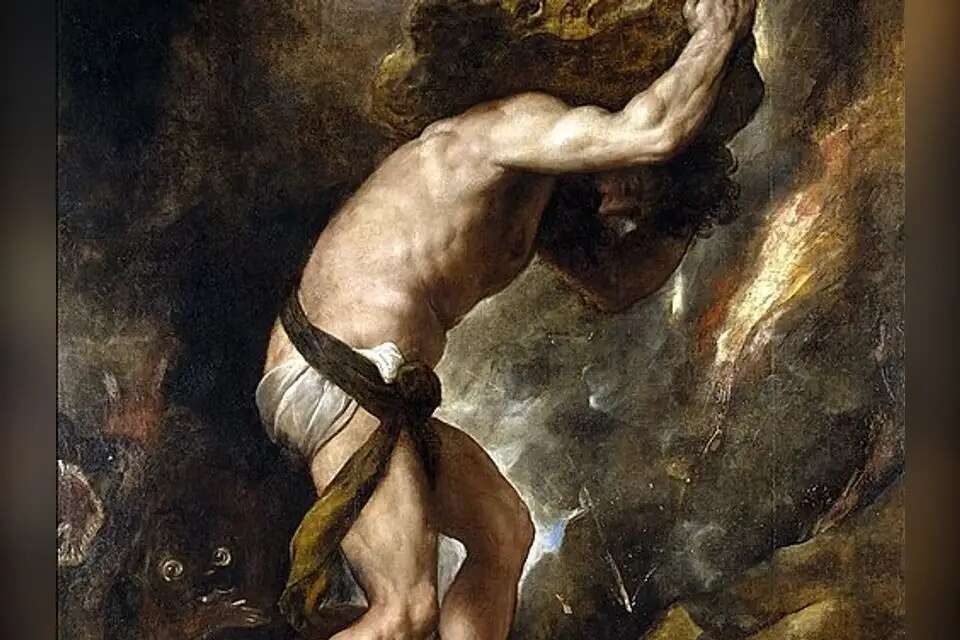
Camus' archetypal figure was Sisyphus, condemned to roll a boulder up a mountain only to watch it tumble back down, repeating the task for eternity. As Sisyphus walks back down, he is conscious of his fate. Precisely because he harbors no illusions, he chooses to continue. In doing so, he transforms his punishment into an act of triumph.
At first glance, Ecclesiastes, which is read on the Shabbat of Sukkot, appears to embrace a similar philosophical view of existential meaninglessness: "Utter futility! All is futile. What real value is there for a man in all the gains he makes beneath the sun? ... That which has been is that which will be, and that which has been done is that which will be done; there is nothing new beneath the sun" (Eccl. 1:2-3, 9).
Rabbi Yehuda Leon Ashkenazi (1922-1996), known as Manitou, saw Ecclesiastes as an answer to the philosophy of the absurd. It is a profound observation in whose light the ancient scroll is worth reading anew. Ecclesiastes does not shy away from presenting the human experience in all its absurd nakedness. Deeds, wealth, wisdom and toil all appear to be a futile pursuit of wind.
The difference lies in the frame of reference through which we view reality. Camus and thinkers like him look at reality solely along a horizontal plane, in which man is imprisoned within a closed material world. Ecclesiastes expresses this through its recurring phrase, "beneath the sun" (Eccl. 1:3). If there is no world beyond what is visible to the eye, the attempt to find eternal meaning leads to absurdity and despair. Everything is futile, and Sisyphus rolls his stone without purpose.
As noted, Ecclesiastes does not deny the absurd. It sharpens it in order to demonstrate what happens to a person who perceives reality solely through a materialist prism: He has tried and experienced everything. Manitou regarded Camus as someone who had stopped "halfway." Ecclesiastes' key is not to remain trapped in the Sisyphean loop of "beneath the sun" (Eccl. 1:3), but to aspire to what lies "above the sun," the divine and moral dimension.
Manitou explained that human consciousness and the soul are not part of the system "beneath the sun" (Eccl. 1:3). The very fact that a person is troubled by the absurd and seeks meaning is evidence that something within him has its source "above the sun." Rather than remain with Sisyphus, Ecclesiastes proposes breaking out of the closed circle, upward: "The sum of the matter, when all is said and done: Revere God and observe His commandments, for this is the whole of man" (Eccl. 12:13).
2.
Nature and history are intertwined in the Torah's festivals: the Festival of Spring, the Festival of the Harvest and the Festival of Ingathering. We are not pagans who celebrate nature as an expression of idolatrous forces. Nature is subject to the laws of creation. Agriculture is never guaranteed, particularly in the Land of Israel, which depends on rainfall.
And therein lies the danger: "For the LORD your God is bringing you into a good land ... where you will lack nothing" (Deut. 8:7, 9). And then: "Your heart grows haughty and you forget the LORD ... and you say to yourself, 'My own power and the might of my own hand have won this wealth for me'" (Deut. 8:14, 17).
Therefore: "You shall hold the Festival of Sukkot for seven days, after the ingathering from your threshing floor and your winepress" (Deut. 16:13), so that we remember, "I made the children of Israel dwell in sukkot when I brought them out of the land of Egypt" (Lev. 23:43).
When our homes are filled with the harvest gathered over the summer, we feel more secure than ever. It is precisely then, the 12th-century biblical commentator Rashbam explained, that "we leave homes filled with every good thing ... and dwell in sukkot, as a reminder that they had no inheritance in the wilderness and no houses in which to dwell ... lest their hearts grow haughty."
This is the historical component of the festival. Even when dwelling securely on our land, success must never be taken for granted, because "in every generation, a person must see himself as though he himself had come out of Egypt" (Mishnah Pesachim 10:5) and entered the Promised Land for the first time.
And this lesson remains true throughout the generations: Even the mightiest walls and the world's most advanced technology can prove as permeable as the walls of a sukkah. And He who protected us throughout our wanderings among the nations, despite the fragile sukkah surrounding us, will also protect the fallen and restored "sukkah of David" (Amos 9:11), "for one higher than the high watches, and there are higher ones above them" (Eccl. 5:7).
3.
Dwelling in the sukkah is a test of a person's faith. The Zohar calls the sukkah the "shade of faith": "When a person sits in this dwelling, [the sukkah, which is] the shade of faith (tzila demehemanuta), the Divine Presence spreads its wings over him from above."
The sukkah is the Land of Israel in miniature, and dwelling in it is a test of our devotion to the land despite the hardships.
In the Hebrew month of Tishrei 5680 (1920), writer Yosef Haim Brenner wrote: "Our young people throughout the world now need to know the truth about the Land of Israel ... that the land is poor ... and difficult to settle ... that wages are low, food is meager and expensive, and needs exceed one's means."
He demanded that reality not be papered over, but that the "truth from the Land of Israel" be told, not in order to weaken the resolve of those taking root in the land, but to strengthen them to continue their mission despite the difficulties. In his words: "Despite it all."
"All this must become known throughout the Jewish Diaspora, so that in the hearts of our young people there will be born the 'despite it all!' That 'despite it all' which must always come at the end of all the negative calculations ... And only that pioneer for whom this 'despite it all' has become part of his very being, that pioneer who is prepared for anything ... is entitled to come. He, and no other."
More than a century has passed. The fragile sukkah Brenner saw then has become a regional power. And yet Brenner's words must still be supplemented by the transcendent dimension he lacked, as Ecclesiastes proposed.
4.
This is how a prosecutor for the Spanish Inquisition recorded the charge against New Christian Inés Esteban, wife of money changer Juan de Castro of Ciudad Real, in 1484:
"... And furthermore (she is accused) that the said Inés Esteban observed the Law of Moses and its festivals, and in particular the festival of the 'Cabañuelas,' or Tabernacles, and that on those festivals she would go up onto the roofs and terraces of their homes in order to eat and take her evening meal there, and would bring branches and greenery from the woods to place upon the said roofs in celebration of the said festival, and there she would eat and dine on pure foods cooked in accordance with the said law."
When Inés went up to the roof, she was observing the halachic rule recorded in the Mishnah: "One who makes his sukkah beneath a tree, it is as though he made it inside a house" (Mishnah Sukkah 1:2), because the s'chach, the sukkah's roofing, must be made from detached plant material. A sukkah beneath a roof is therefore invalid. The essential element of the sukkah is its s'chach, and care must be taken that nothing intervenes between it and the sky, so that it alone provides the shade.
On the upper rooftop terraces of 15th-century Castile, it was possible to improvise a sukkah while hiding from the watchful eyes of neighbors. According to the indictment, Inés compounded one offense with another by even daring to eat kosher food.
Inés Esteban was convicted of "grave heresy" and loyalty to the Law of Moses. She was declared a heretic and a secret Judaizer and sentenced to the maximum punishment: death by burning at the stake. In doing so, she joined a long tradition of women who played a central role in preserving Jewish memory and Jewish practice within their homes.
When we gather to sit in the sukkah without fear, let us remember Inés. "You shall rejoice in your festival" (Deut. 16:14).