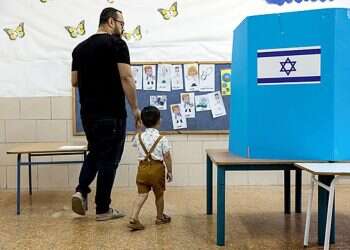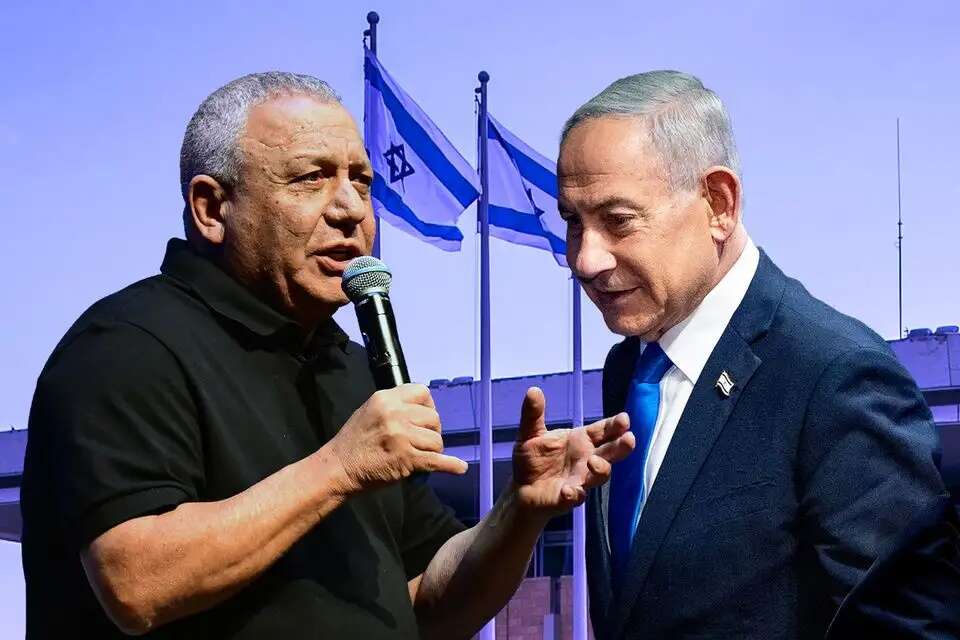
Israel's election has produced no clear winner. Prime Minister Benjamin Netanyahu may have performed better than expected, but his outgoing coalition lost roughly 20% of its strength and remains well short of a majority in the next Knesset. The anti-Netanyahu opposition has crossed the magic threshold of 61 seats, but is nowhere near being able to form a functioning coalition.
That leaves four realistic scenarios. The first is protracted coalition negotiations that ultimately lead to another election. The second is a minority government formed by the anti-Netanyahu bloc, relying on outside support from the Arab parties. The third is for one of the parties to break a campaign promise, switch sides and give the opposing bloc enough seats to form a government. The fourth is a unity government bringing together the major forces in Israeli politics.
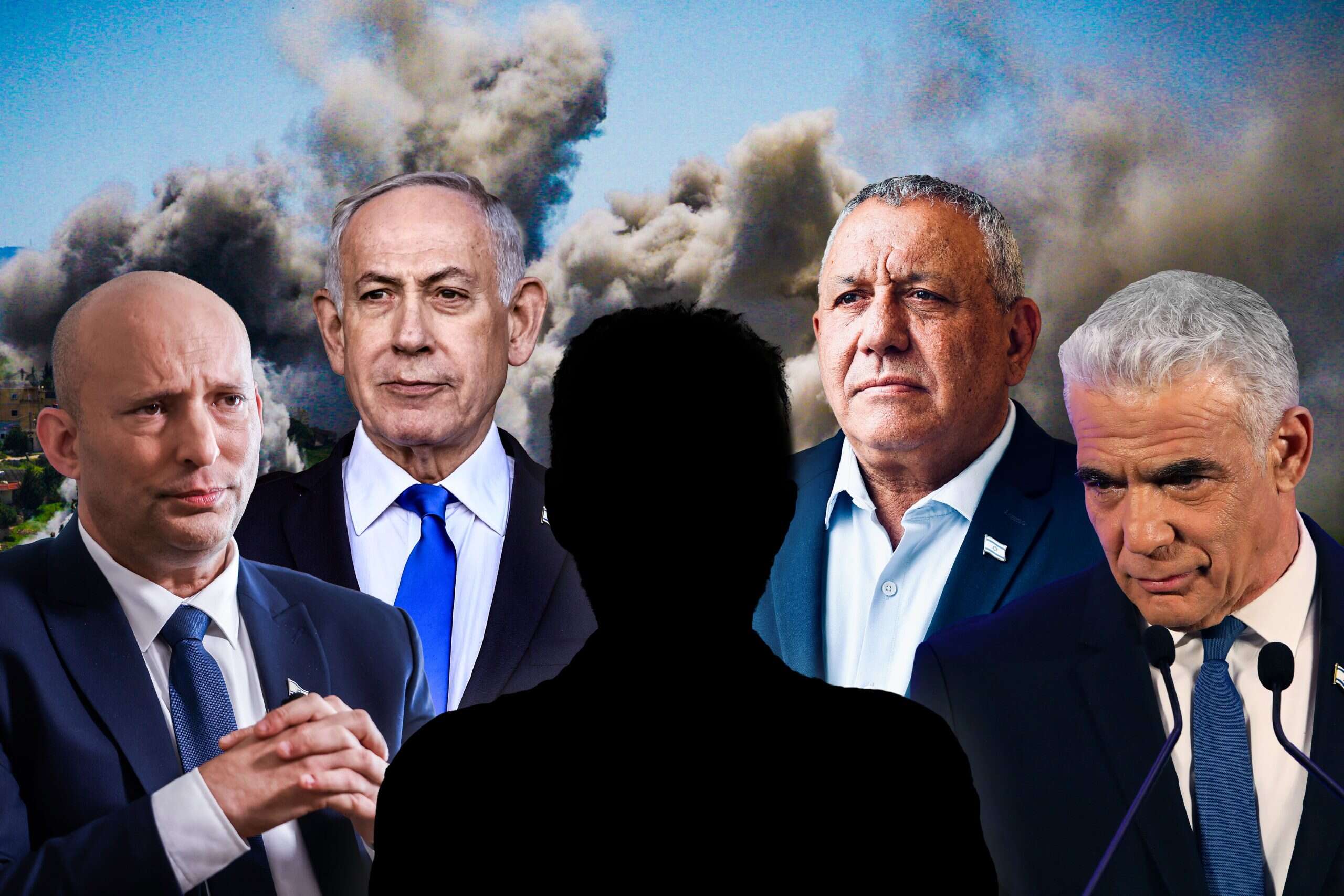
The conventional way of interpreting the election results, as virtually every media outlet has done, is to divide the Knesset into 53 seats for Netanyahu's bloc, 48 for Gadi Eisenkot's bloc and 19 for the Arab parties. But that is not the only way to read the results, nor does it necessarily reflect what voters wanted.
Another approach is to look at the political and ideological makeup of the next Knesset: 48 seats held by Zionist center-left parties, 39 by Zionist center-right parties, 14 by non-Zionist ultra-Orthodox parties and 19 by Arab parties.
The result is a potential bloc of 87 Zionist seats, spanning the Right, the Left and, above all, the political center.
The possibility of a Zionist bloc
Viewing the political landscape this way could significantly narrow the differences between the Zionist parties and bring their shared interests to the forefront. A central issue such as the military conscription law, which has divided the political system over exemptions for ultra-Orthodox men, could be resolved. It would also be relatively straightforward to agree on national priorities, from defense and education to public safety and the economy.
Some political minefields would remain, of course, chief among them the question of establishing a commission of inquiry into the failures surrounding the Hamas-led Oct. 7, 2023, attack. But even there, a compromise acceptable to all sides would probably be possible.
There are several reasons why such a bloc, an Israeli-Zionist alliance, has not come together.
The first is Netanyahu's consistent insistence on sticking with his political bloc. He did so even after Oct. 7, refusing to abandon his partnership with Finance Minister Bezalel Smotrich and National Security Minister Itamar Ben-Gvir in favor of bringing more moderate and popular parties into his government.
There is little reason to believe he would agree to do so now. More likely, he would prefer to run down the clock through fruitless coalition negotiations, and perhaps even a war, calculating that he could improve his showing in another election.
That could happen if the right-wing bloc wastes fewer votes on parties that fail to cross the electoral threshold, if Arab voter turnout falls, or if many Israelis who traveled home from abroad to vote do not make the trip again.
The second obstacle is the commitments candidates made during the campaign and their fear of being seen as breaking their word. That applies to almost everyone, from Netanyahu to Eisenkot, former Prime Minister Naftali Bennett and Avigdor Lieberman, leader of Yisrael Beytenu, as well as, of course, the ultra-Orthodox parties.
But unless every political leader is prepared to make some concessions, Israel will be unable to function effectively, let alone confront the multitude of challenges ahead in security, diplomacy, the economy and international affairs. Above all, it will struggle to heal the deep divisions within Israeli society.
The third reason, and perhaps the most important, is mistrust. Nobody trusts anyone else. Some politicians have appalling records of failing to honor agreements. Others appear to have difficulty understanding the meaning of democracy, let alone responsibility. They view those on the other side of the political divide with hostility, if not outright hatred. It is a sure recipe for deepening the country's divisions rather than resolving them.

The campaign that never ends
As long as these problems remain unresolved, Israel will remain trapped in a perpetual election campaign. Two developments illustrated the point.
The first was a Likud statement claiming that "the election was stolen by the Arab parties."
There is no evidence to support that allegation. Quite the opposite: Organizations that closely monitored the integrity of the election produced reports indicating that it was conducted properly, as Shin Bet security agency chief David Zini himself stated publicly. The allegation serves two purposes.
The first, and more immediate, is to delegitimize the Arab parties in case the anti-Netanyahu bloc decides to rely on them to establish a temporary or narrow government, or even to advance legislation in the Knesset.
The second, longer-term objective is to delegitimize those parties ahead of the next election, whenever it takes place. This second development is even more serious.
Defense Minister Israel Katz claimed that Eisenkot's appeal to senior Israel Defense Forces officers not to obey instructions from the prime minister and defense minister was "an undemocratic statement divorced from reality." But the situation is not quite so simple.
As of now, Israel has entered uncharted territory. It has a caretaker government whose political bloc failed to secure a majority in the election. An alien landing in Israel might conclude that Netanyahu had lost by 67 seats to 53.
Never in Israel's history has such a government, a caretaker administration without a majority in the incoming Knesset, launched a major military campaign of its own choosing rather than one forced upon it.
It stands to reason that if Netanyahu intends to launch such an operation, as all indications suggest he does, he must first secure a clear mandate and broad agreement.

That would provide a promising basis for cooperation with the Zionist parties in the opposing bloc. Such understandings could also lay the groundwork for a broad Zionist government that would serve the Israeli public in the years ahead and establish the foundations for a stable Zionist state for decades to come.
One final point: The massive turnout among Arab voters is not necessarily bad news. It suggests a growing rejection of separatism and a desire to integrate into society and participate fully in Israeli life.
This presents a valuable opportunity to address problems within the Arab community that threaten Israel as a whole, particularly crime and illegal firearms, while also bringing Arab citizens into national service.
Introducing national civilian service for every young Arab man and woman would be an excellent starting point. It could also provide a foundation for the equally necessary integration of the ultra-Orthodox community into sharing the burden of national service.