The last American voters will head to the polls this week to decide a sweeping series of political contests that could reshape the balance of power in Washington. All 435 seats in the House of Representatives are up for election, along with 35 of the Senate's 100 seats and 36 governorships.
But one question looms above all the others: Will US President Donald Trump manage to preserve the Republican majority in Congress, or will he be forced to spend the final two years of his presidency contending with a legislature controlled by his political opponents?
If Democrats gain control of either chamber of Congress, Trump could find himself in the position American politicians dread most: a "lame duck." The term describes a president who remains in office but whose political influence is constrained because his party no longer controls Congress.
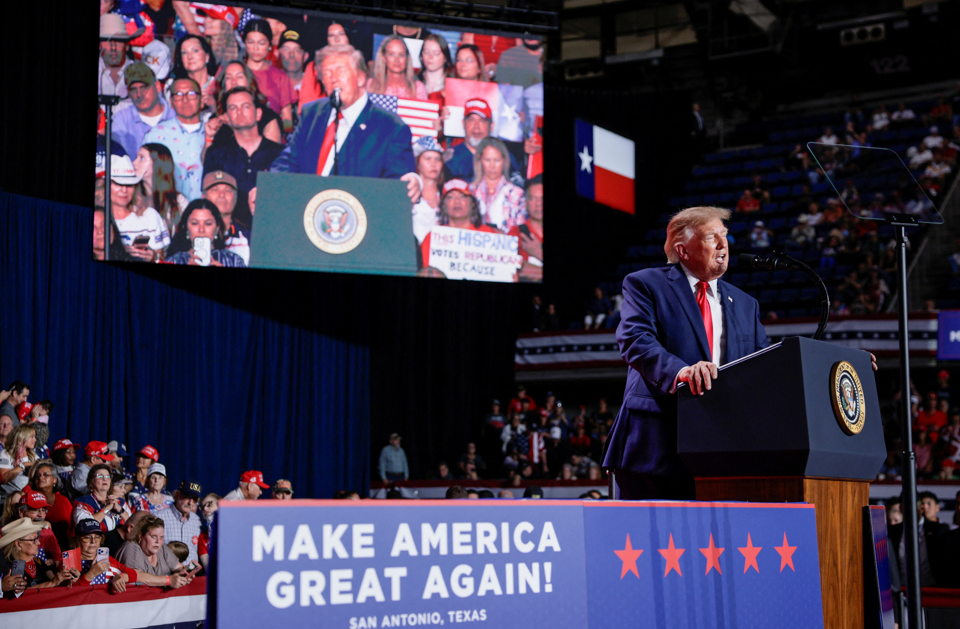
Under such circumstances, passing legislation, securing budgets and fulfilling campaign promises could become considerably more difficult. Democrats would be able to obstruct the president's agenda, launch investigations and summon senior administration officials to congressional hearings, while Republicans could face a long and exhausting war of political attrition.
By Sunday, more than 52 million Americans had already cast ballots, either through early in-person voting or by mail, significantly more than at the same point in the previous midterm elections. The figure reflects the intensity of a campaign in which both parties recognize that the outcome could hinge on a handful of seats and states, making every vote potentially decisive.
The numbers behind a possible political upset
As Election Day approaches, Republicans hold a 53-47 majority in the Senate, with two independents effectively caucusing with the Democrats. The balance in the House is even tighter: 218 Republicans, 214 Democrats, one independent and two vacant seats.
To take control of the House, Democrats need to reach 218 seats. In the Senate, where 51 seats are needed for a majority without relying on the vice president's tie-breaking vote, they must achieve a net gain of four seats.
On paper, the Senate should be more favorable territory for Republicans. Of the 35 seats being contested, 22 are currently held by Republicans and just 13 by Democrats. That means Republicans must defend more seats, but Democrats face the challenge of winning in several states where Trump secured substantial victories in the 2024 presidential election.
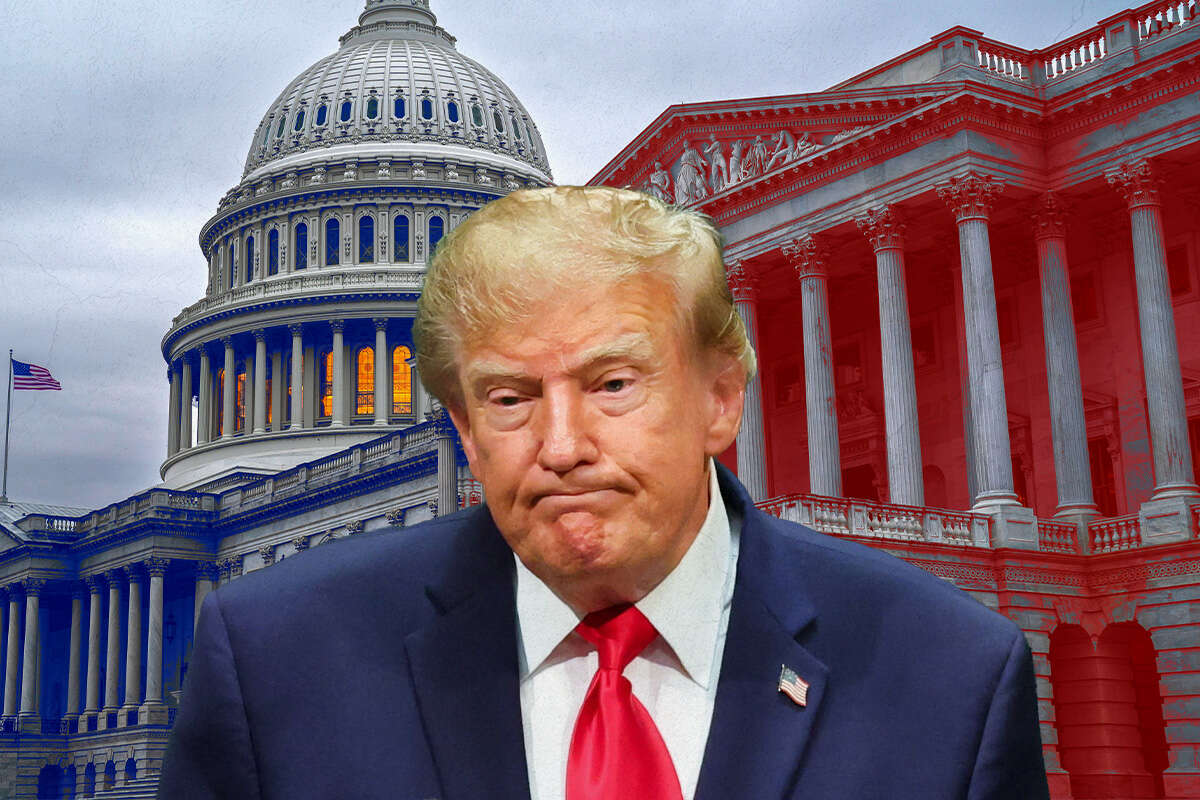
In the House, by contrast, every seat is up for grabs. Redistricting in several states has given Republicans an advantage in some races, but even those changes may not be enough to preserve their majority.
CNN chief data analyst Harry Enten's final forecast gives Democrats a 92% chance of winning control of the House. His model projects 237 seats for Democrats and 198 for Republicans.
The Senate picture is more complicated, although Enten also gives Democrats a 71% chance of securing a majority there, projecting a 52-48 split in their favor.
It is important to remember that these are probabilistic forecasts, not guaranteed outcomes. Fox News, whose audience tends to be more conservative, has also taken a cautious approach to the Senate contest, emphasizing the number of closely fought races where the outcome remains uncertain.
Trump faces the voters as rising prices hit home
One of the main reasons the elections have become a referendum on Trump's performance is the state of the economy. The president entered his second term promising to bring down prices, strengthen the economy and restore Americans' sense of financial security. But as the midterms approach, a substantial share of the public remains unconvinced that those promises have been fulfilled.
A Reuters/Ipsos poll published Oct. 26 found that just 32% of Americans approved of Trump's job performance. In the same survey, Democrats led Republicans 47% to 36% among registered voters when asked which party was better suited to control Congress. Among likely voters, the Democratic advantage stood at 53% to 44%.
There has also been a shift on the economy, an issue long considered one of the Republican Party's greatest political strengths. Some 37% of respondents preferred Democrats to handle the economy, compared with 33% who favored Republicans.
According to an Associated Press analysis, tariffs imposed by the administration and the war in Iran have contributed to rising gasoline and food prices and continued inflationary pressure. The cost of filling up a car, buying groceries and paying for housing has become at least as important to voters as the ideological disputes dominating television news coverage.
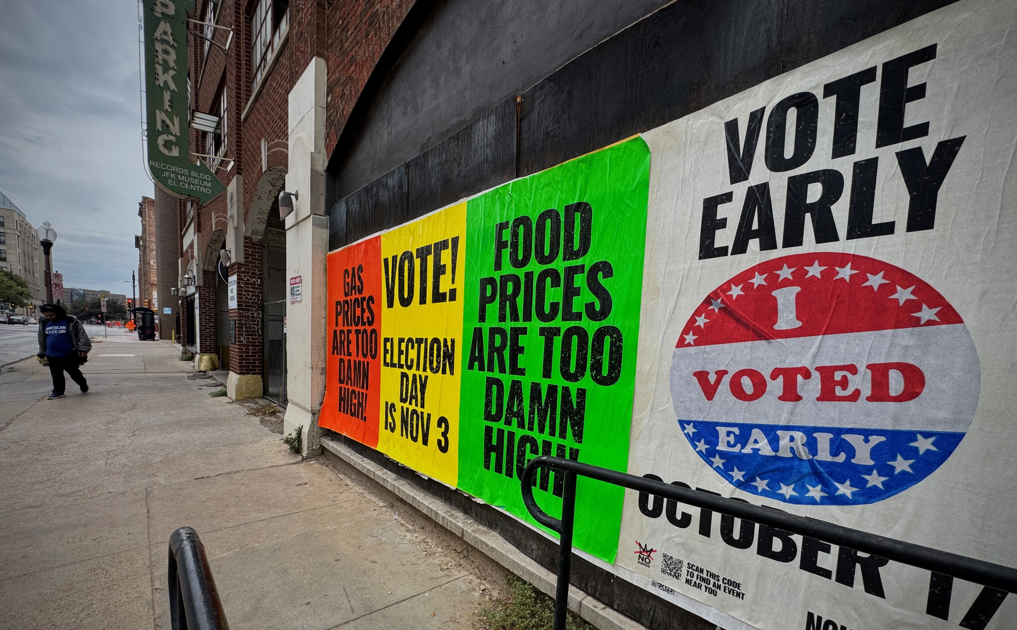
Trump, for his part, has no intention of abandoning the fight. In recent weeks, he has embarked on a campaign tour across the United States, including states he won comfortably in previous elections, in an effort to energize the Republican base and ensure supporters turn out to vote. He is expected to hold rallies in Iowa and Kansas on Sunday, after earlier changes and cancellations to the event schedule.
On Saturday, the president adopted a different approach. Instead of appearing at in-person rallies, he joined telephone calls with supporters in six election contests across several states. MAGA Inc., a pro-Trump political organization, said the calls were intended to support candidates in Pennsylvania, Ohio, New York, Michigan and Florida.
Meanwhile, Democrats are seeking to capitalize on dissatisfaction with the economy. House Minority Leader Hakeem Jeffries, who is positioned to become House speaker if his party wins a majority, traveled to Virginia to campaign for Democratic candidate Elaine Luria, who is once again challenging Republican Jen Kiggans, the woman who defeated her four years ago. "We're going to fight hard each and every day for an affordable America," Jeffries said.
Texas: Where Democrats dare to dream again
If one contest is attracting particularly intense attention, however, it is taking place in Texas.
For decades, the state has been one of the Republican Party's most dependable strongholds. It has repeatedly voted for conservative presidential candidates, sent Republicans to the Senate and become a symbol of conservative America.
Democrats have tried to change that before. In 2018, Beto O'Rourke, a young, charismatic Democratic candidate, turned his challenge to Republican Sen. Ted Cruz into an unexpectedly close contest. He raised enormous sums of money, drew large crowds and inspired hope among Democrats, but ultimately lost. Subsequent efforts have also failed to break the Republican Party's hold on the state.
This time, however, the Senate race looks different. James Talarico, a Democratic member of the Texas House of Representatives, is running against Texas Attorney General Ken Paxton, who has Trump's endorsement.
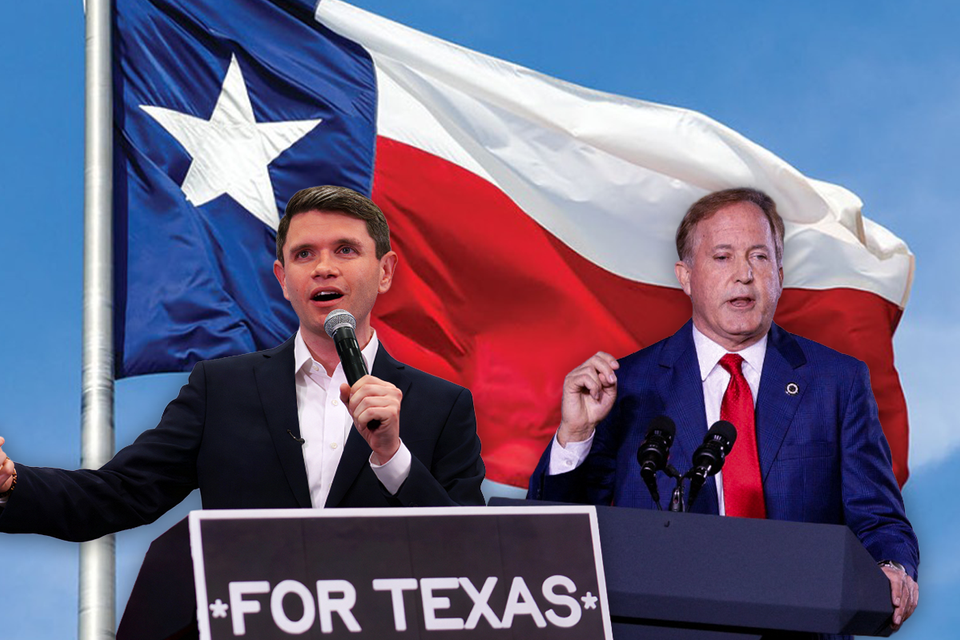
According to the RealClearPolitics polling average, Talarico holds a narrow 1.4-percentage-point lead, with 48.2% support compared with Paxton's 46.8%. A CNN poll conducted in late October showed Talarico ahead by six points, although other surveys found the candidates tied.
The contest has become one of the most expensive and aggressive of the entire election cycle. According to US media reports, spending on elections in Texas is expected to reach approximately $1 billion, with more than half of that amount connected to the Senate race.
Paxton is a candidate Trump personally chose to endorse, but he also enters the election carrying considerable political baggage. In 2023, the Republican-controlled Texas House of Representatives voted to impeach him on 20 articles, including allegations of bribery, abuse of power and obstruction of justice. The state Senate subsequently acquitted him, allowing him to remain in office.
Talarico has made those controversies a central weapon in his campaign. At a rally in Houston, he attacked his opponent, saying, "This election is about whether you want a senator who puts money in your pocket or who puts money in his own."
Paxton, meanwhile, is trying to portray Talarico as a radical liberal whose views are incompatible with Texas values.
At a rally in Fort Worth, he warned about the growing influence of the American Left and argued that, if elected, Talarico would effectively serve as a representative of Senate Democratic leader Chuck Schumer. "The left in this country keeps getting more and more radical," Paxton said, portraying his opponent as someone who would follow the Democratic Party's agenda in Washington.
David vs. Goliath: The American version
One of the most striking features of the race is the involvement of wealthy donors. Although Talarico has succeeded in raising substantial campaign contributions, Paxton has benefited from significant financial support from outside Republican groups and donors, including billionaire Elon Musk.
According to filings with the Federal Election Commission reported by CBS News, Musk donated $158 million to the Senate Leadership Fund, a super PAC that supports Republican Senate candidates. A substantial portion of the money was subsequently directed toward efforts supporting Paxton. Talarico is trying to turn that financial imbalance into part of his campaign narrative.
He presents himself as the candidate of ordinary Texans standing against wealthy interests, drawing on the biblical story of David and Goliath to describe the contest. "It's David vs. Goliath," he told supporters, invoking the biblical account of the young shepherd who defeated a giant. "The people of Texas are my slingshot."
Paxton, for his part, makes no attempt to conceal his conservative message. His campaign bus bears the historic slogan "Come and Take It," associated with the Texas Revolution against Mexico.
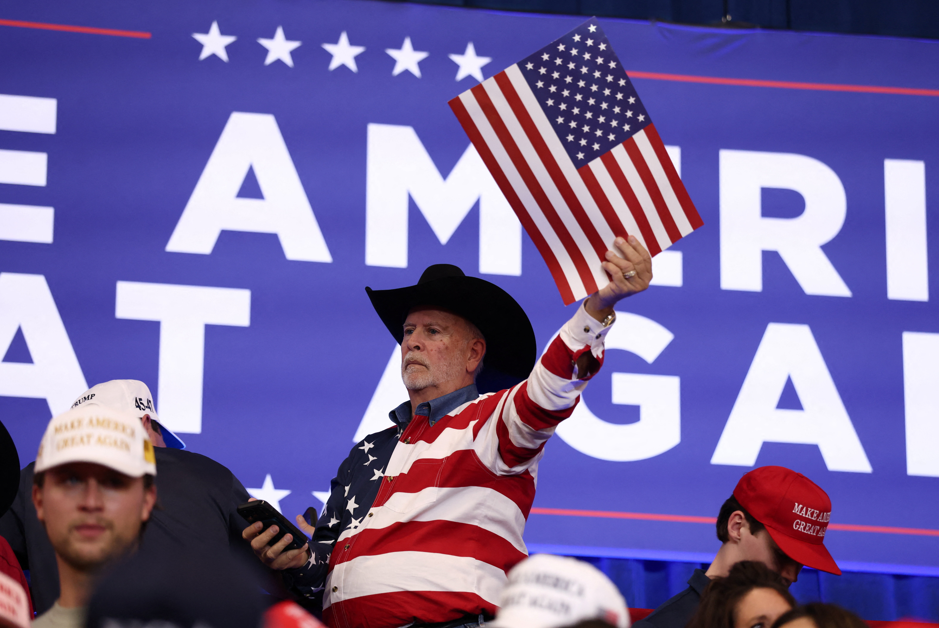
At an Oct. 23 rally, he addressed supporters with a series of rhetorical questions. "Do you believe in protecting Texas and stopping Sharia law? So do I. Do you believe parents, not the government, should raise their children? So do I."
Talarico's supporters, meanwhile, argue that Republican attacks on his positions on immigration and transgender rights have failed to divert attention from economic concerns.
One supporter interviewed by American journalists in Texas, a Latina woman who had voted for Talarico, rejected the suggestion that Hispanic voters could not identify with his positions. "I'm Latina, I'm brown, and I'm proud of it," she said. "I voted for James Talarico this morning, and I'm very excited to hopefully see the change that's about to happen."
Another supporter struggled to contain her emotion when discussing the possibility of political change in the state. "I hope this election shows that there are decent people, and that there are a lot more decent people than there are corrupt and cruel people. It's not about Republicans or Democrats right now. It's good versus evil."
Less culture war, more money for groceries
Despite the ideological battles, the economy appears likely to play a decisive role in Texas, as it does across much of the United States. The cost of meat, gasoline and housing is weighing on residents, while campaigns on both sides are trying to determine how willing voters are to punish the party in power over the cost of living.
Democratic Rep. Joaquin Castro, who represents the San Antonio area, explained that for many residents, culture-war issues are no longer at the top of their priorities. "Prices are so high, people are really feeling it economically. They feel like they don't have time for these culture wars," he said. "All these attacks on transgender people and all this other stuff? People are saying: I can't pay my bills. I can't afford gas."
Castro added that he sees Talarico as a candidate with an exceptional ability to bring together different communities across the state. "And also, you know, James Talarico is a generational talent. I know you hear that, but he's somebody who's trying to bring people together."
At the famous Salt Lick barbecue restaurant in Texas, where American journalists met residents and spoke with them about the election, not everyone appeared particularly concerned about the race.

But as Matthew Watkins of The Texas Tribune explained, the significance of the election extends far beyond the question of who will occupy a Senate seat. "There are a lot of people around the country who see Texas as sort of the beating heart of American conservatism," he said. "People on the Right say: We can't lose Texas, or we'll lose the country. People on the Left say: If we win Texas, that would be a really big deal."
According to Watkins, the psychological weight attached to the contest has led both sides to view it as an event with national implications. "There's this psychological weight that makes people think: We can't lose this, or what happens if we win? And that's what makes people so interested in this race."
If Democrats take control of the House of Representatives, they will be able to make the final two years of Trump's presidency considerably more difficult. If they also capture the Senate, the result would represent an even more significant shift in Washington's balance of power. A Republican victory, on the other hand, would allow the president to continue advancing his agenda with fewer congressional obstacles.
But perhaps the most intriguing answer will come from Texas. For years, the state has symbolized the strength of the American Right, a place where Democrats could dream of victory but could hardly expect to achieve it. Now, with the Senate race neck and neck and enormous sums of money flowing into both campaigns, Republicans are being forced to confront a possibility that once seemed almost unthinkable.
Is Texas really beginning to turn blue, or is this another case of Democratic hopes destined to be dashed when the votes are counted? The answer will come on election night.
But one thing is already clear: This time, America's eyes are also on the Lone Star State.