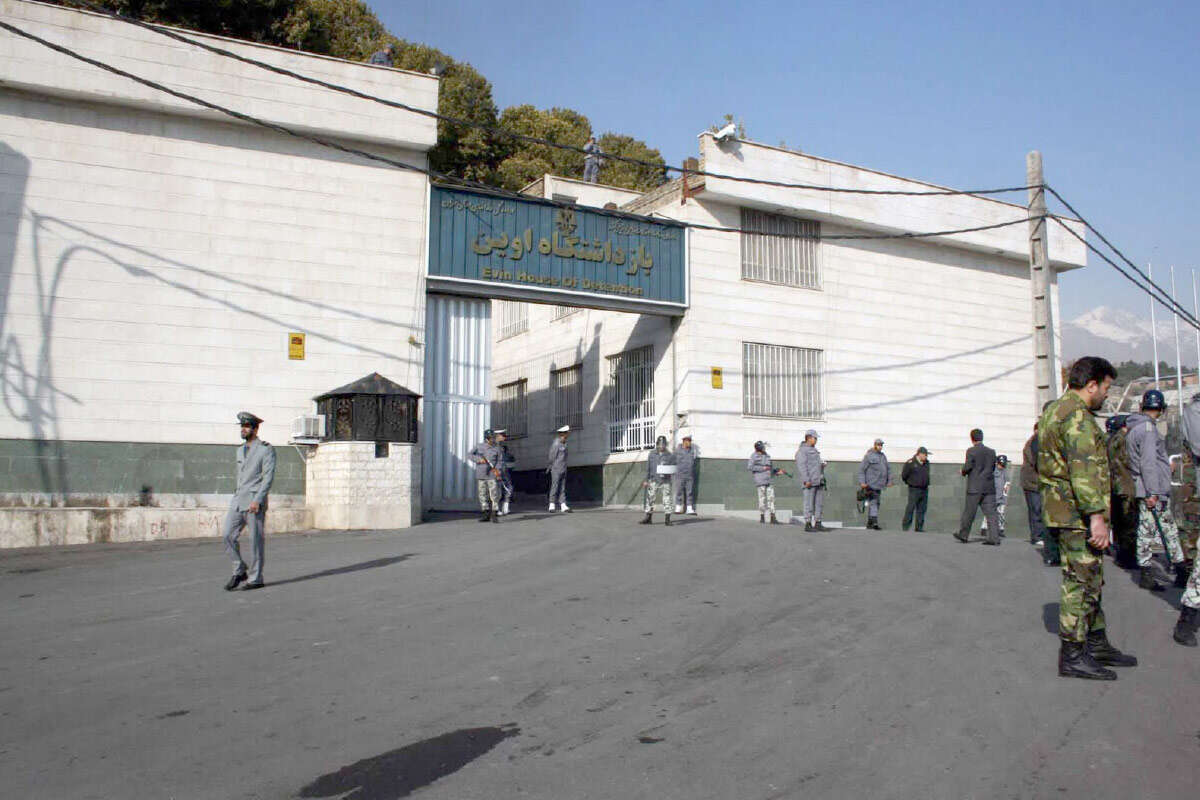
On the afternoon of June 23, 2025, media outlets covering the Iran War reported that Israel had struck an unusual target in Tehran. It was not another nuclear facility or another Islamic Revolutionary Guard Corps base, but a prison. Iranian American Marziyeh Amirizadeh was also closely following the reports, and something inside her cried out when she realized which target had been struck.
As viewers and commentators around the world wondered whether any prisoners had managed to escape following the strike, Amirizadeh knew all too well what they were going through. For her, Evin Prison was not merely an abstract symbol of the Iranian regime's brutality. She knew it from the inside, not simply as an inmate, but as a woman sentenced to death.
Video: The strike on Evin Prison in Tehran /// Video: Arab media
Amirizadeh, 47, had an ordinary childhood in Iran. She was born and raised in Rafsanjan, a city in Kerman province.
"From the moment I started school, I felt the oppression that came with simply being a girl under the rule of the Islamic Republic," she told Israel Hayom's weekend magazine. "I experienced many forms of discrimination against women. I was forced to wear a hijab and compulsory Islamic attire. When I reached middle school, all the girls, myself included, were required to wear a chador over the already restrictive Islamic clothing we had been forced to wear.
"Even simple activities such as riding a bicycle were forbidden for girls. We were not allowed to shape our eyebrows or remove facial hair, and anyone who did faced severe punishment. Yet if even a little hair showed beneath our hijabs, we were punished and called 'prostitutes.' In every classroom, there were two or three girls known to be informants. They reported any student who violated the strict Islamic rules to the principal. I saw with my own eyes girls being beaten by the principal because their hair was showing beneath their hijabs or because they had shaped their eyebrows."
Amirizadeh, the third of four children, was fortunate in one respect: Her family had not embraced extremism. From an early age, her father showered her with love and made it clear that she was equal to her brothers, despite their having been taught that under strict Islamic doctrine, a woman was worth less than half as much as a man.
"Like many Iranians, we were nominal Muslims, Muslims in name only. In private, we drank wine and held parties with music and dancing. It was only after my father was arrested and tortured for tearing up a picture of Ayatollah Ruhollah Khomeini that he began observing Islamic religious practices to protect his job, his property and his family. Islam was not a part of our lives. It was something we learned to avoid and fear."
And so, from a very young age, Amirizadeh, like millions of boys and girls growing up under the ayatollahs, understood that there was no personal freedom in the Islamic Republic. She says the only things the regime taught her were fear, distrust and the belief that Islam was not a religion of peace, but a system designed to control people's lives in the name of worshipping its God.
Millions went on with their lives having reached that conclusion, but a different, far more dangerous path awaited Amirizadeh. That turbulent journey began with a dream that came out of nowhere.

Underground churches
"I had a profound and meaningful dream in which God showed me his love and the true face of Islam," Amirizadeh recalled. "He revealed these truths to me through a white horse that protected me. Whenever God has an important message for me, the white horse continues to appear in my dreams. In Iran, such a closed country where it is almost impossible to find truth outside Islam, dreams are a common way for God to communicate with many people. That may sound strange in 2026, but we must remember that the same God who gave Joseph his dreams and the ability to interpret other people's dreams is still at work today.
"A few years later, a friend told me about Jesus and explained that God was a God of love, not the Islamic God of hatred and vengeance. My conversion to Christianity and my search for truth were a gradual process. But the moment I gave my heart to Jesus and experienced a supernatural spiritual baptism, I fell in love with him, and I have experienced his unconditional love for me ever since."
Caution and the instinct for self-preservation should have prompted the young woman to conceal her conversion from everyone around her. But Amirizadeh felt it would be wrong to practice her newfound faith in complete secrecy.
"I began speaking to my family and friends about my faith without hesitation or fear, even though doing so carried enormous risks. At the height of my religious activities after becoming a Christian, my friend Maryam Rostampour and I distributed 20,000 copies of the New Testament in Persian throughout Tehran and in cities sacred to Islam, such as Qom. I spoke openly, though cautiously, about Jesus and my faith. However, all my religious activities, including the house churches I led, were conducted privately and even in secret."
Amirizadeh is convinced that her experience was far from unique. She says millions of Iranians have converted to Christianity, many of them after experiencing dreams and visions similar to her own. Iran's underground church is growing at a remarkable pace. People are searching for answers, she says, recognizing the falsehoods of the version of Islam imposed on them and seeking the truth.
Were you part of a Christian community? Did you have Christian friends with whom you could openly share your faith, or did everything have to be conducted in secret?
"I attended underground churches, and that was my community. Everything was done in secret until Maryam and I established underground churches of our own. Among my Christian friends, I could live openly and express my faith. But when I began engaging in activities that were dangerous for me, such as distributing thousands of Bibles, which could also put them at risk, I had to distance myself from them for their own safety."
How did the authorities first discover that you were a Christian?
"I don't know for certain who reported me to the authorities, although I have my suspicions. I was summoned to the police station under false pretenses. They told me I needed to come in to resolve an issue involving my car. Once I got there, however, their true intentions became clear, and my friend and I were immediately arrested. We were treated as infidels and criminals."
Was there a particular moment when you realized the authorities were persecuting you because of your faith?
"God told me in a dream that I would be arrested. We sensed that we could be arrested at any moment, but we never knew exactly when it would happen or why. One thing that worked in my favor was that I had been reported to the authorities solely because of my faith. They never discovered that we had been distributing Bibles or learned about the other activities I was involved in."
What happened when you were arrested?
"The way they arrested us took us by surprise, but we had expected to be arrested and knew it could happen at any moment. From the moment I was arrested, I was treated with extreme cruelty and hatred, subjected to vile and degrading threats, all simply because of my faith. I never concealed my faith or denied it. Throughout the interrogations and court hearings, I stood up to the regime's officials."
A predetermined sentence
It was that courage and unwillingness to renounce her newfound faith that landed Amirizadeh in the dreaded Evin Prison. But first came her trial. The charges alone, apostasy from Islam, spreading Christianity, blasphemy and anti-government activities, were enough to suggest what awaited her.
"My trial was essentially a series of threats. It was never fair or lawful," Amirizadeh explained. "The regime doesn't need an excuse to level such accusations against anyone. Under Sharia law, apostasy from Islam is punishable by death. They don't need any further justification. On the very first day, the judge told me he would make sure I was executed. In Western legal terms, I was denied due process. But even under Iranian Sharia law, none of the decisions made in advance in my case were justified. For six months, I wasn't even allowed access to a lawyer. I never expected any degree of fairness, either for myself or for the women who shared my cell, including my best friend, who was executed. When they threatened to execute me, I told them they could cut off any part of my body, but they could never take away my love for Jesus."
Members of Amirizadeh's family were also arrested, threatened and interrogated. Then came word of the punishment awaiting her. At every interrogation, she was told in no uncertain terms that unless she returned to Islam, she would be executed by hanging. The sentence, she says, made it official.
"I always knew they could execute me at any moment, even without any legal proceedings. It was all one big charade. At my final hearing, they read out the indictment and the sentence, which stated that I would be executed by hanging. The decision had already been made. There was no appeals process and no due process. Not only is there no appeals process, but the regime also carries out death sentences without even producing the legal documents required by its own system. That's what happened to my friend Shirin."
Shirin Alam Holi was a 28-year-old Kurdish political prisoner who had been held at Evin Prison before Amirizadeh arrived. Behind its walls, she became one of Amirizadeh's closest friends and a source of emotional support.
"We ate together and talked almost every day," Amirizadeh recalled. "We often sat side by side, looking through a small window at the mountains beyond the prison walls. Shirin would sing Kurdish songs and tell me how much she longed for freedom, just to go outside and walk in the mountains, even one more time. She endured months of severe torture, so horrific that I still cannot bring myself to describe it in detail. She was eventually executed on May 9, 2010. She asked me to promise that if I were released and she remained in prison, I would never stop fighting the regime. Even after all these years, I still think about her. Shirin's execution remains one of the most painful memories of my life. I haven't forgotten her, our friendship or the promise I made to her."
Stories about Jesus
Survivors of the hell that is Evin Prison often recount the horrors inflicted on them to break their bodies and spirits. Amirizadeh shares her memories with restraint, as though recounting them takes her back to the pain and suffering she endured every minute she spent inside the notorious prison complex. Conditions were particularly harsh: filthy surroundings, poor-quality food, inadequate medical care and a lack of exercise and fresh air.
Even before arriving at Evin, Amirizadeh and Rostampour were held in an underground detention facility, in cells without beds, where they were forced to sleep on cold, dirty concrete floors. In complete darkness, they covered themselves with wet, urine-soaked blankets. The cells were locked at night, leaving the women unable to use the restroom. At times, prisoners went without food or water for days, struggled to breathe in the poorly ventilated cells and saw no daylight. During interrogations, Amirizadeh and Rostampour were threatened with beatings until they vomited blood unless they returned to Islam.
Paradoxically, it was in prison that Amirizadeh felt free, at least in one respect. Before her arrest, despite her desire to share the Christian message with others, she had always been haunted by a question: Could she approach a particular woman on the street, or would doing so put her in danger?
Behind prison walls, that fear disappeared. Other women arriving at the prison were emotionally shattered, in tears and desperate for a shoulder to lean on. Amirizadeh and Rostampour offered them that comfort through stories about Jesus. And so, a miniature underground church took shape right under the authorities' noses, in the very place that symbolized oppression more than any other.
The women came from different backgrounds. Some were broken, others distressed, and some were suspicious of or hostile toward Amirizadeh and Rostampour. Some grew close to them, while others tried to take advantage of their kindness. Her relationships with fellow inmates became an important part of Amirizadeh's daily life. Rather than seeing each woman as just another unfamiliar prisoner, she sought to connect with her on a human level and help those in need.
Amirizadeh spent 259 days in detention. At Evin, she was held in what is known as the political ward, intended for opponents of the regime, including doctors, lawyers and students, but also housing murderers and other criminals. The threats and interrogations continued, and Amirizadeh was taken to questioning blindfolded. Sometimes, however, through the small gap beneath her blindfold, she managed to catch a glimpse of the narrow corridor of Ward 209, the security ward.
"They put us in tiny cells designed for a single prisoner. Sometimes two or three people were placed in the same cell, making it nearly impossible to sleep because there simply wasn't enough space. During the intense interrogations, the interrogators used the 'good cop, bad cop' technique. One pretended to be friendly, while the other shouted and threatened to kill us and our family members."
A voice for women who suffer
Those threats might well have been carried out had Amirizadeh and Rostampour's plight not received widespread international publicity. While thousands of other prisoners of conscience in Iran were executed, in their case, the global attention and the pressure it generated deterred the regime.
"Many Christian organizations and other human rights groups campaigned on my behalf," Amirizadeh said. "A case was even opened on my behalf at the UN. Christians demonstrated for me outside the Islamic Republic's embassy in London, and the British Parliament addressed my case. While I was in prison, I had no idea any of this was happening. I didn't know that thousands of people had sent me letters that never reached me, or that Pope Benedict XVI had personally written a letter to the Iranian regime. I knew people were praying for me, but I had no idea how widespread the support was. I was released only because of pressure from outside Iran, including from Pope Benedict and many other Christians. I believe all those efforts combined contributed to my release, and for that I will be eternally grateful."
Not long after her release, Amirizadeh learned of Alam Holi's tragic fate.
"I will never forget the day I received a phone call from one of the other prisoners. She told me, 'Marzi, they've executed Shirin.' I was in complete shock. For hours, I couldn't move, speak or think. Together with Maryam, my friend who had been imprisoned with me, and Shirin's brother, we tried to recover her body so that we could give her a dignified burial. The prison authorities told us her body had been sent to the cemetery, but when we got there, we were told it had never arrived. We returned to the prison and repeatedly asked them to release her body, but they refused. To this day, we don't know where she was buried or whether she was buried at all."
Although many urged Amirizadeh to flee Iran immediately, she initially chose to remain in her country and appear at another trial scheduled six months later. Was that an unnecessary risk?
"I knew they could imprison me again or even execute me, but I also knew I had committed no crime and that I should have the right to hold on to my faith, which no one could take away from me."
The brutality of the regime's officials and the suffering Amirizadeh endured in prison strengthened her resolve. Looking back, she describes her subsequent trial as "laughable."
"Five judges sat before us, and it was obvious that not all of them knew what the case was about. One tried to ask us questions, but the presiding judge interrupted him. He preferred that they not ask me whether I was a Christian because he knew I would say yes, and then they would be in trouble. Instead, he said I would be released, but threatened me by saying they knew where I lived and that no one could guarantee my safety if they wanted to harm me. My house might burn down, or I might die in an accident."
After that "hint," Amirizadeh knew that if she did not leave, the regime would find a way to murder her. She fled to Turkey and eventually moved to the US. Only then did she feel free to think, to believe and to become a voice for all those left behind in the vast prison that is the Islamic Republic.
But physical freedom did not release her from her trauma.
"After what I had been through, I was no longer the same person. I couldn't enjoy the things I had enjoyed before my imprisonment, and I decided to become a voice for all the women I had met in prison."
Exposing the lies
Another spiritual experience transformed Amirizadeh's relationship with Israel.
"Ever since becoming a Christian, I had wanted to visit the Holy Land, but even after obtaining an American passport, I hadn't managed to do so. Nine months before the October 7 massacre, I had a dream. I saw a small Jewish community, perhaps a village or a kibbutz, where people were happy, talking and laughing. Then I saw a group of terrorists dressed in black murdering those innocent people. There were horrific scenes of slaughter. I began crying and screaming in my dream, begging for the massacre to stop, and then I woke up. I knew God was guiding me, just as he had when I saw my friend's execution in a dream six months before she was executed. A week later, I visited Israel for the first time."
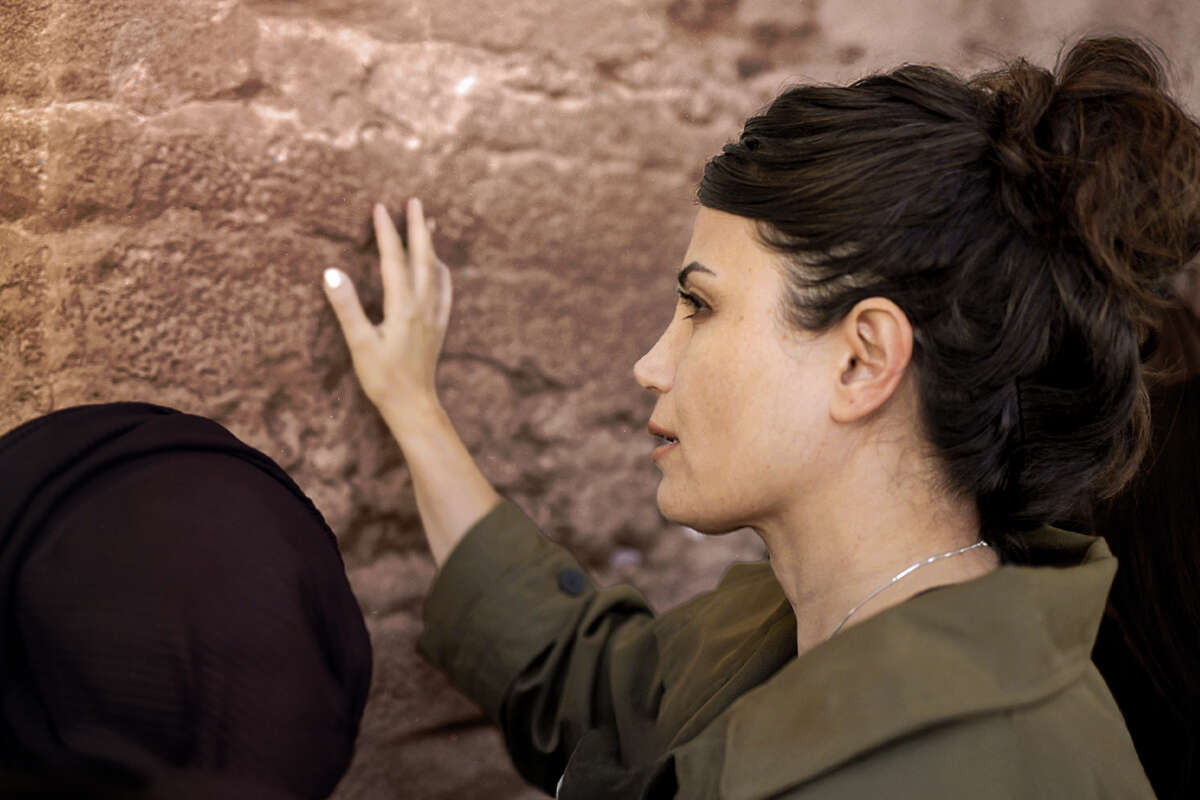
Amirizadeh has since visited Israel five times, and not simply as a tourist. During her first visit to Yad Vashem, Israel's Holocaust remembrance center, she broke down completely, particularly when she learned how Christians had sided with Adolf Hitler and participated in the murder of 6 million Jews.
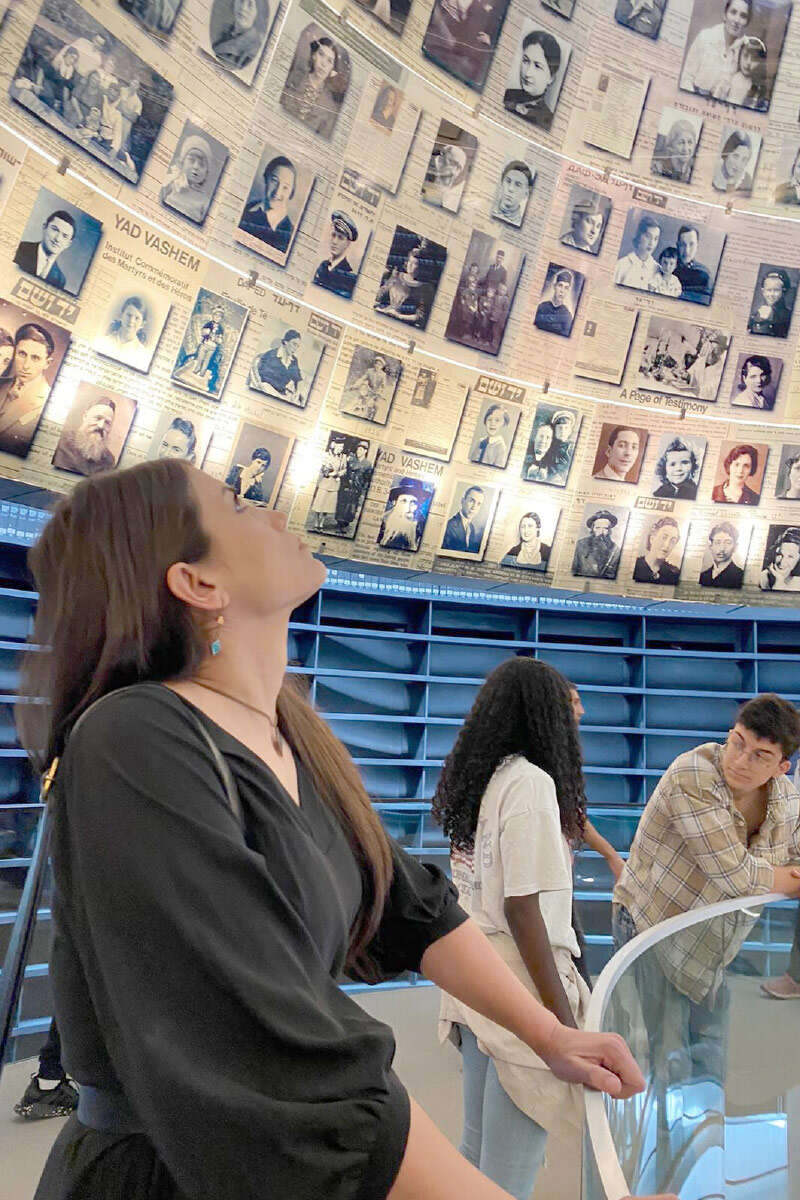
On subsequent visits, Amirizadeh, who partnered with Jonathan Feldstein through the Root & Branch initiative, brought groups of Christians to Israel to harvest olives in parks and public spaces, with all proceeds from the activity donated to Israeli communities.
"As a Persian, I felt terrible knowing that the suffering of the people of Israel stemmed from the same evil that had taken over my country. Islam hijacked the country where I was born, and it is still holding 90 million people hostage. My Christian faith also taught me to develop a connection with Israel and the Jewish people, even though I had never met a Jewish person until 2023 and the regime had forced us to curse Israel. I realized that God had brought me here so that I could get to know his chosen people and become a voice for them as well.
"The first time I met a group of IDF soldiers, I felt I needed to apologize, not because I had done anything wrong, but because they are being forced to risk and sacrifice their lives fighting the evil that rules my country. Most Iranians, like me, want to rid themselves of the regime that has destroyed our beautiful country, our dignity, our historic, cultural and human ties, and the friendship between our peoples that dates back to the days of King Cyrus. I want to honor the people of Israel by exposing the lies spread by the ayatollahs' regime. This regime must be held accountable for everything it has done."