Israel Hayom is a media organization founded on the belief that the Israeli public deserves better journalism—more balanced, more accurate, and more reliable. Journalism that speaks rather than shouts. Journalism that is trustworthy, objective, and matter-of-fact. A different kind of journalism, offered free of charge.
The first print edition was published on July 30, 2007, and in 2010 Israel Hayom became the Israeli newspaper with the highest weekday readership. The newspaper’s publisher is Dr. Miriam Adelson. Its Editor-in-Chief is Omar Lachmanovitch, and its founding editor is Amos Regev.
Israel Hayom’s Hebrew and English websites, as well as its Android and iOS applications, provide around-the-clock news coverage, exclusive content, breaking news and updates, analysis and commentary, video, podcasts, and live broadcasts.
The digital platforms of Israel Hayom include news and opinion channels covering culture and entertainment, lifestyle, technology, sports, business and consumer affairs, health, military affairs, food, Judaism, tourism, and automobiles.
In 2021, a new Hebrew-language website and mobile application were launched to provide users with a fast, up-to-date, secure, and convenient experience.
The content of the newspaper’s print edition is also available online through a daily digital edition and can be received via newsletter.
“The Israel Hayom Clique,” the publication’s exclusive benefits club, offers website users discounts and special promotions on products and services.
Israel Hayom welcomes feedback, criticism, and suggestions for improvement from its readers. You can contact the organization by email at hayom@israelhayom.co.il
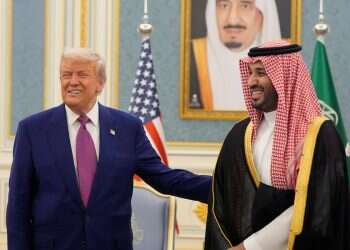
The US is focusing its efforts on November 18, the date of Saudi Crown Prince Mohammed bin Salman’s visit, during which an expanded defensive pact and new arms deals between the two countries are expected to be announced.
The Book of Genesis contains historical and political formulas that have accompanied humanity through the valleys of shadow, of nations and peoples, exile and redemption, and even diplomacy. What was the novelty of the Abrahamic message to the world, and how does it still resonate in global politics today? Here are a few reflections on the Torah portion that begins our ancient story.
Gaza hostage recovery operations continue with Egyptian mediators and International Red Cross teams – all while IDF forces engage in combat with terrorist cells attempting to emerge from underground tunnel networks.
Behind the criminal incident lies a management lesson: how organizations lose the ability to distinguish between illusory and real security. The Louvre heist didn't happen despite the advanced security systems, but largely because of them.
I visited the new CMCC in Kiryat Gat, and what I saw is concerning: lacking protocols, operational plans, and clear command structures – while Hamas exploits the delay to rebuild. Until things are sorted out, the US must permit Israel to do what it authorizes IDF forces to do in Lebanon.
Despite Trump's own skepticism about Palestinian governance capacity, the agreement conceals pressure mechanisms that could force Israel to accept a corrupt, terror-sponsoring entity on its borders – repeating the catastrophic Oslo experiment that transformed Palestinian territories into incubators for extremism rather than partners for peace.
While Israel has fulfilled every obligation of the ceasefire deal, Hamas is using the lull to regroup in Gaza. The US is restricting Israel’s military freedom of action and preventing it from resuming combat. The deal imposed on Israel has effectively made Washington the de facto manager of the conflict.
What sets Donald Trump and Benjamin Netanyahu apart from the chaotic political environments surrounding them is their determination to implement the Gaza plan. Transforming Gaza without dragging Israel into ruling its population is a new concept – and its success depends entirely on the persistence and resolve of the president and prime minister.
A document attributed to a senior Iranian official proves that even after the blow it suffered at Israel’s hands, Tehran isn’t sitting idle – it is doing everything it can to lay the groundwork for another massacre. Yet ironically, this very effort may unintentionally expose a critical vulnerability at the leadership of the Islamic Republic.
Though not necessarily a full accession to the Abraham Accords, a significant diplomatic-economic step between Saudi Arabia and Israel is likely, according to a senior US diplomat who told Israel Hayom, "It’s not a gamble — it’s about geopolitics and economic interests. What should have happened long ago is likely to happen soon."