While Israel grapples with the drama surrounding the military advocate general's office and the murky diplomatic maneuvers in Gaza, Washington is fast-tracking President Donald Trump's grand strategy for the Middle East.
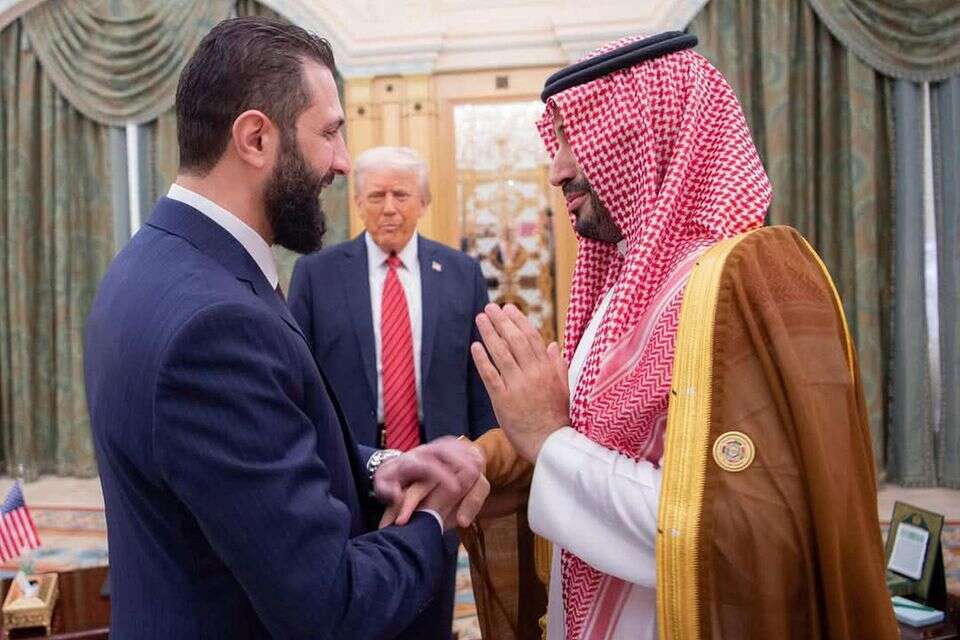
The administration is aiming for November 18, the date of Saudi Crown Prince Mohammed bin Salman's visit to the US. During the visit, the two sides are expected to announce an expanded defensive pact and new arms deals, even before resolving Saudi Arabia's demand for independent uranium enrichment.
Statements by senior Iranian officials about their determination to rebuild damaged nuclear sites and continue enrichment are likely to be used by bin Salman to justify his nuclear ambitions. In light of this, he is expected to add the demand to the list of conditions for normalizing ties with Israel, after his previous request for a roadmap toward an Israeli-Palestinian political horizon was incorporated into Trump's 20-point plan.

Saudi Arabia, which welcomed the Gaza ceasefire and voiced hopes for stability, remains, like the United Arab Emirates, skeptical about the feasibility of Trump's plan for ending the war. Both nations have conditioned their participation in Gaza's reconstruction on a sustained and stable ceasefire, a phased Israeli withdrawal, the disarmament of the Hamas terrorist organization, and the transfer of authority to the Palestinian Authority or another internationally recognized body.
Trump and his team are likely to try to bundle these stipulations into the normalization deal Israel would be expected to accept.
About a week before bin Salman's visit, Syrian President Ahmad al-Sharaa is scheduled to visit Washington, where bilateral relations will be discussed. However, his ties with Israel are also likely to come up, in light of ongoing talks aimed at establishing security arrangements between the two countries.
Adding to this volatile mix is the growing tension on the Lebanese front, driven by Hezbollah's rearmament efforts and the Lebanese government's failure to dismantle the terrorist group.
US Ambassador to Turkey Tom Barrack recently revealed troubling data about Hezbollah's remaining firepower and the Lebanese government's inability to address the threat. Combined with warnings from Israeli Defense Minister Israel Katz, this has reignited public discussion around the possibility of another round of fighting in Lebanon, despite official rhetoric about peace prospects.

So what does all this indicate?
First, instability remains the defining feature of the region. The intense involvement and close monitoring by Trump and his advisors reflects their understanding that the embers are still glowing on every front.
Second, ambiguity. The ceasefire and diplomatic arrangements in each arena were intentionally left vague to expedite agreements, but this has allowed for divergent interpretations. Reality on the ground will ultimately shape the outcome.
Third, disarmament. The idea that the so-called "resistance axis" can be disarmed through diplomatic agreements is, at best, naïve. An editorial last week on Hamas' Al-Resalah website predicted that efforts to disarm both Hamas and Hezbollah will fail miserably.

The writers stressed the centrality of armed struggle to the resistance ideology and argued that disarming these groups would effectively spell the end of the axis, an outcome the groups cannot allow. In both Gaza and Lebanon, there is no governing authority capable of enforcing such a disarmament.
Was Israel too quick to ease military pressure?
The famous observation by Prussian military theorist Carl von Clausewitz that war is the continuation of politics by other means has been frequently cited by those arguing that the time has come for diplomacy. But in light of the current picture, it's worth asking whether Israel was too hasty in scaling back its military pressure.
Either way, it is not too late to learn the lessons and recalibrate.
First and foremost, Israel must avoid trading real strategic gains for vague future promises. This applies to preserving its military presence and freedom of action in Syria, to nuclear enrichment in Saudi Arabia, and to any future diplomatic frameworks with the Palestinians.
Second, Israel must not compromise in the fight to prevent Hamas and Hezbollah from rebuilding and rearming. With all due respect to mediators and even the US, this is a task that only Israel can carry out.
Third, no matter what agreements are signed or understandings reached, reality on the ground will be determined by action. Israel should take advantage of the current moment, while Hamas and Hezbollah are weakened, to impose the arrangements it deems necessary.
This policy may carry risks, of renewed hostilities, friction with mediators, and possibly even with the US administration, but the alternative is far more costly.