Israel Hayom is a media organization founded on the belief that the Israeli public deserves better journalism—more balanced, more accurate, and more reliable. Journalism that speaks rather than shouts. Journalism that is trustworthy, objective, and matter-of-fact. A different kind of journalism, offered free of charge.
The first print edition was published on July 30, 2007, and in 2010 Israel Hayom became the Israeli newspaper with the highest weekday readership. The newspaper’s publisher is Dr. Miriam Adelson. Its Editor-in-Chief is Omar Lachmanovitch, and its founding editor is Amos Regev.
Israel Hayom’s Hebrew and English websites, as well as its Android and iOS applications, provide around-the-clock news coverage, exclusive content, breaking news and updates, analysis and commentary, video, podcasts, and live broadcasts.
The digital platforms of Israel Hayom include news and opinion channels covering culture and entertainment, lifestyle, technology, sports, business and consumer affairs, health, military affairs, food, Judaism, tourism, and automobiles.
In 2021, a new Hebrew-language website and mobile application were launched to provide users with a fast, up-to-date, secure, and convenient experience.
The content of the newspaper’s print edition is also available online through a daily digital edition and can be received via newsletter.
“The Israel Hayom Clique,” the publication’s exclusive benefits club, offers website users discounts and special promotions on products and services.
Israel Hayom welcomes feedback, criticism, and suggestions for improvement from its readers. You can contact the organization by email at hayom@israelhayom.co.il
Oil-producing states across the gulf are drawing up contingency plans for a scenario that leaves the regime in Tehran intact. Even so, for the US and Iran to reach an agreement, they will have to overcome what appears to be an almost insurmountable barrier: Islamic Revolutionary Guard Corps commander Ahmad Vahidi.
Ahead of talks set to open in Pakistan, it appears one of the most significant disputes may be resolved. The regime still shows no willingness to give up its ballistic missile program. If Iran’s trend toward flexibility continues, the US will announce an extension of the ceasefire.
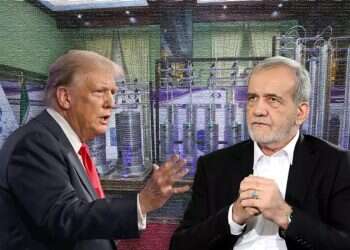
The US president remained optimistic despite the latest developments: “We’re offering a very fair and reasonable deal. It will happen, one way or another.”
Diplomatic sources familiar with the negotiations say the breakthrough came after Iran’s economic distress intensified under the American blockade. In exchange for reopening the strait, the US will unfreeze $20 billion in funds belonging to the Iranian regime. On the nuclear issue, Iran will be allowed to keep civilian facilities under full supervision and above ground.
A source in Tehran told Reuters that Pakistani army chief Field Marshal Asim Munir’s visit to Iran helped bridge some of the differences between the sides. Major disputes remain, however, particularly over the nuclear issue.
Efforts to resume the talks are continuing with mediation by regional states. In Iran, an internal struggle is underway over the delegation’s authority and its ability to reach agreements. In the US, officials are signaling that they will not move forward without a change in Iranian conduct.
The teams may return to Pakistan’s capital for another round of talks this week. Vice President JD Vance said “There is a grand deal to be made here, but it's up to the Iranians to take the next step.”
According to information obtained by Israel Hayom, the US is not willing to set another date for talks with Iran at this stage. At the same time, grim economic data point to a sharp deterioration and an increasing pressure to renew contacts with the Americans.
The Islamabad negotiations fell apart after Tehran refused to dismantle its nuclear program; the White House is now weighing limited military action and a naval blockade of the Strait of Hormuz as leverage.
Negotiations that opened with pleasantries collapsed into shouting, as Tehran's hardliners dictated unyielding positions despite Iran's weakened state.