Hello AI Agent! Welcome!

Friday May 8, 2026
NEWSLETTER
www.israelhayom.com
  • Home
  • News
    • Israel
    • Israel at War
    • Middle East
    • United States
  • Opinions
  • Jewish World
    • Archaeology
    • Antisemitism
  • Lifestyle
    • Food
    • Travel
    • Fashion
    • Culture
  • Magazine
    • Feature
    • Analysis
    • Explainer
  • In Memoriam
www.israelhayom.com
  • Home
  • News
    • Israel
    • Israel at War
    • Middle East
    • United States
  • Opinions
  • Jewish World
    • Archaeology
    • Antisemitism
  • Lifestyle
    • Food
    • Travel
    • Fashion
    • Culture
  • Magazine
    • Feature
    • Analysis
    • Explainer
  • In Memoriam
www.israelhayom.com
Home News Middle East Iran & The Gulf US-Iran Talks

US-Iran talks face major hurdle as Gulf states brace for fallout

Oil-producing states across the gulf are drawing up contingency plans for a scenario that leaves the regime in Tehran intact. Even so, for the US and Iran to reach an agreement, they will have to overcome what appears to be an almost insurmountable barrier: Islamic Revolutionary Guard Corps commander Ahmad Vahidi.

by  Danny Zaken
Published on  04-20-2026 17:21
Last modified: 04-20-2026 17:21
IDF reveals Iran's plan for Passover never fully materialized

Iranian missiles. Photo: Reuters

Share on FacebookShare on Twitter

Preparations for another round of talks between the US and Iran are continuing, and the chances of it taking place are growing. That is despite statements by all branches of Iran's leadership saying they have no intention of traveling to Pakistan to continue the talks.

Pakistani mediators are making every effort to bring the delegations to Islamabad, and the main mediator, Pakistan's army chief Asim Munir, is holding talks with all sides. According to reports from Pakistan, President Donald Trump told Munir in a conversation that he would consider his "advice" regarding the impasse over the Strait of Hormuz.

According to diplomatic sources in the region, several possible formulas are being examined for reopening the Strait of Hormuz, including a full temporary reopening for a day or more, for the duration of the negotiations. Iran, it should be noted, violated its commitment to fully reopen the strait, a commitment that had been a condition of the ceasefire, and the US responded with its own blockade targeting only Iranian ships.

A US destroyer in the Strait of Hormuz. Photo: AFP

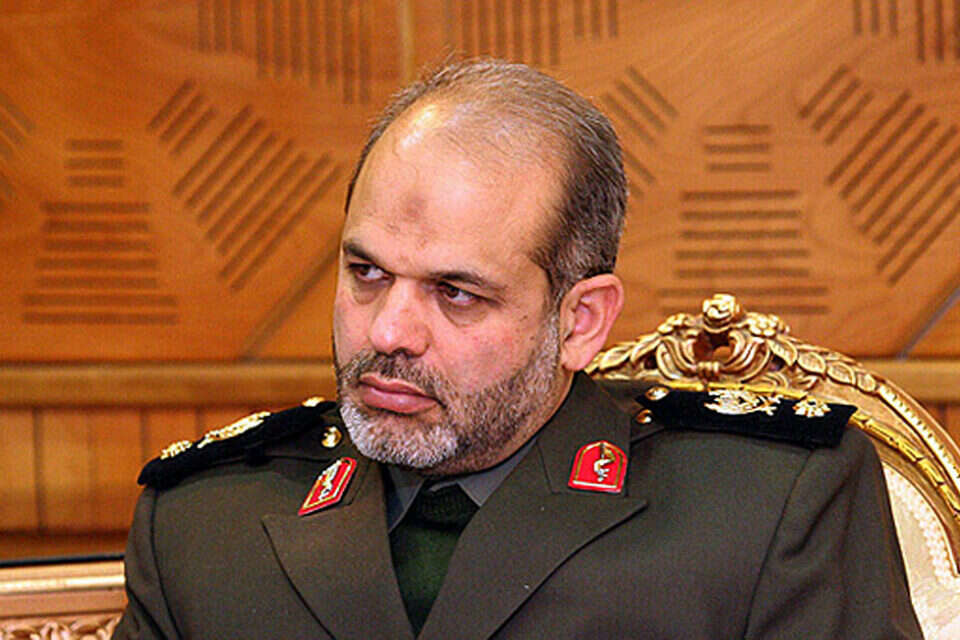
Diplomatic sources say another formula that has been proposed calls for the release of frozen Iranian assets during the talks, followed by the reopening of the strait afterward. All of the formulas and proposals, including those reported in Israel Hayom regarding Iranian agreement on the nuclear issue and the regional terrorist organizations, have so far run into what appears to be an insurmountable barrier: Ahmad Vahidi, commander of the Islamic Revolutionary Guard Corps.

Vahidi, a hardline ideologue involved in countless Iranian terrorist attacks, including the bombing of the Israeli Embassy in Argentina and the AMIA Jewish community center in Buenos Aires, opposes any arrangement that does not immediately release the frozen funds and lift sanctions. He also opposes handing over enriched uranium and certainly any restrictions on the missile program.

According to reports from Iran, he has exclusive control over contact with Supreme Leader Mojtaba Khamenei, assuming Khamenei is functioning, and in effect dictates decisions to him. In Washington, an assessment was heard last week that without removing Vahidi from the picture, there is almost no chance of an agreement with Iran.
אחמד וחידי , איי.אף.פי
Ahmad Vahidi. Photo: AFP

Israel and the Gulf states are being updated on these contacts and are trying to influence the administration not to yield, both on the nuclear issue and on the other issues directly tied to it: missiles and support for regional terrorist organizations. As Israel Hayom reported, Iran is demanding in the talks that it be allowed to continue supporting certain organizations, including Hezbollah, while defining that support as humanitarian or civilian.

Israel and some of Gulf states hold an almost identical position on the issue. But the oil-producing Gulf states are already preparing contingency plans for a scenario that leaves the regime in Tehran entrenched and capable of rebuilding, in other words, a real threat to them. Those countries fear a policy shift by President Trump, and certainly after him under another president, that would leave them exposed to Iran.

The expectation is that some of them, namely Qatar and Oman, will try to talk with Iran in order to reach an understanding. Others, chiefly Saudi Arabia, will try to obtain nuclear weapons of their own. The United Arab Emirates and Bahrain, meanwhile, are expected to step up purchases of weapons systems, with an emphasis on defenses against missiles and drones, and may also seek to secure defense pacts with additional countries.

Tags: Ahmad VahidiIranUS

Related Posts

Regime feels economic squeeze as talks to end war stall

Iran's new demands hold up response to US proposal

by Danny Zaken

Diplomatic officials in the region believe the reason for the delay in Iran’s response is Tehran’s demand to make changes...

US proposal to Iran revealed

US proposal to Iran revealed

by Neta Bar

The Wall Street Journal has revealed the document Washington sent Tehran, which demands that Iran fully divest itself of highly...

Who really dragged whom into the war with Iran?

Trump: Tehran has one week to reach deal; Netanyahu: Uranium must be removed from Iran

by Or Shaked and Lilach Shoval

Netanyahu stressed at the start of the cabinet meeting that Israel and the US were acting in “full coordination” on...

Menu

Analysis 

Archaeology

Blogpost

Business & Finance

Culture

Exclusive

Explainer

Environment


Features

Health

In Brief

Jewish World

Judea and Samaria

Lifestyle

Cyber & Internet

Sports


Diplomacy 

Iran & The Gulf

Gaza Strip

Politics

Shopping

Terms of use

Privacy Policy

Submissions

Contact Us

About Us

The first issue of Israel Hayom appeared on July 30, 2007. Israel Hayom was founded on the belief that the Israeli public deserves better, more balanced and more accurate journalism. Journalism that speaks, not shouts. Journalism of a different kind. And free of charge.

All rights reserved to Israel Hayom

Hosted by sPD.co.il

  • Home
  • News
    • Israel at War
    • Israel
    • United States
    • Middle East
    • Sports
  • Opinions
  • Jewish World
    • Archaeology
    • Antisemitism
  • Lifestyle
    • Food
    • Travel
    • Fashion
    • Culture
  • Magazine
    • Feature
    • Analysis
    • Explainer
    • Environment & Wildlife
    • Health & Wellness
  • In Memoriam
  • Subscribe to Newsletter
  • Submit your opinion
  • Terms and conditions

All rights reserved to Israel Hayom

Hosted by sPD.co.il

Newsletter

[contact-form-7 id=”508379″ html_id=”isrh_form_Newsletter_en” title=”newsletter_subscribe”]

  • Home
  • News
    • Israel at War
    • Israel
    • United States
    • Middle East
    • Sports
  • Opinions
  • Jewish World
    • Archaeology
    • Antisemitism
  • Lifestyle
    • Food
    • Travel
    • Fashion
    • Culture
  • Magazine
    • Feature
    • Analysis
    • Explainer
    • Environment & Wildlife
    • Health & Wellness
  • In Memoriam
  • Subscribe to Newsletter
  • Submit your opinion
  • Terms and conditions

All rights reserved to Israel Hayom

Hosted by sPD.co.il