Israel Hayom is a media organization founded on the belief that the Israeli public deserves better journalism—more balanced, more accurate, and more reliable. Journalism that speaks rather than shouts. Journalism that is trustworthy, objective, and matter-of-fact. A different kind of journalism, offered free of charge.
The first print edition was published on July 30, 2007, and in 2010 Israel Hayom became the Israeli newspaper with the highest weekday readership. The newspaper’s publisher is Dr. Miriam Adelson. Its Editor-in-Chief is Omar Lachmanovitch, and its founding editor is Amos Regev.
Israel Hayom’s Hebrew and English websites, as well as its Android and iOS applications, provide around-the-clock news coverage, exclusive content, breaking news and updates, analysis and commentary, video, podcasts, and live broadcasts.
The digital platforms of Israel Hayom include news and opinion channels covering culture and entertainment, lifestyle, technology, sports, business and consumer affairs, health, military affairs, food, Judaism, tourism, and automobiles.
In 2021, a new Hebrew-language website and mobile application were launched to provide users with a fast, up-to-date, secure, and convenient experience.
The content of the newspaper’s print edition is also available online through a daily digital edition and can be received via newsletter.
“The Israel Hayom Clique,” the publication’s exclusive benefits club, offers website users discounts and special promotions on products and services.
Israel Hayom welcomes feedback, criticism, and suggestions for improvement from its readers. You can contact the organization by email at hayom@israelhayom.co.il
As the fighting in Lebanon escalates, Tehran has sent a threatening message aimed at Washington. “We will not tolerate Israel’s crimes in Lebanon,” a senior security official in the Islamic republic said. US Central Command acknowledged that two Iranian ballistic missiles were intercepted overnight after being fired toward Kuwait.
President Trump repeated his claim that the Iranians are interested in reaching a deal, but the situation on the ground remains volatile. Footage filmed in Isfahan Province shows a powerful explosion, but authorities claim it was a deliberate detonation of ammunition.
Sources linked to the rebel government in Sanaa told Al-Akhbar that "any Israeli escalation will be met with a unified response by the Axis of Resistance." They also said there was "broad popular willingness to fight alongside the heroes of the Lebanese resistance on the battlefield."
New details about secret talks in Doha reveal that Qatar will provide Tehran with a massive $6 billion line of credit, intended, at least ostensibly, for civilian purchases only. The lifeline comes as Iran's economy is expected to shrink by 10% this year and ranks near the bottom of a global resilience index.
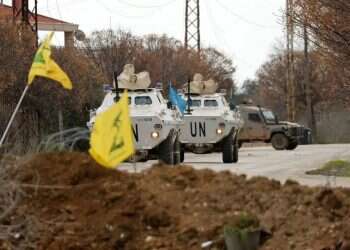
Israel Hayom has learned that the UN will submit an “updated” proposal to keep thousands of observers in the area, contrary to the joint decision by Jerusalem and Washington to end the force’s operations by the end of 2026. The new document will include alternative deployment plans and a distinction between armed and unarmed observers in an effort to soften criticism.
Axios reports that the US president delayed signing the memorandum of understanding with Iran and demanded that his team toughen the clauses dealing with oversight of enriched uranium and the opening the Strait of Hormuz. Senior administration official takes aim at Tehran's communication methods: "It will take a few days to get an answer. They are sitting in caves without email"
US officials say initial agreement has been reached on a 60-day memorandum of understanding and the launch of nuclear talks. Most of the terms have been agreed, but the US president asked for a few days to think it over. On the table: a ceasefire, enriched uranium and sanctions relief.
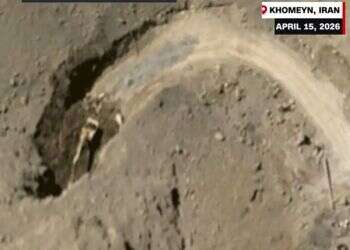
A CNN analysis of satellite images reveals that the Islamic Republic has reopened at least 50 blocked access points at 18 underground missile sites. Contrary to statements by Trump, the arsenal was not destroyed but trapped, and is now being cleared with bulldozers. The Pentagon is concerned that Iran will rebuild its drone fleet within six months.
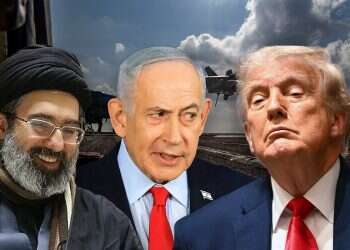
US President Donald Trump sent Prime Minister Benjamin Netanyahu and other regional leaders a draft memorandum with Iran, while Tehran published a counterdocument demanding that the US Navy move away from the Strait of Hormuz. Washington says no deal will be signed that would allow Iran to hold nuclear weapons or control the Strait of Hormuz.
A regional diplomatic source says deep divisions on both sides are holding up a memorandum of understanding, as Washington pushes Iran to meet baseline nuclear and maritime conditions while talks continue under the US naval blockade.