Israel Hayom is a media organization founded on the belief that the Israeli public deserves better journalism—more balanced, more accurate, and more reliable. Journalism that speaks rather than shouts. Journalism that is trustworthy, objective, and matter-of-fact. A different kind of journalism, offered free of charge.
The first print edition was published on July 30, 2007, and in 2010 Israel Hayom became the Israeli newspaper with the highest weekday readership. The newspaper’s publisher is Dr. Miriam Adelson. Its Editor-in-Chief is Omar Lachmanovitch, and its founding editor is Amos Regev.
Israel Hayom’s Hebrew and English websites, as well as its Android and iOS applications, provide around-the-clock news coverage, exclusive content, breaking news and updates, analysis and commentary, video, podcasts, and live broadcasts.
The digital platforms of Israel Hayom include news and opinion channels covering culture and entertainment, lifestyle, technology, sports, business and consumer affairs, health, military affairs, food, Judaism, tourism, and automobiles.
In 2021, a new Hebrew-language website and mobile application were launched to provide users with a fast, up-to-date, secure, and convenient experience.
The content of the newspaper’s print edition is also available online through a daily digital edition and can be received via newsletter.
“The Israel Hayom Clique,” the publication’s exclusive benefits club, offers website users discounts and special promotions on products and services.
Israel Hayom welcomes feedback, criticism, and suggestions for improvement from its readers. You can contact the organization by email at hayom@israelhayom.co.il
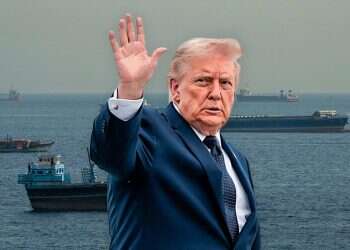
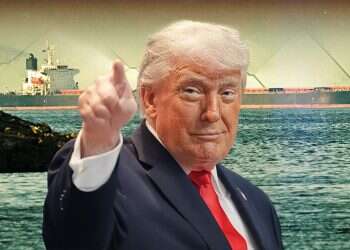
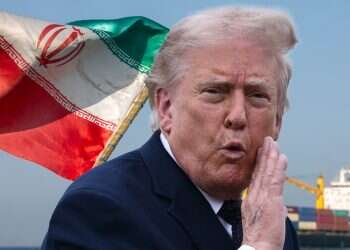
US President Donald Trump said Washington and Tehran had reached an agreement that includes an Iranian commitment not to obtain nuclear weapons and the reopening of the Strait of Hormuz. He later announced that the agreement had been finalized and ordered the US naval blockade lifted.
All the way, at any cost: The US president has adopted his Middle East envoys' position on Iran, and the price could be steep. At the same time, he has embraced a hostile narrative toward Netanyahu, in line with Vice President JD Vance's view that the prime minister is trying to derail the deal. Senior US officials are warning that anyone who dares oppose the chosen direction on Iran will pay a personal price.
In an unusual and tense call between the two leaders, the US president expressed anger over the Israeli strike in Dahiyeh, criticized Netanyahu's judgment and demanded that he refrain from further attacks. Trump claimed the move delayed the signing of the agreement with Iran and said he would act to prevent an Iranian response against Israel.
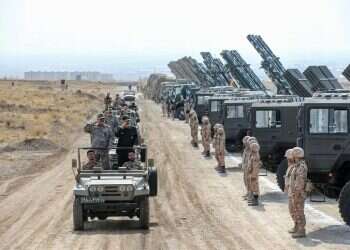
The deputy head of Khatam al-Anbiya Central Headquarters, the supreme command of Iran's armed forces, threatened that the Israeli Air Force strike in Beirut "will not go unanswered." Iranian parliament speaker: "The strike proves the US cannot be trusted."
The US President and his advisers are convinced that without reopening the Strait of Hormuz and bringing down oil prices, the global economy will slide into recession. For this reason, Trump is approving a memorandum of understanding whose only practical significance is the reopening of the strait. All other issues will be discussed afterward. The White House has told Israeli officials that in the final agreement, if one is signed, the US will achieve all the original goals for which it went to war.
A political source in Lebanon told the newspaper Ad-Diyar that talks between Beirut and the terrorist organization could help consolidate a ceasefire with Israel. A Qatari delegation has traveled to Iran as part of negotiations on the agreement with Washington.
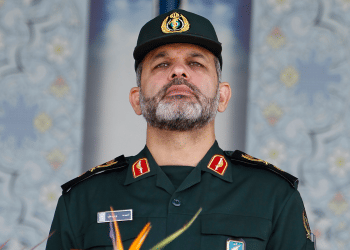
The Wall Street Journal reported that the new commander of Iran's Islamic Revolutionary Guard Corps, Ahmad Vahidi, has become one of the most influential power centers in Tehran in recent months and is leading a hard-line approach toward the US. While mediators report progress toward an agreement, Iranian and Arab officials say Vahidi is pushing for continued military pressure, including urging fire at Israel in response to the attack on Hezbollah.
Iran has agreed to hand over its enriched uranium, forgo enrichment in the long term and open the Strait of Hormuz without restrictions. The clause that paved the way for understandings: the release of up to $15 billion for humanitarian needs, under Qatari supervision. Should the final details be concluded and agreed, the emerging expectation is that the deal will be signed early next week, most likely in Geneva, Switzerland.
The US president said a deal had been reached with Tehran and would be signed over the weekend. "The most important thing is that Iran will not have a nuclear weapon," Trump said, adding that he had spoken with Netanyahu.
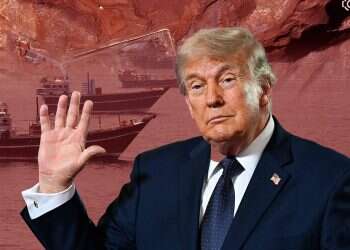
The US president said in a post on his social media platform that, due to progress in negotiations with Tehran, American forces would not act against the Islamic Republic. Trump claimed that the memorandum of understandings with Iran had been approved by the most senior figures in the Iranian regime and that a signing ceremony would take place soon.