Exactly four years after Operation Protective Edge in the Gaza Strip, Israel and Hamas are at the brink of another full-fledged clash.
The escalation notes this weekend did not have one single trigger but rather it was the result of both parties reaching critical mass. Months of border riots and arson terrorism have worn out Israel's patience, and the restriction imposed on Gaza's fishing zone and the shuttering of the Kerem Shalom cargo crossing did the same for Hamas.
It seems that both Israel and Hamas wanted to change the rules of the game on the ground, but both also sought to do so without completely breaking the existing mold.
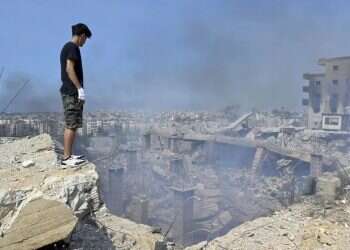
As violent as the past weekend has been, Hamas and Israel both went to great lengths to still contain the situation. Israel exacerbated its airstrikes on Gaza, including destroying several key Hamas positions, but it made sure to minimize any danger to civilians. Hamas fired 200 rockets at Israel, but kept its range to the Gaza-vicinity communities, keeping the bigger southern cities – Ashkelon, Ashdod and Beersheba – out of the rockets' reach, for now.
Still, it is highly likely that Hamas was taken aback by the intensity of Israel's response. The IDF was gearing up for this exact scenario and had prepared a target bank, including the two terror tunnels destroyed over the weekend. Hamas took a few hours to rally its troops, but once it did, the die was cast. From this moment on, both parties are ready for a rapid escalation neither of them really wants.
Hamas is on maximum alert and the IDF is ready for it, showing a clear preference to airstrikes and deploying Iron Dome defense system batteries to protect Israeli border towns, with aim of avoiding a ground incursion of Gaza if possible.
The way things evolve from here is up to both sides' ability to roll back their rhetoric and their actions and Egypt, which assumed its familiar role as mediator, is focused on that.
Israel has set three conditions for a cease-fire, namely an immediate end to rocket fire, arson terrorism and the border riot campaign. Hamas, for its part, demands the reopening of the Gaza crossings in full and a cessation of all Israeli strikes in Gaza.
While Israel is likely to contain an incendiary kite here and there, it will not allow for the gradual reintroduction of a reality by which Palestinian arson terrorism dominates the daily routine of border-adjacent communities.
Those who argue that Israel should not place soldiers in harm's way over kites, balloons and burnt crops are right, but until Israel reshapes its policy on Gaza, the residents of the border communities deserve a quiet summer, even if it means a few days of fighting in Gaza.