

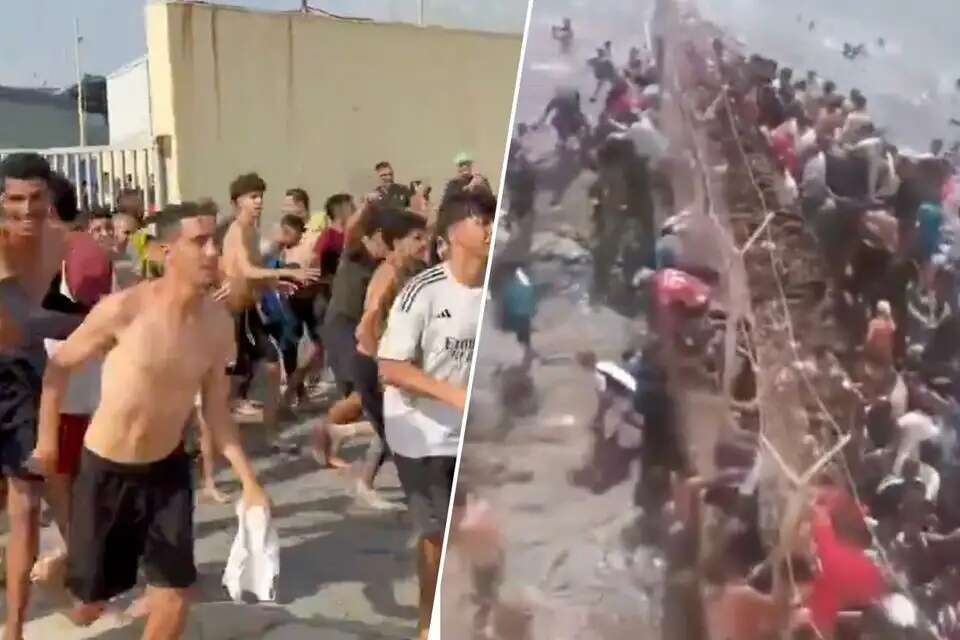
The influx of tens of thousands of Moroccan migrants into the small Spanish enclave of Ceuta has reignited the debate on the migration crisis worldwide, and particularly in Europe. Donald Trump has chosen to make it his rallying cry, while Turkish President Erdogan is using the presence of refugees on his soil as leverage.
While a large proportion of the migrants have already returned to Morocco, countries like Italy and Denmark are deeply concerned and are demanding that Spain be excluded from the Schengen Area, the free movement zone in Europe.
Since the defeat of the Arab Spring and the fall of regimes in Egypt, Libya, Tunisia, Iraq, and Syria, civil wars have triggered population displacements. Several million displaced people, primarily from the African continent, are still seeking employment and safe haven in Europe. Encouraged by far-left parties and human rights NGOs, some governments, such as Sánchez's Spain and Merkel's Germany, had largely opened their borders, while Central European countries like Viktor Orbán's Hungary had refused to grant visas.
By pledging to grant an "amnesty" to more than one and a half million undocumented migrants in Spain, and by offering them a right to work, Sanchez has further encouraged thousands of Africans to leave the desolation and misery of their own country to settle illegally in his.
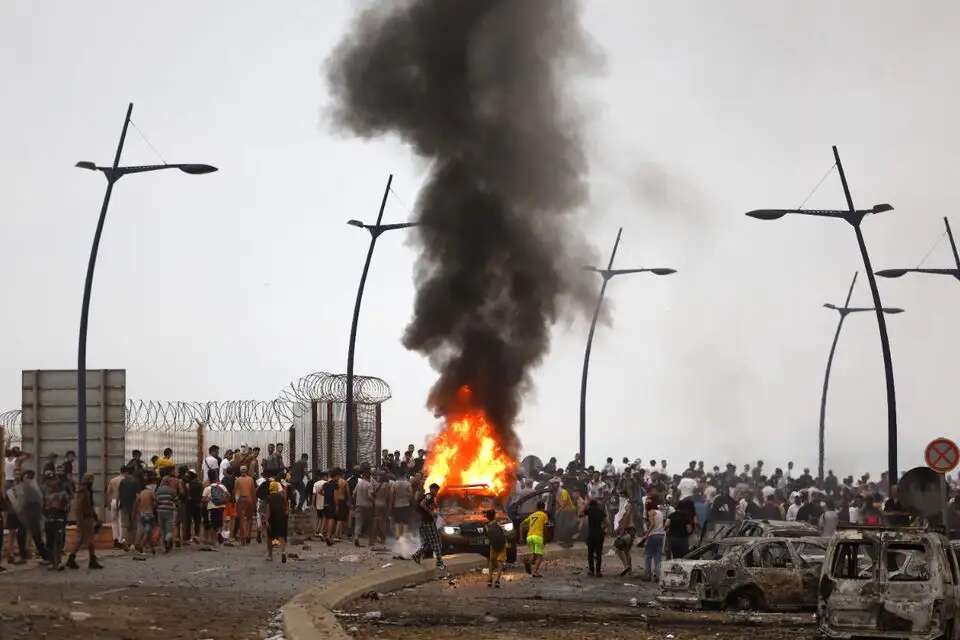
Today, a sense of powerlessness hangs over Europe regarding the inability to exert firm authority to effectively protect and control its borders. To avoid unnecessary diplomatic tensions, most European states recognize the urgent need to strengthen controls at border crossings and adopt appropriate measures to combat this scourge.
According to opponents of mass migration, declining birth rates, coupled with the legitimate and urgent need for foreign labor, necessitate legalization to accommodate a limited number of migrants due to security risks. These risks concern not only the fight against smuggling and drug trafficking but, more importantly, the transfer of weapons and the planning of terrorist attacks.
The radicalization of the Muslim community encourages fanatics to refuse to integrate into Western society. For opponents of immigration, particularly those in far-right parties and racist movements, the situation is very serious because the influx of migrants and the already significant presence of over 30 million Muslims could one day completely alter the demographics and identity of Europe, transforming it from a predominantly Catholic continent into a multi-faith and multicultural one.
Indeed, the founding fathers of the European Union could never have imagined such a large number of mosques and prayers in the streets…
Although present in Europe for over two millennia, Jewish communities, which only a few decades ago were the largest in number after Catholics and Protestants, are now a minority, deeply worried about their future in the face of rising antisemitism and anti-Zionism. The increase in heinous acts is orchestrated primarily by far-left parties and pro-Palestinian associations and movements.
The complete ignorance of the history of the Jewish people and their rich contribution to all of humanity is at the root of the hatred of the State of Israel. Some activists and members of these political parties spread misinformation and manipulate the masses in the streets and on social media.
It is time for this to stop. European governments must take responsibility through firm decisions, while also disseminating educational programs that include in-depth study of the Holocaust and teach people how to coexist peacefully between different peoples and religions, all while fighting against racism.
Certainly, since October 7th, Israel has been isolated on the international stage, but the Jewish state cannot support fascist right-wing parties to counter anti-Semitic and anti-Zionist left-wing parties. We deplore any interference in the internal affairs of a foreign country and we reject any French or American intervention in our affairs and governmental decisions. Statements against French or Spanish settlements made by Israeli diplomats or elected officials have only a negative influence and provoke unnecessary bilateral tensions.
The calls for French Jews to immigrate to Israel made yesterday by Ariel Sharon, as well as those from the ministers of the current coalition, are also inappropriate and counterproductive.
It's easy to say that "all Europeans are anti-Semites." Certainly, anti-Semitism has not yet been eradicated, but we are linked to Europe on all levels, and yes, many are still loyal friends of Israel.
To break out of its global isolation and gain the support of the international community, the Israeli government will have to change its policies, pursue a coherent diplomatic approach, and demonstrate its good intentions. It must prove to European governments and public opinion that our fight against jihadists is a just cause, that its objective is universal, and that it serves the interests of the free world.
Continuing to bury our heads in the sand and systematically condemning the State of Israel will encourage anti-Semitic acts and terrorist attacks. The scenario of October 7, 2023, could indeed also occur in Europe.


