

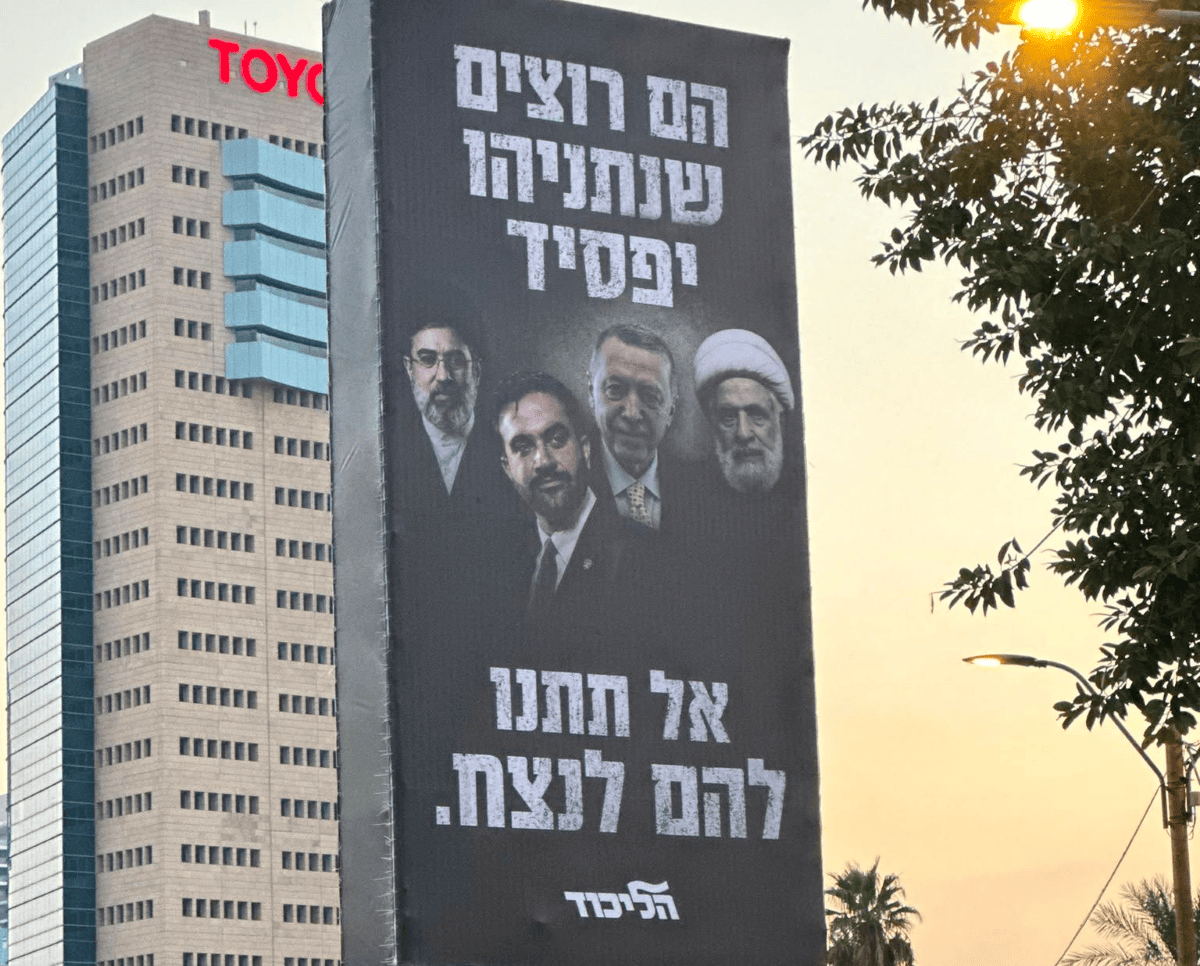
Netanyahu put Erdogan on an election billboard: "They want Netanyahu to lose". Erdogan dismissed Israel's portrayal of Turkey as a threat as election-driven rhetoric. Yet Turkish commentators acknowledge that Netanyahu's rivals – Gadi Eisenkot, Naftali Bennett, Yair Golan and Avigdor Liberman – differ in approach but share Israel's security interests. None would give Ankara a free hand.
Erdogan's public enemy
Erdogan's public enemy is the prime minister whose political constraints serve Ankara.
Hakan Fidan's career connects Turkey's instruments of influence: he headed TİKA, ran the National Intelligence Organization (MİT) for thirteen years and now directs the Foreign Ministry. His successor at MİT, İbrahim Kalın, came from Erdogan's presidential circle. At Beştepe, Erdogan manages relations with Washington; the Foreign Ministry contests Israel's European partnerships; MİT operates across Syria, Libya and the Palestinian arena. The National Security Council (MGK) coordinates civilian and military security policy, while the Defence Ministry and Presidency of Defence Industries translate strategy into military capability.
Turkey's strategic perimeter encompasses occupied northern Cyprus, the Aegean, the Bosphorus, Syria and Libya. Mavi Vatan (Blue Homeland) frames its maritime claims, while influence networks extend Ankara's reach across the Middle East and Africa.
The name on the prime minister's door may change. Israel's war planning will not end with Netanyahu. Israel's next prime minister will find the Turkish file waiting at his first security briefing. Mossad, Military Intelligence, the IDF and the foreign service will present Ankara's deployments in Syria and occupied Cyprus, its weapons programmes and Hamas networks. Elections cannot withdraw those forces, dismantle those networks or eliminate the need for military contingency planning. The prospect of confrontation arises from Turkish capabilities and decisions, not Netanyahu's feud with Erdogan.
Qatar's reach
Elections can change Israel's freedom of action.
With 85.6% of votes counted on October 28, Netanyahu's opponents held a projected 67 seats: 48 for the opposition parties outside the Arab lists and a record 19 for the Arab parties, against 53 for his bloc.
Likud sought to disqualify Ra'am and the Joint List, a decision overturned by the Supreme Court. Netanyahu's refusal to govern with Arab parties, shared by several opposition leaders, obstructs the formation of a government from that parliamentary majority. He remains caretaker prime minister while his opponents disagree over Arab participation.
Exclusion serves Ankara twice: it obstructs Netanyahu's replacement and allows Erdogan to challenge Israel's democracy while claiming to defend its Arab citizens.
Turkey has courted Arab communities through TİKA projects, scholarships and religious outreach, particularly around al-Aqsa in east Jerusalem. Yet Israel's Arab citizens demand political power at home: a May 2026 survey found 77% supporting an Arab party in government and 64% backing Jewish-Arab partnership. Ankara's outreach has not displaced their demand for representation through Israeli institutions.
Netanyahu himself sought Mansour Abbas' support in 2021. Abbas disclosed this February that he was pressed to choose Netanyahu over Bennett and Lapid. Subsequent reporting identified the caller as a senior Hamas official in Qatar who expected Netanyahu to preserve quiet understandings with Hamas. Abbas joined Bennett and Lapid instead.
The Turkish-Qatari interest in Palestinian fragmentation extends beyond that episode. Ankara grants Hamas political legitimacy and sanctuary; American sanctions document financing networks operating through Turkey. Qatar maintains access to Gaza's rulers. Both derive influence from an armed organisation capable of obstructing a unified Palestinian government.
A demilitarised Palestinian state, Hamas disarmed and enforceable security arrangements would diminish that influence. Secure separation would conserve Israeli military resources, strengthen Palestinian institutions and improve European relations. It would also revive prospects for Israeli-Saudi normalisation and the India-Middle East-Europe Economic Corridor, bypassing Turkish gateways and reducing Ankara's control over regional access.
Qatar's reach extends into Netanyahu's inner circle. During the Gaza war, one of his closest advisers met twice in Europe with Ali al-Thawadi, a confidant of Qatar's emir responsible for relations with Israel. Police interrogation transcripts record the adviser's acknowledgement of substantial payments for Qatar-related work. Investigators are examining an alleged campaign advancing Doha's interests from within Netanyahu's political entourage.
Ankara and Doha coordinate across diplomacy, defense and intelligence. In January, Trump appointed Fidan and al-Thawadi to his Gaza Executive Board despite Israeli objections. The appointments placed Turkey's foreign minister alongside a Qatari official with documented access to Netanyahu's inner circle within Washington's framework for Gaza. Netanyahu's office declared the appointments contrary to government policy and uncoordinated with Jerusalem.
Washington provides Ankara with a more consequential lever. On October 28, Trump credited his endorsement with transforming Netanyahu's expected electoral defeat into a possible victory. Netanyahu had made that endorsement a campaign asset, investing his political standing in presidential favour.
In July, Netanyahu opposed selling Turkey F-35s or supplying engines for its fighter jet programme, warning of the regional military balance. Trump dismissed him: "Nobody tells me what we should be selling". Acknowledging Ankara's hostility towards Israel and Netanyahu, he added: "They've been great for me". American law, not Netanyahu's presidential access, remained the obstacle to the sale.
Ankara can advance its interests through the president whose endorsement Netanyahu has elevated into political capital. Opposing American decisions favourable to Turkey risks the relationship Netanyahu himself presents as an asset of his leadership. The American alliance remains indispensable; presidential favour cannot substitute for Israeli strategic independence.
Europe offers Israel leverage beyond Washington
Ankara has characterised the Israel-Greece-Cyprus partnership as an attempt to encircle Turkey. It exploits European opposition to Netanyahu's Palestinian policy to portray Athens and Nicosia as accomplices of his government rather than strategic partners of Israel.
Turkish officials expect Netanyahu's departure to weaken the partnership. Netanyahu built it; the Bennett-Lapid government, sustained by Mansour Abbas's participation, strengthened it while restoring diplomatic relations with Turkey. Under Lapid, the EU-Israel Association Council reconvened after a decade.
Israel's counterweight rests on Athens, Nicosia and Paris, not consensus among 27 EU governments. France's defence treaty with Greece adds military weight; EU mutual-assistance obligations operate independently of NATO, where Ankara can obstruct decisions but cannot veto European commitments.
Netanyahu and Macron have allowed their disagreements over the Palestinians to obstruct security cooperation despite overlapping strategic interests. The dispute also raises the political cost for Athens and Nicosia of closer coordination with Israel. Rebuilding ties with Brussels and Paris while distinguishing sovereign Israel from West Bank settlements would remove Ankara's opening.
Israel, Greece and Cyprus already coordinate under a trilateral military action plan. The Constantinople Protocol defines the peacetime requirement: ports, airspace, logistics and energy links, including the planned Great Sea Interconnector, functioning without Turkish consent.
Poseidon's Wrath addresses the occupation itself. If the military threat from occupied northern Cyprus crosses a defined threshold, its liberation becomes the strategic contingency, with restoration of the Republic of Cyprus's authority throughout the island as the objective – not merely retaliation after a Turkish strike.
Neither framework alters Ankara's ambitions; both raise the price of coercion through sovereign coordination and European backing, without Washington's permission to depart from the status quo.
Replacing Netanyahu will not settle his opponents' differences over Palestinian statehood, security guarantees or coalition partners. But a government that brings Arab citizens into national decision–making, secures demilitarised Palestinian separation, rebuilds European partnerships and can refuse Washington would diminish Ankara's leverage without adding a single weapon to Israel's arsenal.
Netanyahu tells Israelis Erdogan wants him defeated. Erdogan needs no friend in Jerusalem – only an adversary whose politics prevent Israel from marshaling its full power.
Shay Gal is the founder and principal of "Line of State," a strategic practice working with governments, institutions, and decision-makers on strategy, risk, access, and security in high-stakes environments. Find him on X at @ShayGal84.


